


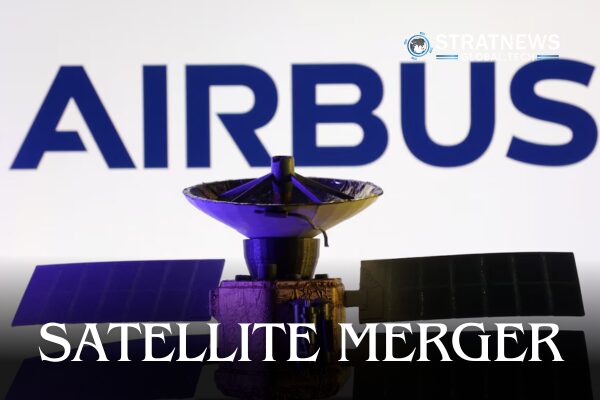
Leonardo, Airbus and Thales Agree on Framework for Satellite Merger
Three of Europe’s leading aerospace companies — Leonardo, Airbus and Thales — have reached a framework agreement to merge their satellite businesses, according to two sources familiar with the discussions. The move is part of an effort to create a unified European satellite manufacturer capable of competing with Elon Musk’s SpaceX and its Starlink network.
Aiming to Strengthen Europe’s Satellite Industry
Leonardo will hold an extraordinary board meeting on Tuesday to discuss the merger’s details, which still require board and regulatory approval. While the three companies declined to comment, the proposed venture is designed to consolidate Europe’s fragmented satellite sector and strengthen its position in a rapidly changing global market.
The new joint venture, valued at around 10 billion euros ($11.66 billion), is reportedly modelled on the MBDA missiles consortium, which successfully integrates operations across several European nations. The project, known internally as “Project Bromo,” aims to pool the companies’ satellite assets into one entity capable of producing satellites at greater scale and lower cost.
Political and Structural Challenges
Talks between the companies have been ongoing for more than a year but were delayed over disagreements about governance, valuation, and the allocation of sensitive technology and jobs between France and Italy. One source said the political situation in Paris had complicated negotiations further. French newspaper La Tribune also reported that disputes arose over the distribution of industrial work between the countries.
Despite these challenges, the framework deal marks a breakthrough after months of uncertainty. The companies’ satellite divisions — including Thales Alenia Space and Telespazio, both controlled by Thales and Leonardo — have struggled in recent years as the market shifted from traditional geostationary satellites to smaller, cheaper models operating in low Earth orbit.
Regulatory Review and Market Pressure
The next major challenge will be securing approval from the European Commission’s competition authority. Past attempts to merge satellite operations have failed over anti-trust concerns and national interests. However, the rapid rise of Starlink and growing competition from private space firms have increased pressure on Europe to combine its resources or risk losing market share.
Industry analysts expect it could take up to two years for the merger to be fully implemented. The framework deal represents only the first stage of what could become a landmark consolidation in the European aerospace sector.
According to consultancy Novaspace, over 43,000 satellites are expected to launch globally in the next decade, representing a $665 billion market in manufacturing and launch services — a market this new European venture aims to capture.
with inputs from Reuters

