


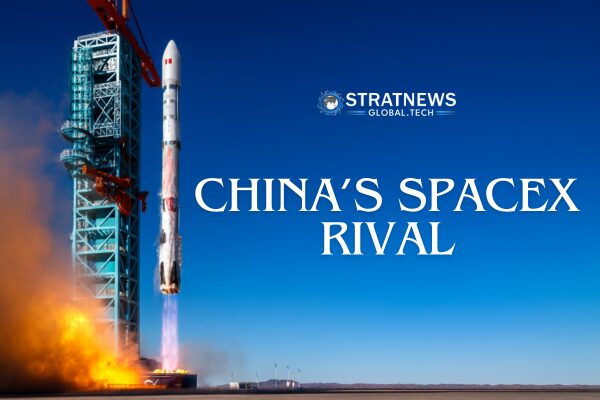
LandSpace Emerges as China’s Closest Rival to SpaceX
LandSpace has become China’s most advanced private rocket company, positioning itself as the nation’s answer to Elon Musk’s SpaceX. The Beijing-based firm is now betting its future on reusable rockets — a technology that could revolutionise space launches by significantly cutting costs and boosting launch frequency.
How LandSpace Began
Founded in 2015, LandSpace was among the first startups to enter China’s space sector after Beijing opened it to private investment a year earlier. The company has attracted billions of yuan in funding from investors such as venture capital firm HongShan (formerly Sequoia Capital China), property developer Country Garden’s investment arm, and the state-backed China SME Development Fund.
In 2020, LandSpace raised 1.2 billion yuan ($170 million) and secured an additional 900 million yuan in late 2023 from a government fund supporting advanced manufacturing. Local governments in Huzhou and Jiaxing have also invested in the company’s development.
LandSpace achieved a milestone in July 2023 when it launched Zhuque-2, the world’s first rocket powered by methane and liquid oxygen. The success placed it ahead of U.S. competitors, including SpaceX and Jeff Bezos’ Blue Origin, in that specific field of rocket propulsion.
Zhuque-3: China’s Reusable Rocket Hope
The company’s next project, Zhuque-3, represents a major leap forward. Constructed from stainless steel, the rocket is designed to carry 20–25 tonnes to low-Earth orbit — several times the capacity of its predecessor.
If Zhuque-3 can successfully lift off, return, and land intact, LandSpace would become the first private Chinese company — and only the third worldwide, after SpaceX and Blue Origin — to recover and reuse a large orbital-class booster.
This breakthrough would position LandSpace at the forefront of China’s efforts to make space launches more affordable and efficient. The Chinese government is encouraging private firms like LandSpace to compete for global satellite launch contracts and support its expanding constellation of communication and Earth-observation satellites.
Musk’s Reaction and Global Significance
Reusable rockets are key to lowering launch costs, but developing them requires highly complex engineering. SpaceX remains the only company that regularly achieves this with its Falcon 9 rocket. However, LandSpace’s Zhuque-3 has drawn global attention — even from Musk himself.
In October, Musk responded to a post on X about Zhuque-3’s design, suggesting the Chinese rocket could one day outperform the Falcon 9. His comment underscored LandSpace’s growing credibility as a true competitor in the commercial space sector.
Part of China’s Broader Space Strategy
Beijing views private firms like LandSpace as essential partners in accelerating innovation and strengthening national space capabilities. The government hopes that combining the agility of startups with the expertise of traditional state-owned space enterprises will drive the country’s next phase of expansion in low-Earth orbit.
In a statement following Zhuque-3’s maiden flight, LandSpace said the rocket would evolve “from recovery demonstrations to routine reuse,” aiming for an “airline-style operational cadence” that aligns with China’s broader space ambitions.
A successful Zhuque-3 programme would bolster the company’s fundraising prospects, including plans for a listing on Shanghai’s tech-focused Star Market. Such progress would not only enhance China’s commercial launch capabilities but also place LandSpace among the world’s top players in reusable rocket technology.
with inputs from Reuters