


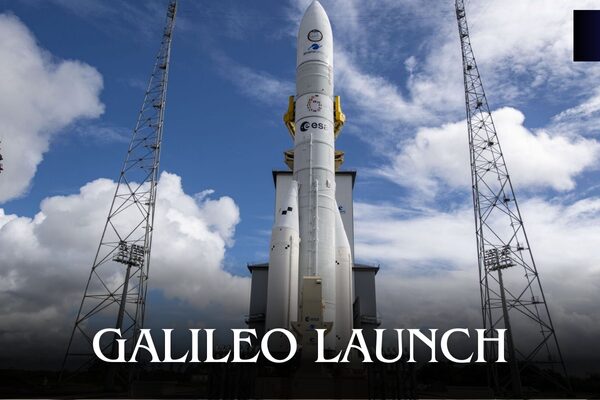
Arianespace Launches EU Galileo Satellites in Boost to Europe’s Space Autonomy
French launch provider Arianespace successfully placed two European Union satellites into orbit early on Wednesday, marking what officials described as a significant milestone in Europe’s pursuit of independent space access. The launch, carried out from Kourou in French Guiana at 2:01 a.m. local time (0501 GMT), underscored the EU’s growing investment in its own navigation and space infrastructure.
First Galileo Mission for Ariane 6
The mission, known as Galileo L14, marked the first use of the Ariane 6 launcher for the EU’s Galileo satellite navigation system. Operated by the European Space Agency (ESA), the programme aims to enhance the accuracy and resilience of Europe’s positioning and timing services, which compete directly with the U.S. GPS network.
During the launch, satellites SAT 33 and SAT 34 were carried into medium Earth orbit at an altitude of approximately 22,922 kilometres. Their separation from the launcher occurred three hours and 55 minutes after liftoff. According to the ESA, two more Galileo missions are scheduled in the near future, each set to deploy another pair of first-generation satellites.
Strengthening Europe’s Space Capabilities
ESA member states recently agreed to increase funding for space activities by about 30%, raising the total budget to €22.1 billion (£19 billion) for the next three years. This investment, up from €16.9 billion in the previous cycle, will support satellite launches, research programmes, and technological development across the continent.
The Galileo constellation, one of the world’s most advanced navigation networks, is central to the EU’s strategy for technological sovereignty. By expanding its own infrastructure, Europe seeks to reduce dependence on U.S. systems and bolster its ability to operate independently in areas critical to defence, security, and commerce.
Push for Strategic Independence
The renewed focus on space investment reflects Europe’s broader ambition to assert greater geopolitical and technological autonomy. The war in Ukraine has accelerated these efforts, prompting the EU to strengthen its capabilities across sectors once dominated by foreign powers.
A representative from Arianespace hailed the successful launch as “a new step in Europe’s independent access to space,” highlighting the Ariane 6’s role as a cornerstone of the continent’s future space transport strategy.
with inputs from Reuters