


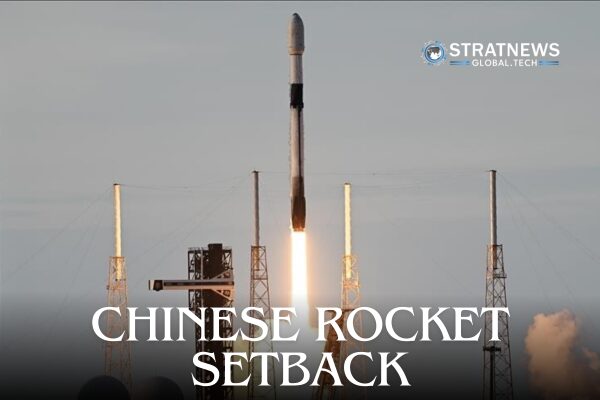
China’s bid to advance reusable rocket technology suffered a setback after the first stage of its Long March 12A failed to be recovered during its maiden flight on Monday, according to state media outlet Xinhua. The test marks Beijing’s latest effort to rival U.S. space leader SpaceX in reusable rocket technology.
Partial Success as Second Stage Reaches Orbit
While the first stage was lost, the rocket’s second stage successfully entered its planned orbit, Xinhua confirmed. The launch represented China’s second attempt to land and recover a rocket booster after flight—an essential milestone for achieving rocket reusability.
Over recent years, China has conducted numerous satellite launches using expendable rockets. However, the country has yet to achieve the technically demanding process of recovering and reusing a rocket’s first stage. This capability, long mastered by SpaceX, has transformed the economics of spaceflight by significantly reducing launch costs.
Beijing’s Push to Close the Gap with SpaceX
Elon Musk’s SpaceX revolutionised space access with its Falcon 9 rocket, which can land and be reused multiple times. This innovation underpins the company’s success in deploying thousands of Starlink satellites, giving it dominance in the low-Earth orbit (LEO) communications sector.
Chinese space firms, both private and state-owned, are now racing to match this capability. Reusable rockets are seen as key to lowering launch costs and making China’s satellite networks competitive with Starlink. Without mastering reusability, analysts say Beijing’s expanding LEO satellite constellations will struggle to compete on cost and scale.
Rivalry Among Chinese Rocket Firms Intensifies
Earlier this month, private rocket company Landspace also attempted to demonstrate full reusability with its Zhuque-3 launch. Although the booster failed to land successfully, the test highlighted the growing ambition of China’s private aerospace sector.
The Long March 12A was developed by the China Aerospace Science and Technology Corporation (CASC), a state-owned conglomerate employing more than 100,000 people and serving as the country’s main rocket contractor. By contrast, Landspace operates with fewer than 2,000 employees, positioning it as a nimble challenger in China’s increasingly competitive space industry.
with inputs from Reuters
Author
 View all posts
A multi-faceted professional with a diverse range of skills and experiences. He currently works as a Producer, Digital Marketer, and Journalist for several well-known media outlets, namely StratNewsGlobal, BharatShakti, and Interstellar. With a passion for storytelling and a keen eye for detail, Aditya has covered a wide range of topics and events across India, bringing a unique perspective to his work.
When he's not busy producing content, Aditya enjoys exploring new places and cuisines, having traveled extensively throughout India. He's also an avid writer and poet, often penning his thoughts and musings in his free time. And when he wants to unwind and relax, Aditya spends time with his two loyal companions, Zorro and Pablo, his beloved dogs.
Aditya's dynamic personality and varied interests make him a unique individual, always eager to learn and experience new things.