


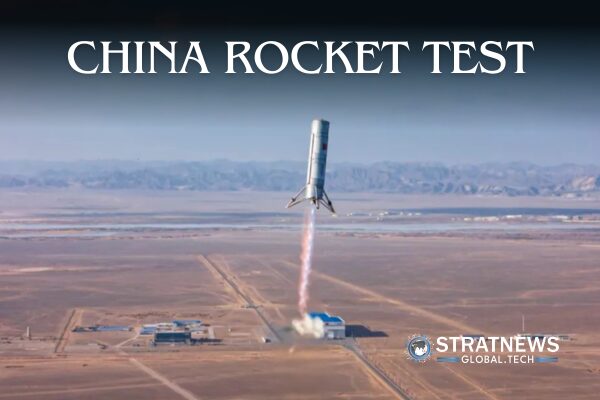
Deep in the vast desert of northwest China’s Gansu Province lies the recovery landing pad for China’s first reusable rocket, Zhuque-3. The remote site symbolises a significant step in the country’s push to build a competitive commercial space sector capable of matching global rivals.
Developed by Beijing based commercial aerospace firm LandSpace, the rocket is designed to provide a more cost effective way of launching large payloads into orbit. As a result, it could offer a crucial boost to China’s emerging private space industry, which is seeking to reduce costs while improving reliability.
Maiden flight marks major milestone
A key moment arrived on December 3, 2025, when Zhuque-3 lifted off on its maiden flight from the Jiuquan Satellite Launch Center. The launch marked another important breakthrough for China’s commercial spaceflight ambitions and demonstrated the growing capabilities of private rocket developers.
However, landing a reusable rocket safely is an exceptionally complex task. Although the mission progressed largely as planned, the returning first stage failed to slow down sufficiently during descent, resulting in an unsuccessful recovery attempt.
Dai Zheng, the test flight commander and an experienced engineer, said the outcome was expected at this stage. “This launch was actually China’s first attempt to recover the first stage of an orbital deployed launch vehicle,” he explained. “From the very beginning, we did not expect the maiden flight to be a guaranteed success. It was an experimental and exploratory endeavour.”
Learning through trial and error
As seen with companies such as SpaceX, founded by Elon Musk, bringing a rocket from supersonic speed to a controlled landing remains one of aerospace engineering’s greatest challenges. Even so, Dai said Zhuque-3’s first attempt came close enough to provide confidence for future missions.
Importantly, the rocket successfully reached its designated orbit. Dai noted that this achievement alone proves the vehicle can deliver satellites to customers. While reusability helps reduce costs, he said clients primarily care about accurate and reliable payload delivery.
Building experience and resilience
Dai’s career spans both state owned and private aerospace programmes. After graduating from Tsinghua University, he joined the China Academy of Launch Vehicle Technology and worked on the Long March rocket family. Later, he moved into the private sector as LandSpace emerged as a pioneer in China’s commercial spaceflight industry.
That journey included setbacks. In 2018, the Zhuque-1 rocket failed just before entering orbit. “This is the cruel side of aerospace, it is a matter of zero or one,” Dai said, adding that the failure underscored the need for independent control over key power systems.
Looking ahead with renewed support
LandSpace later made the strategic decision to develop liquid oxygen methane engines, balancing technical risk with long term commercial and environmental benefits. By 2022, a Zhuque rocket powered by these engines flew, and in 2023 the Zhuque-2 Y2 successfully reached orbit, making history.
In June 2025, policy updates at the Shanghai Stock Exchange STAR Market further strengthened the sector by opening new financing channels for high technology companies, including commercial aerospace.
As demand for satellite launches grows and global competition intensifies, engineers like Dai remain driven by resilience and ambition. He believes progress depends on accepting failure as part of innovation and continuing to push boundaries.
With inputs from Reuters

