


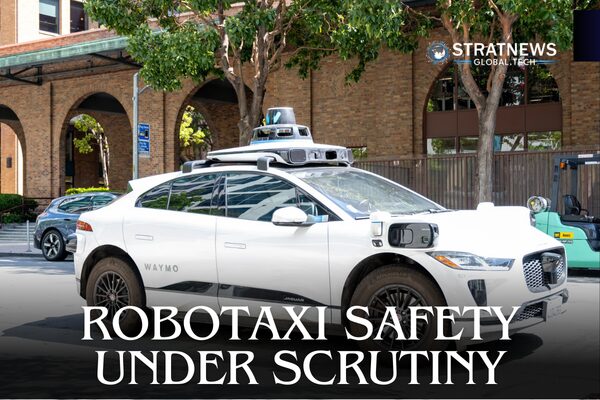
Waymo is set to defend its robotaxi safety record before the U.S. Senate Commerce Committee on Wednesday, following multiple federal investigations into incidents involving its self-driving vehicles.
The hearing comes after regulators began probing a case in which a Waymo vehicle struck a child near an elementary school, as well as separate incidents where robotaxis were reported to have driven past school buses while children were boarding or disembarking.
Waymo, owned by Alphabet, has argued that its autonomous technology performs significantly better than human drivers and should be supported by clearer national legislation to maintain U.S. leadership in the sector.
Waymo Points to Lower Crash Rates
In written testimony obtained by Reuters, Waymo Chief Safety Officer Mauricio Pena said the company’s autonomous vehicles had been involved in “10 times fewer serious injury or worse crashes” compared with human drivers operating under similar conditions and over the same distances.
Pena added that Waymo’s safety systems had recently undergone an independent audit, reinforcing the company’s claim that its technology reduces road risk rather than increases it.
Despite these assurances, both the National Highway Traffic Safety Administration (NHTSA) and the National Transportation Safety Board (NTSB) have opened formal investigations into Waymo’s operations, keeping robotaxi safety firmly in the regulatory spotlight.
Waymo currently operates paid robotaxi services in several U.S. cities, including Phoenix, San Francisco, Los Angeles, Austin, Atlanta and Miami, and says it has completed 200 million fully autonomous miles while providing around 400,000 rides each week.
China Cited as Strategic Rival
Waymo urged Congress to move faster on autonomous vehicle legislation, warning that delays could weaken America’s global competitiveness.
“The United States is locked in a global race with Chinese AV companies for the future of autonomous driving,” Pena said in his testimony, describing the sector as a trillion-dollar industry comparable in strategic importance to aviation and space exploration.
Similar arguments were echoed by Tesla, which also submitted testimony to lawmakers. Tesla’s vice-president of vehicle engineering, Lars Moravy, said outdated regulations were slowing innovation and risking ceding leadership to overseas rivals.
“If the U.S. does not lead in AV development, other nations — particularly China — will shape the technology, standards and global market,” Moravy warned.
Tesla Faces Its Own Safety Questions
Tesla’s appearance at the hearing comes amid ongoing scrutiny of its Full Self-Driving (FSD) system. NHTSA has opened multiple investigations into millions of Tesla vehicles following reports of crashes and traffic violations, including incidents in poor visibility conditions.
Tesla maintains that FSD requires active driver supervision and does not make vehicles fully autonomous. Moravy told lawmakers that Tesla vehicles using FSD travel an average of 5.1 million miles before a major collision, compared with a U.S. average of 699,000 miles.
Lawmakers remain divided over proposed legislation that would ease the deployment of autonomous vehicles without traditional human controls. While testing and commercial robotaxi services continue to expand, robotaxi safety remains a central concern shaping the future of self-driving transport in the United States.

