


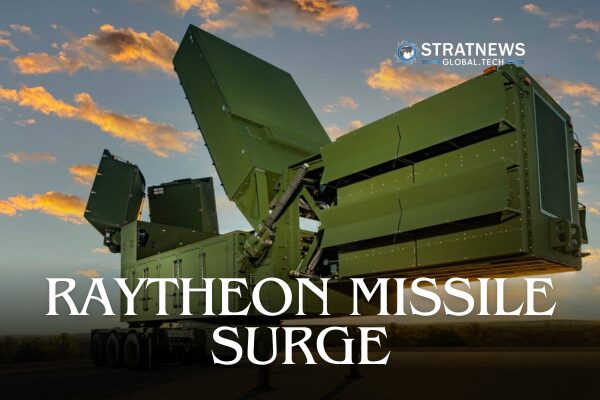
Pentagon Moves to Rebuild Depleted Stockpiles
Raytheon, a unit of RTX, has reached a seven-year agreement with the U.S. Department of Defense to significantly expand production of key missile systems, including Tomahawk cruise missiles, AMRAAM air-to-air missiles and ballistic missile interceptors. The company said the agreement is part of Washington’s broader effort to rebuild weapons stockpiles depleted by recent conflicts and sustained military support to allies.
The deal follows a series of similar long-term agreements between the administration of President Donald Trump and major U.S. defence contractors. These contracts are designed to lock in government demand over multiple years, giving manufacturers the confidence to invest heavily in new facilities, equipment and workforce expansion.
Sharp Increases Across Multiple Missile Systems
Under the agreement, Raytheon plans to raise annual production of Tomahawk cruise missiles from roughly 60 units per year for U.S. forces to as many as 1,000 annually over time. The sea-launched Tomahawk is a core capability of the U.S. Navy, providing long-range precision strike options from surface ships and submarines. A land-based variant, introduced more recently, extends similar strike capabilities to ground forces.
Production of AMRAAM missiles — the primary beyond-visual-range air-to-air weapon used by the U.S. Air Force and Navy — will rise to at least 1,900 units per year. Output of SM-3 Block IB and SM-3 Block IIA ballistic missile interceptors, which are designed to destroy short- and intermediate-range ballistic missiles in space, will increase by two to four times current levels.
SM-6 interceptor production will also grow sharply, rising to more than 500 units annually from about 125. The SM-6 provides the Navy with a multi-role capability, including air defence, anti-ship warfare and ballistic missile defence.
Long-Term Contracts Signal Strategy Shift
RTX said the agreements use a “collaborative funding approach” that preserves near-term cash flow while enabling long-term investments in production capacity. Manufacturing will take place at Raytheon facilities in Tucson, Arizona; Huntsville, Alabama; and Andover, Massachusetts.
The deal comes as the Trump administration seeks to pressure defence firms to accelerate weapons delivery. In January, Trump signed an executive order linking dividends, share buybacks and executive compensation to delivery timelines, creating new uncertainty around capital returns.
RTX chief executive Chris Calio said the agreements represent a new model for cooperation between government and industry to speed up delivery of critical defence technologies. No financial value for the contracts was disclosed.
The Raytheon framework follows similar seven-year agreements signed by Lockheed Martin, including plans to quadruple annual production of THAAD interceptors and sharply expand Patriot PAC-3 missile output.