


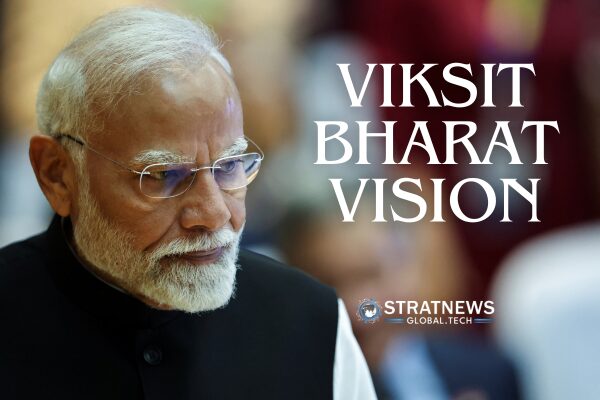
Prime Minister Narendra Modi addressed the first post budget webinar of the 2026 to 27 series on the theme Technology Reforms and Finance for Viksit Bharat. He stated that this year’s Union Budget sets a clear roadmap for Viksit Bharat. Moreover, he described the budget as a policy blueprint rather than a short term trading document. Therefore, he urged all stakeholders to work together to achieve the goal of a developed India by 2047.
Budget As A Roadmap For Long Term Growth
The Prime Minister emphasised that the budget must be judged by tangible outcomes. For instance, he highlighted infrastructure expansion, easier credit flow, improved ease of doing business, and greater transparency in governance. Additionally, he noted that the budget aims to make life easier for citizens while creating new opportunities. He asserted that decisions in these areas provide permanent strength to the economy.
Furthermore, he stressed that no budget stands alone. Instead, he described nation building as a continuous journey. Therefore, every reform, allocation, and policy change must align with the larger objective of building Viksit Bharat by 2047. He maintained that each budget represents another decisive step towards that goal.
Reform Express And Delivery Excellence
The Prime Minister pointed out that a quarter of the 21st century has already passed. Consequently, he said the country now stands at a crucial point in its development journey. He credited India’s steady progress to conviction driven reforms rather than chance. Over the past decade, the government simplified processes, improved the ease of doing business, expanded technology led governance, and strengthened institutions. As a result, he remarked that the nation continues to ride what he called the Reform Express.
However, he underlined that strong intent alone does not guarantee success. Instead, he called for relentless focus on delivery excellence. He insisted that stakeholders must measure reforms by their impact on the ground rather than by announcements. Moreover, he encouraged the integration of AI, blockchain, and data analytics to increase speed, transparency, and accountability in public services. At the same time, he stressed the importance of monitoring outcomes through effective grievance redressal systems.
Infrastructure And Public Capital Expenditure
The Prime Minister reiterated that the government has maintained a strong focus on infrastructure over the past decade. He stated that India’s development depends on the creation of solid assets such as highways, railways, ports, digital networks, and power systems. These assets, he explained, will generate productivity for decades. Therefore, the government continues to increase public capital expenditure.
He noted that public capital expenditure has risen significantly over the last eleven years. This increase, he said, sends a clear signal to the private sector to expand its participation in infrastructure and innovation. Consequently, he called on industry and financial institutions to contribute fresh energy and ideas. He urged them to develop innovative financing models and strengthen collaboration in emerging sectors.
In addition, he emphasised the need to improve project sanction methods and appraisal quality. He recommended strict cost benefit analysis and life cycle costing to reduce waste and prevent delays. Thus, he argued that careful planning will enhance efficiency and deliver better results.
Strengthening Financial Framework And Investment Climate
Addressing the financial framework, the Prime Minister stated that the government is simplifying the foreign investment system. He said these steps will make the framework more predictable and investor friendly. Furthermore, he highlighted efforts to deepen bond markets and simplify bond trading. He described these reforms as essential to long term growth.
He also stressed the need to deepen liquidity and introduce new instruments to manage risk effectively. Consequently, he urged stakeholders to learn from global best practices. He maintained that a stronger bond market and transparent foreign investment regime will attract sustained foreign capital.
Moreover, he proposed the idea of a Reform Partnership Charter. He described it as a shared commitment between government, industry, financial institutions, and academia. He clarified that post budget webinars now focus on implementing the budget quickly and simply rather than debating its provisions.
Collective Effort For Viksit Bharat
The Prime Minister emphasised that policy can create a framework, but active participation determines success. Therefore, he called upon industry to step forward with fresh investment and innovation. At the same time, he urged financial institutions and analysts to offer practical solutions and strengthen market confidence. He asserted that when government, industry, and knowledge partners move together, reforms transform into results and announcements turn into achievements on the ground.
Finally, he encouraged all stakeholders to seize the opportunities presented by the budget. He expressed confidence that sincere deliberations and collective action will accelerate implementation. Consequently, he stated that such collaboration will open the doors to a vibrant economy and bring the vision of Viksit Bharat closer to reality.
With inputs from PIB