


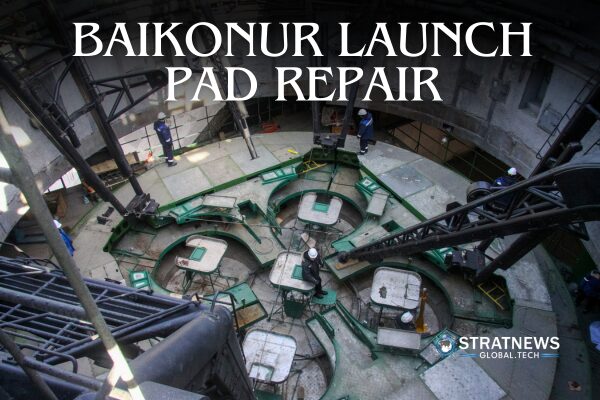
Russia’s space agency confirmed on Tuesday that engineers have completed repairs at a damaged launch pad at the Baikonur cosmodrome in Kazakhstan, according to Russian state media. The site plays a critical role in Moscow’s space programme.
The launch pad sustained heavy damage in November. A Soyuz MS 28 spacecraft carrying two Russian cosmonauts and one NASA astronaut had blasted off from the facility at the time. The force of the launch left the structure in need of urgent restoration.
RIA state news agency cited Roscosmos as confirming that operations will resume shortly. The first launch from the restored pad is scheduled for March 22. Therefore, the repair work ensures continuity in upcoming missions.
Strategic Importance of Launch Pad 31
Although Russia operates other cosmodromes within its own territory, Baikonur remains central to its space ambitions. Moreover, while the Kazakhstan site contains multiple launch facilities, the damaged pad, known as launch pad number 31, holds unique operational value.
It serves as the only pad capable of handling launches of the Soyuz rocket and its crew capsule. In addition, it supports the Progress cargo vehicle, which transports supplies without crew. Both vehicles remain vital for missions linked to the International Space Station.
Consequently, any disruption at this specific pad directly affects Russia’s ability to maintain its commitments in orbit. The completion of repairs therefore restores a key logistical link in ongoing space operations.
Continued Role in ISS Missions
The Soyuz system continues to carry both Russian and international astronauts. Furthermore, the Progress vehicle ensures regular delivery of equipment, fuel, and provisions. Without launch pad 31, these operations would face serious constraints.
While alternative facilities exist, none can fully replicate the technical compatibility of this site. As a result, Roscosmos prioritised swift repairs. The March 22 launch will mark a return to normal scheduling.
The restoration underscores Baikonur’s enduring significance within Russia’s space framework. Despite evolving geopolitical conditions, operational cooperation related to the International Space Station continues through established channels.
With inputs from Reuters