


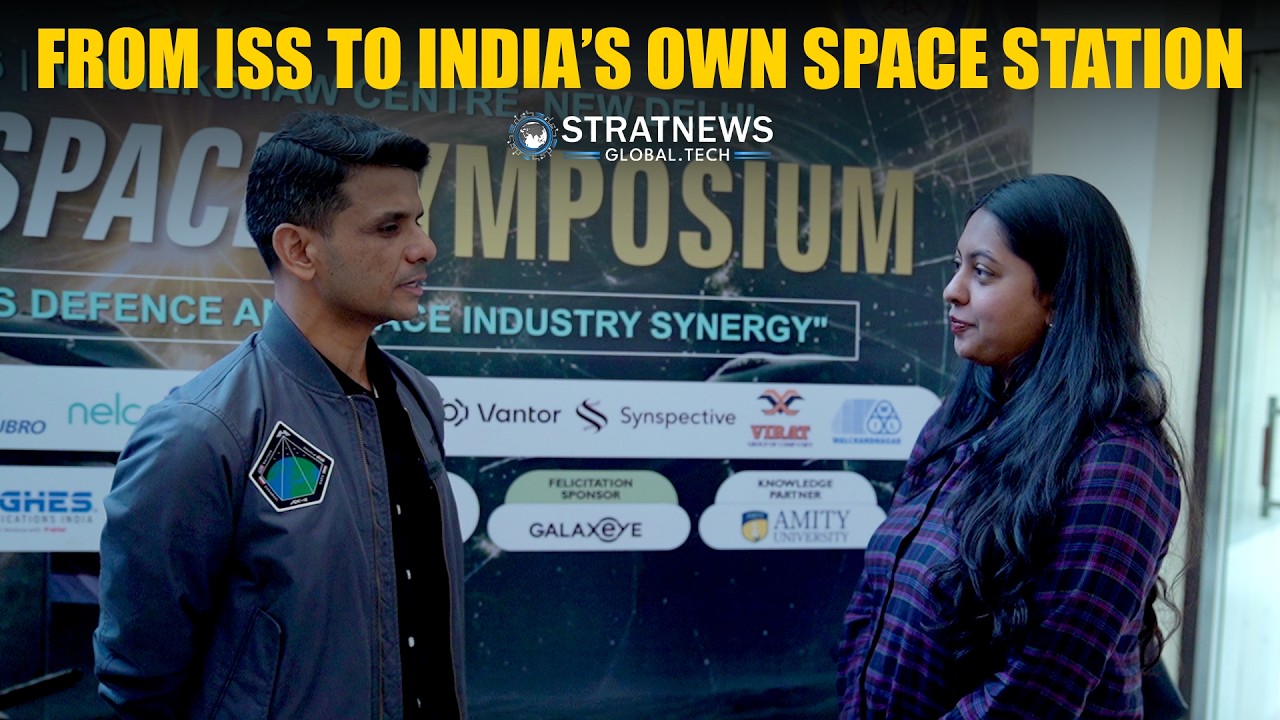
Shubhanshu Shukla Shares ISS Insights at DefSpace
India’s first astronaut to visit the International Space Station, Shubhanshu Shukla, has delivered a rare and personal account of life in orbit. This time, however, he spoke on stage at a major defence-space forum rather than from space. His appearance highlighted the growing importance of astronauts in shaping national space strategy.
Speaking after his 18-day mission aboard the Axiom-4 Mission, Shukla described the journey as transformative. Moreover, he reflected on the profound perspective gained from viewing Earth without visible borders. This experience, he noted, creates a philosophical shift that reshapes how one understands humanity and conflict. Consequently, his insights resonated strongly with an audience focused on defence and space integration.
His participation also signals a broader change. Astronauts are no longer limited to exploration roles. Instead, they are increasingly contributing to strategic discussions that influence national policy and technological direction.
Microgravity Research and Human Experience
During the interview, Shukla combined scientific explanation with engaging storytelling. He addressed light-hearted speculation about food in space while sharing that Indian dishes such as moong dal halwa and aamras were appreciated by fellow crew members. At the same time, he maintained focus on the mission’s scientific achievements.
Notably, he conducted seven microgravity experiments during his time aboard the station. These experiments demonstrated how orbital conditions enable research that cannot occur under Earth’s gravity. Therefore, such missions hold significant value for advancing scientific knowledge.
Furthermore, these efforts directly support India’s long-term ambitions in human spaceflight. According to Shukla, missions like his form the foundation for the planned Bharatiya Antariksh Station. As a result, each experiment contributes to a larger roadmap for sustained presence in space.
Training, Discipline, and Strategic Relevance
Shukla’s journey to space reflects years of intensive training and preparation. He trained at the Yuri Gagarin Cosmonaut Training Center and the NASA Johnson Space Center, combining global expertise with Indian discipline. Consequently, his experience represents a blend of international collaboration and national capability building.
At DefSpace, this background gained additional strategic significance. His training demonstrated that astronaut programmes extend beyond science. They also serve as investments in national readiness and technological strength.
Human spaceflight develops several critical competencies. These include decision-making under pressure, advanced systems integration, and endurance during long missions. Additionally, such programmes enhance coordination across multiple operational domains. Therefore, these capabilities align closely with defence requirements in the evolving space domain.
DefSpace Drives Capability and Integration
The timing of Shukla’s interview at DefSpace underscores its importance. As India accelerates its defence-space integration, real-world experiences from orbit are shaping priorities. Consequently, policymakers and industry leaders are drawing practical lessons from missions like his.
The DefSpace platform continues to emphasise rapid translation of research into operational systems. In addition, it promotes indigenous technology development and stronger collaboration between the armed forces and private sector. These efforts aim to build resilient and secure space-based infrastructure.
Shukla’s mission serves as a practical example of what India must expand. By combining human spaceflight, scientific innovation, and strategic planning, the country is working towards a more integrated and capable space ecosystem.
India is steadily transitioning from milestone achievements to system-level development. His journey from fighter pilot to astronaut and now a strategic voice reflects this evolution. As India prepares for its own space station and deeper defence integration, such experiences will play a defining role in shaping future capabilities.

