


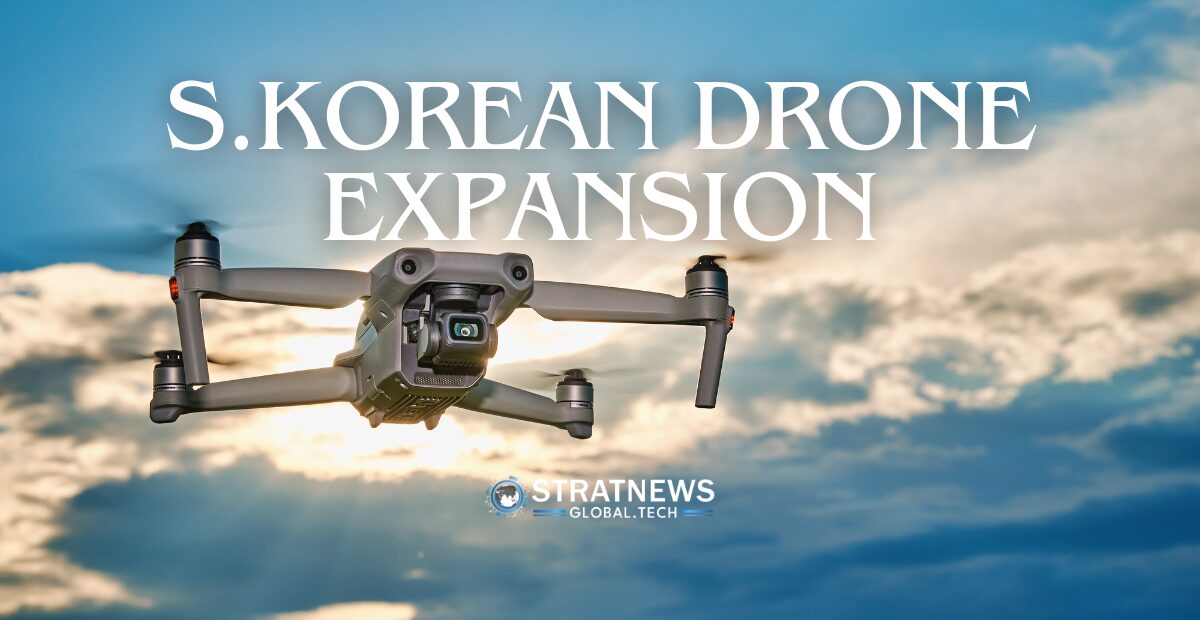
South Korea Expands Drone Programme With 500,000 ‘Drone Warriors’ to Counter North Korea
South Korea has unveiled an ambitious plan to rapidly expand its drone and counter-drone capabilities, aiming to strengthen its military readiness against North Korea while adapting to the changing nature of modern warfare. The Defence Ministry announced that it will train 500,000 “drone warriors” and distribute tens of thousands of unmanned systems to frontline units over the coming years.
The initiative also includes plans to manufacture 110,000 drones by 2029 for deployment across the army, navy, air force and marine corps. The government intends to make drones a standard piece of equipment for individual soldiers rather than a specialised asset reserved for select units.
Drones to Become Standard Military Equipment
Defence Minister Ahn Gyu-back said drones should become a universal combat tool across the armed forces. He described them as a “second personal weapon” that every soldier should be able to operate during military operations.
In addition, Ahn confirmed that all drone systems would be built using entirely domestically produced components. The decision reflects growing security concerns over reliance on foreign-made parts, particularly those sourced from China.
The announcement comes as both South Korea and North Korea continue accelerating investments in unmanned military technology. Recent conflicts in Ukraine and the Middle East have demonstrated the growing importance of low-cost drones in surveillance, reconnaissance and precision strikes.
Ahn said the widespread use of inexpensive drones is fundamentally reshaping modern warfare, adding that North Korea is also expanding its unmanned capabilities, increasing potential threats to both military and civilian infrastructure in the South.
Counter-Drone Defences to Be Strengthened
Alongside expanding offensive drone capabilities, South Korea plans to enhance its counter-drone defences. The military will increase the deployment of laser weapons and high-power microwave systems designed to detect and neutralise hostile drones.
Furthermore, each branch of the armed forces will receive greater authority to conduct surveillance and strike missions using drones. The new approach will reduce reliance on a centralised command structure and improve operational flexibility.
A senior defence official also revealed plans to acquire more than 20,000 low-cost expendable drones. The military will introduce AI-powered drone swarms and loitering munitions to improve battlefield effectiveness and support future combat operations.
Faster Procurement and Domestic Industry Support
The Defence Ministry said it will reform procurement rules to accelerate the adoption of civilian drone technologies. At the same time, the military aims to become a major purchaser of domestically developed systems, helping to strengthen South Korea’s drone manufacturing industry.
Officials believe closer cooperation between the defence sector and private industry will encourage innovation while reducing dependence on imported technology.
Military Reorganisation After Political Controversy
The expansion follows political controversy surrounding military drone operations under the previous administration. Earlier this month, a South Korean court sentenced former President Yoon Suk Yeol to 30 years in prison over a military drone incursion into North Korea that prosecutors alleged was intended to justify his 2024 martial law bid.
Following those allegations, President Lee Jae Myung’s government dismantled the previous drone operations command. The new strategy replaces it with an organisation focused on policy, capability development and support, while operational responsibility will rest with individual military services.
Addressing Demographic Challenges
South Korea’s renewed emphasis on drones also reflects broader demographic challenges facing its armed forces. With the country’s declining population reducing the pool of available military personnel, defence planners increasingly view automation and unmanned systems as essential to maintaining future combat capability.
By expanding both offensive and defensive drone technology while supporting domestic production, the government aims to modernise the military and prepare for evolving security challenges across the Korean Peninsula.
With inputs from Reuters