


SpaceX Launches Satellite Servicing Mission with 10-Foot Robotic Arms
SpaceX has launched a pioneering satellite servicing mission designed to extend the operational lives of ageing spacecraft in geostationary orbit. A Falcon 9 rocket lifted off from Cape Canaveral Space Force Station in Florida on July 21 at 5:15 pm EDT (July 22, 2:45 am IST), carrying Northrop Grumman’s Mission Robotic Vehicle (MRV) and three Mission Extension Pods (MEPs).
Operated by SpaceLogistics, a subsidiary of Northrop Grumman, the MRV-MEP mission marks the first deployment of the company’s satellite life-extension pods. The mission aims to demonstrate a new approach to in-orbit servicing that can help operators keep satellites functioning for several additional years.
Robotic Arms to Install Satellite Extension Pods
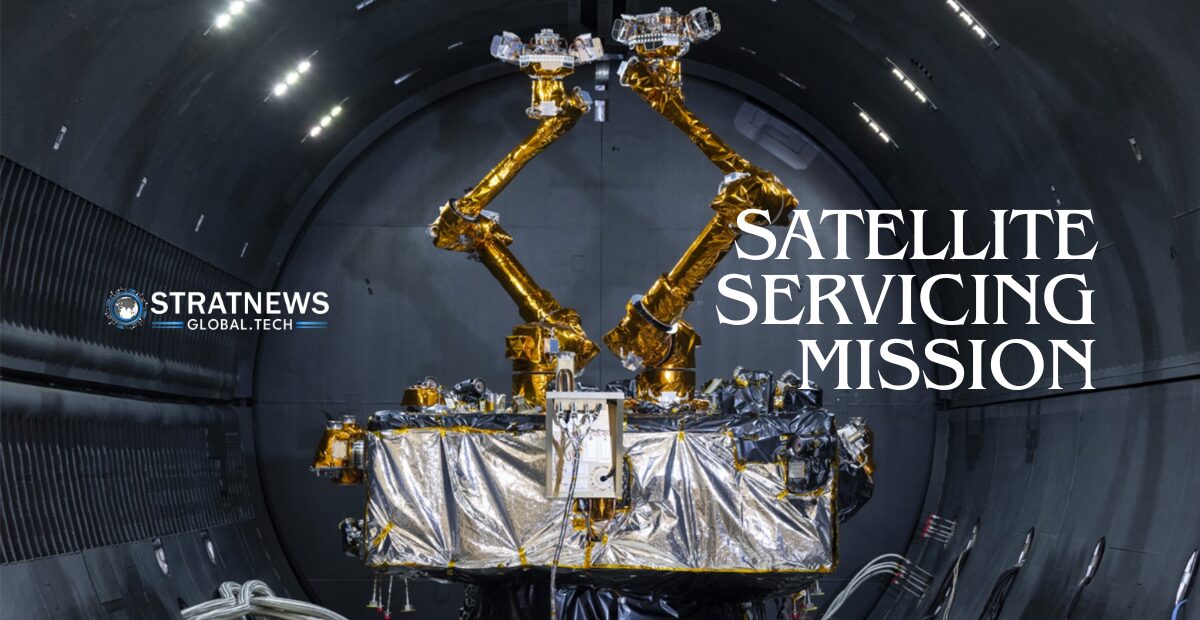
The MRV is travelling to geostationary orbit, approximately 35,786 kilometres above Earth, where many communications, weather and surveillance satellites operate. The spacecraft is equipped with two robotic arms measuring 10 feet each, developed by the US Naval Research Laboratory.
Once in orbit, the robotic vehicle will use these arms to attach the three Mission Extension Pods to separate client satellites. The pods function as propulsion units, providing orbit control and momentum management that can extend a satellite’s operational life by up to eight years.
Australian satellite operator Optus has reserved one of the extension pods, while Intelsat will use the remaining two for its satellites.
Built for Future In-Orbit Servicing
Unlike previous satellite servicing missions, the MRV and the Mission Extension Pods will travel independently before meeting in geostationary orbit. The robotic vehicle will capture each pod, transport it to the designated satellite and attach it in space.
After completing the installation of all three pods, the MRV will remain in orbit to support future servicing missions as additional extension pods become available.
Beyond deploying the pods, the spacecraft has been designed to relocate, inspect, repair and upgrade satellites already operating in orbit. It also carries a Passive Refuelling Module, the first refuelling interface standard approved by the US Space Force. This system is intended to allow the robotic vehicle itself to be refuelled in space, enabling longer-term operations.
Mission Builds on Earlier Servicing Programme
The latest mission builds on Northrop Grumman’s Mission Extension Vehicle (MEV) programme. MEV-1, launched in 2019, became the world’s first commercial satellite servicing spacecraft after docking with Intelsat 901 in 2020. MEV-2 followed in 2020 and later docked with Intelsat 10-02 in 2021.
However, the new MRV introduces a different approach. Instead of using a single servicing spacecraft to dock directly with one satellite, it employs reusable robotic servicing capable of deploying multiple extension pods across different spacecraft.
Final Flight for Veteran Falcon 9 Booster
The Falcon 9 upper stage deployed the Mission Robotic Vehicle approximately 35.5 minutes after liftoff. It then released the three Mission Extension Pods at intervals of around 10 minutes.
Because the mission required additional performance to reach geosynchronous transfer orbit, SpaceX did not attempt to recover the Falcon 9 first-stage booster. The booster completed its 32nd and final flight after previously supporting missions including CRS-24, Eutelsat HOTBIRD 13F, OneWeb 1, SES-18, SES-19 and 27 Starlink launches.

