


Close Menu
Stratnews GlobalStratnews Global
    Facebook X (Twitter) Instagram
    Trending
    • AI Takes Center Stage in India’s Space Sector Ahead of AI Summit
    • Railways Strengthens Cybersecurity, Ensuring Smooth Tatkal Booking
    • National Biodiversity Authority Secures ₹2.40 Crore Through ABS Contributions
    • Failed Supernova Black Hole Formation Observed in Andromeda
    • Eutelsat, Starlink Rival Revenue Beats Forecasts
    • Mexico World Cup Counter-Drone Systems Unveiled for 2026 Tournament
    • Ariane 6 Amazon Satellite Launch Deploys 32 Spacecraft
    • GE Aerospace Singapore Automation Targets Repair Bottlenecks
    Stratnews GlobalStratnews Global
    Write for Us
    Monday, February 16
    • Space
    • Science
    • AI and Robotics
    • Industry News
    Stratnews GlobalStratnews Global
    Home » AI System Successfully Adjusts Satellite in Orbit

    AI System Successfully Adjusts Satellite in Orbit

    Aditya LenkaBy Aditya LenkaNovember 18, 2025 AI and Robotics No Comments3 Mins Read
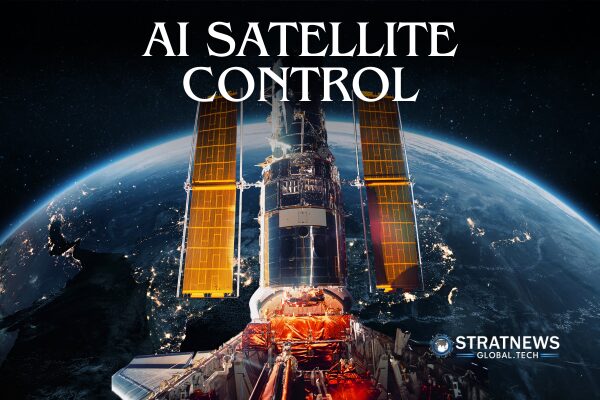
    AI satellite control

    AI Controls Satellite Orientation for the First Time in Space

    For the first time, scientists have successfully used artificial intelligence to autonomously control the orientation of a satellite in orbit — a breakthrough that could revolutionise spacecraft operations and safety in space.

    A Major Leap in Satellite Autonomy

    The experiment, led by researchers at Julius-Maximilians-Universität Würzburg (JMU) in Germany, demonstrated how an AI-driven system can independently adjust a satellite’s attitude — the term used to describe its orientation relative to space. Normally, these manoeuvres are handled by human operators or pre-programmed routines, both of which require time, resources and prior knowledge of possible scenarios.

    The project, known as the In-Orbit Demonstrator for Learning Attitude Control (LeLaR), showcased the first real-world instance of a satellite changing its own orientation without human input. Using a nanosatellite called InnoCube, the system applied deep reinforcement learning, a branch of machine learning that enables software to learn through trial and error.

    Testing AI in Orbit

    Before being deployed, the AI was trained using a high-fidelity simulator at JMU to prepare it for real orbital conditions. Once in orbit, researchers tested the system by setting a target attitude for the satellite and allowing it to adjust itself. Mechanical reaction wheels — the devices that physically rotate a satellite — were controlled directly by the AI.

    The first in-orbit test took place on 30 October, when the InnoCube successfully achieved the desired orientation autonomously. The team repeated the test several times, confirming consistent results.

    “This successful test marks a major step forward in the development of future satellite control systems,” said Tom Baumann, a research assistant at JMU and a member of the LeLaR project. “It shows that AI can not only perform in simulations but also execute precise, autonomous manoeuvres under real conditions.”

    Transforming Satellite Operations

    Attitude control is critical for satellite missions, ensuring instruments point in the right direction, maintaining thermal balance and enabling navigation adjustments. Traditionally, such control requires extensive ground communication, which can delay responses and increase costs. The new system could help satellites make instant decisions in complex or unexpected situations, reducing human oversight and operational expenses.

    While other agencies have used AI to automate satellite tasks — such as NASA’s dynamic camera targeting or the US Naval Research Laboratory’s Autosat project — none have previously demonstrated full motion control in orbit.

    Professor Sergio Montenegro, who leads aerospace information technology at JMU, described the achievement as a pivotal moment. “It’s a major step towards full autonomy in space,” he said. “We are at the beginning of a new class of satellite control systems — intelligent, adaptive and self-learning.”

    This advancement opens the door to the next generation of fully autonomous spacecraft, capable of managing themselves with minimal human intervention — a vital step for future deep-space exploration.

    with inputs from Reuters

    Author

    • Aditya Lenka
      Aditya Lenka

      A multi-faceted professional with a diverse range of skills and experiences. He currently works as a Producer, Digital Marketer, and Journalist for several well-known media outlets, namely StratNewsGlobal, BharatShakti, and Interstellar. With a passion for storytelling and a keen eye for detail, Aditya has covered a wide range of topics and events across India, bringing a unique perspective to his work.When he's not busy producing content, Aditya enjoys exploring new places and cuisines, having traveled extensively throughout India. He's also an avid writer and poet, often penning his thoughts and musings in his free time. And when he wants to unwind and relax, Aditya spends time with his two loyal companions, Zorro and Pablo, his beloved dogs.Aditya's dynamic personality and varied interests make him a unique individual, always eager to learn and experience new things.

      View all posts
    Featured
    Share. Facebook Twitter Pinterest LinkedIn Tumblr Email Reddit Telegram WhatsApp
    Aditya Lenka
    Aditya Lenka

      A multi-faceted professional with a diverse range of skills and experiences. He currently works as a Producer, Digital Marketer, and Journalist for several well-known media outlets, namely StratNewsGlobal, BharatShakti, and Interstellar. With a passion for storytelling and a keen eye for detail, Aditya has covered a wide range of topics and events across India, bringing a unique perspective to his work.When he's not busy producing content, Aditya enjoys exploring new places and cuisines, having traveled extensively throughout India. He's also an avid writer and poet, often penning his thoughts and musings in his free time. And when he wants to unwind and relax, Aditya spends time with his two loyal companions, Zorro and Pablo, his beloved dogs.Aditya's dynamic personality and varied interests make him a unique individual, always eager to learn and experience new things.

      Keep Reading

      AI Takes Center Stage in India’s Space Sector Ahead of AI Summit

      Railways Strengthens Cybersecurity, Ensuring Smooth Tatkal Booking

      National Biodiversity Authority Secures ₹2.40 Crore Through ABS Contributions

      Failed Supernova Black Hole Formation Observed in Andromeda

      Eutelsat, Starlink Rival Revenue Beats Forecasts

      Mexico World Cup Counter-Drone Systems Unveiled for 2026 Tournament

      Add A Comment
      Leave A Reply Cancel Reply

      Anti Drone System (CUAS)
      Latest Posts

      AI Takes Center Stage in India’s Space Sector Ahead of AI Summit

      February 15, 2026

      Railways Strengthens Cybersecurity, Ensuring Smooth Tatkal Booking

      February 13, 2026

      National Biodiversity Authority Secures ₹2.40 Crore Through ABS Contributions

      February 13, 2026

      Failed Supernova Black Hole Formation Observed in Andromeda

      February 13, 2026

      Eutelsat, Starlink Rival Revenue Beats Forecasts

      February 13, 2026

      Mexico World Cup Counter-Drone Systems Unveiled for 2026 Tournament

      February 13, 2026

      Ariane 6 Amazon Satellite Launch Deploys 32 Spacecraft

      February 13, 2026

      GE Aerospace Singapore Automation Targets Repair Bottlenecks

      February 13, 2026

      Why Nirmala Sitharaman’s 9th Budget Is A Turning Point

      February 12, 2026

      Iron Mountain AI Data Center Revenue Forecast Beats Estimates

      February 12, 2026

      Subscribe to News

      Get the latest sports news from NewsSite about world, sports and politics.

      • Astronomical Events
      • Space Missions
      • Industry News
      • Science
      StratNewsGlobal Tech
      Facebook X (Twitter) Instagram LinkedIn YouTube
      © 2026 StratNews Global, A unit of BharatShakti Communications LLP
      • About Us
      • Contributors
      • Copyright
      • Contact
      • Write for Us

      Type above and press Enter to search. Press Esc to cancel.