


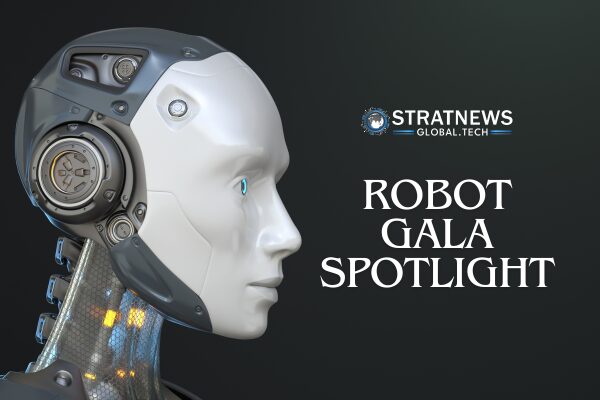
China’s CCTV Spring Festival Gala Highlights Humanoid Robot Ambitions
China’s most watched television programme, the annual CCTV Spring Festival gala, will air later on Monday as a high profile showcase for the country’s industrial strategy. This year, the event will underline Beijing’s ambition to dominate humanoid robots and shape the future of manufacturing.
Four rising humanoid robot startups, Unitree Robotics, Galbot, Noetix and MagicLab, will present their latest products during the broadcast. The gala stands as a cultural touchstone in China, comparable in scale and influence to the Super Bowl in the United States. Consequently, companies that secure a place on its stage gain instant national exposure.
Humanoid Robot Startups Take Centre Stage
The excitement surrounding China’s humanoid robot startups has intensified in recent months. Major players, including AgiBot and Unitree, are preparing for initial public offerings this year. At the same time, domestic artificial intelligence startups have released a wave of advanced models during the lucrative nine day Lunar New Year holiday.
Last year’s gala captured widespread attention when 16 full size Unitree humanoid robots danced in unison with human performers, twirling handkerchiefs in synchronised routines. Shortly afterwards, Unitree’s founder met President Xi Jinping at a high profile technology symposium, the first such event since 2018.
Over the past year, Xi has met five robotics startup founders. In comparison, he met four electric vehicle entrepreneurs and four semiconductor founders during the same period. Therefore, the emerging robotics sector has gained unusual visibility at the highest political level.
The CCTV show drew 79 per cent of live television viewership in China last year. For decades, organisers have used it to highlight Beijing’s technological ambitions, including advances in space exploration, drones and robotics. According to Georg Stieler, Asia managing director and head of robotics and automation at consultancy Stieler, the gala offers a direct pipeline from industrial policy to prime time spectacle. Companies that appear often receive government orders, investor interest and improved market access.
China’s Strength In AI And Manufacturing
Beyond eye catching displays of robots running marathons or performing kung fu kicks, China has placed robotics and artificial intelligence at the core of its next generation AI plus manufacturing strategy. Officials believe automation will boost productivity and offset pressure from an ageing workforce.
Beijing based technology analyst Poe Zhao said humanoids combine many of China’s advantages into one narrative. They showcase AI capability, a strong hardware supply chain and ambitious manufacturing goals. Moreover, their human like form makes them easy for both the public and policymakers to understand. In an early stage market, Zhao added, attention itself becomes a valuable resource.
China accounted for 90 per cent of the roughly 13,000 humanoid robots shipped worldwide last year, according to research firm Omdia. Meanwhile, Morgan Stanley expects China’s humanoid sales to more than double to 28,000 units this year.
Elon Musk has said he sees Chinese companies as Tesla’s biggest competitors as it shifts towards embedded AI and its Optimus robot. However, real world deployments remain limited and often rely on support. For example, Galbot holds a contract to deploy its robots in factories run by battery maker CATL. In addition, UBTech secured a government contract to send humanoid robots to work in logistics and support roles at a border crossing with Vietnam.
Chinese startups continue to refine the artificial intelligence models that power humanoid “brains”. They collect real world data to improve environmental awareness and natural language understanding. Analysts will watch Monday’s performance closely for advances in multi robot coordination, fault recovery and delicate hand movements such as fine object manipulation.
While a backflip may impress viewers, experts note that carefully gripping a plastic cup of water demands far greater technical precision.
With inputs from Reuters

