


Close Menu
Stratnews GlobalStratnews Global
    Facebook X (Twitter) Instagram
    Trending
    • China Robot Industry Expands With Data Factories And Schools
    • India Throws Down The Trade Gauntlet
    • Japan Introduces AI Robot Monk To Aid Buddhist Institutions
    • Binance Targets Greece For European Expansion
    • Pentagon Anthropic Dispute Escalates Over AI Safeguards
    • DeepSeek V4 Skips US Chipmakers In Performance Shift
    • OpenAI Hires Pang In Escalating Silicon Valley AI Talent War
    • Sorry, Says AI Agent After Wiping Meta Staffer’s Inbox
    Stratnews GlobalStratnews Global
    Write for Us
    Friday, February 27
    • Space
    • Science
    • AI and Robotics
    • Industry News
    Stratnews GlobalStratnews Global
    Home » IMF: AI to Boost Global GDP While Emissions Rise from Data Centre Expansion

    IMF: AI to Boost Global GDP While Emissions Rise from Data Centre Expansion

    Kanika SharmaBy Kanika SharmaApril 23, 2025 AI and Robotics No Comments3 Mins Read
    IMF

    IMF: AI Economic Boost to Outweigh Carbon Emissions Costs by 2030

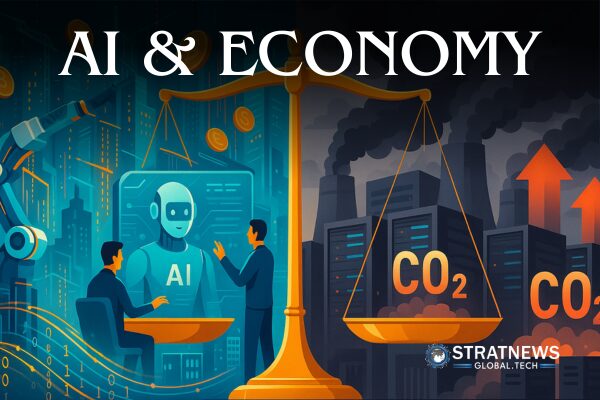
    The International Monetary Fund (IMF) has projected that artificial intelligence (AI) will significantly boost global economic output over the next decade. According to its latest report, AI is expected to increase global GDP by around 0.5% annually between 2025 and 2030. These gains are anticipated to surpass the environmental costs caused by rising carbon emissions from energy-intensive data centres.

    Global Gains with Uneven Distribution

    The IMF’s findings, presented during its spring meeting in Washington, stress that while AI will deliver strong economic benefits, these will not be evenly shared across countries. The report, titled “Power Hungry: How AI Will Drive Energy Demand”, highlights the need for governments and businesses to adopt inclusive and sustainable strategies.

    Despite concerns over electricity prices and greenhouse gas emissions, the economic upside of AI is seen as dominant. Still, the IMF warned that even modest increases in emissions contribute to the global climate challenge.

    AI to Drive Energy Demand Surge

    One of the key issues raised is the rising demand for electricity. AI development requires significant computing power, most of which is housed in data centres. The report cited northern Virginia as a major hub, where data centre floor space already matches eight Empire State Buildings.

    Global electricity demand linked to AI could triple by 2030, reaching 1,500 terawatt-hours (TWh). This figure is equivalent to India’s current electricity usage and exceeds expected electric vehicle consumption over the same period by 50%.

    Whether this increase results in high emissions will depend largely on the energy sources used. Tech firms have pledged to transition to renewable energy, but the pace and scale of this shift remain uncertain.

    Balancing Innovation and Sustainability

    The IMF estimates that the cumulative increase in emissions from AI could reach 1.2% by 2030 under existing energy policies. Greener approaches could cap this rise at 1.3 gigatonnes. Using a $39 per tonne cost of carbon, this would equate to a financial burden of $50.7 to $66.3 billion—far less than the GDP gains expected from AI.

    Experts argue that AI’s real environmental impact will depend on how it is applied. Used wisely, AI could promote energy efficiency and speed up progress in low-carbon sectors like transport and agriculture.

    Roberta Pierfederici from the Grantham Research Institute noted that AI might even reduce total emissions if directed towards sustainable innovation. However, she stressed that this outcome is unlikely without active government and industry intervention.

    Policymakers must guide AI adoption to ensure it supports climate goals and reduces inequality. This includes investing in research, regulating energy use, and crafting fair technology policies.

    with inputs from Reuters

    Author

    • Kanika Sharma
      Kanika Sharma

      View all posts
    Featured
    Share. Facebook Twitter Pinterest LinkedIn Tumblr Email Reddit Telegram WhatsApp
    Kanika Sharma
    Kanika Sharma

      Keep Reading

      China Robot Industry Expands With Data Factories And Schools

      Japan Introduces AI Robot Monk To Aid Buddhist Institutions

      Binance Targets Greece For European Expansion

      Pentagon Anthropic Dispute Escalates Over AI Safeguards

      DeepSeek V4 Skips US Chipmakers In Performance Shift

      OpenAI Hires Pang In Escalating Silicon Valley AI Talent War

      Add A Comment
      Leave A Reply Cancel Reply

      Anti Drone System (CUAS)
      Latest Posts

      China Robot Industry Expands With Data Factories And Schools

      February 26, 2026

      India Throws Down The Trade Gauntlet

      February 26, 2026

      Japan Introduces AI Robot Monk To Aid Buddhist Institutions

      February 26, 2026

      Binance Targets Greece For European Expansion

      February 26, 2026

      Pentagon Anthropic Dispute Escalates Over AI Safeguards

      February 26, 2026

      DeepSeek V4 Skips US Chipmakers In Performance Shift

      February 26, 2026

      OpenAI Hires Pang In Escalating Silicon Valley AI Talent War

      February 26, 2026

      Sorry, Says AI Agent After Wiping Meta Staffer’s Inbox

      February 25, 2026

      YuVerse CEO Champions Lifestyle AI For Enterprise Transformation

      February 25, 2026

      Peak XV Partners Backs C2i Semiconductors To Solve AI Data Center Power Limits

      February 25, 2026

      Subscribe to News

      Get the latest sports news from NewsSite about world, sports and politics.

      • Astronomical Events
      • Space Missions
      • Industry News
      • Science
      StratNewsGlobal Tech
      Facebook X (Twitter) Instagram LinkedIn YouTube
      © 2026 StratNews Global, A unit of BharatShakti Communications LLP
      • About Us
      • Contributors
      • Copyright
      • Contact
      • Write for Us

      Type above and press Enter to search. Press Esc to cancel.