


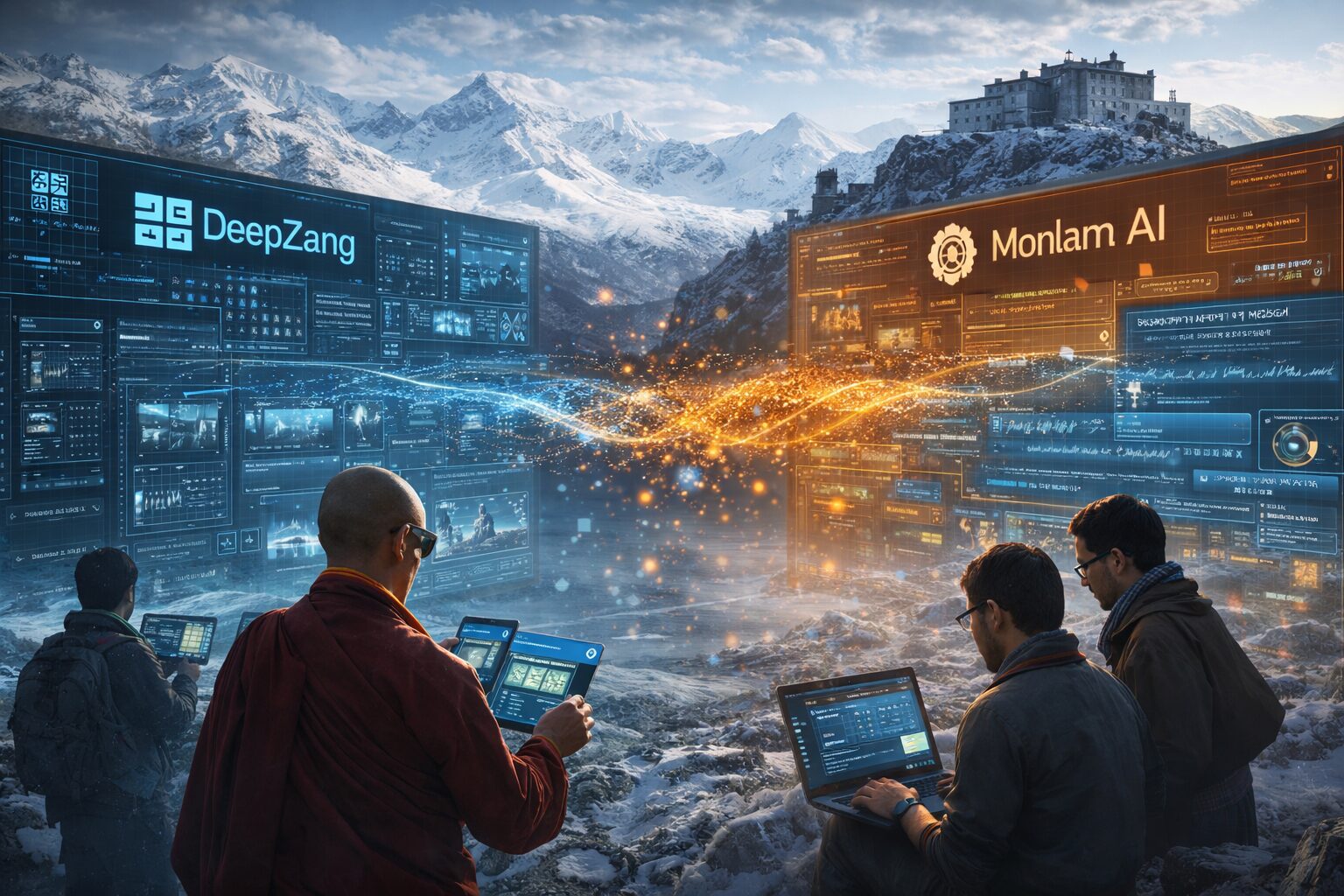
China Launches DeepZang Amid Competing Tibetan AI Vision
China unveiled its first Tibetan language large language model, DeepZang, on Sunday, marking a significant development in artificial intelligence for ethnic languages. Authorities introduced the platform in Lhasa and rapidly promoted it through state channels. The name DeepZang draws from “Xizang”, the official Chinese term for Tibet.
Officials presented the model as a technological breakthrough designed to advance Tibetan language computing. State narratives framed it as a pioneering platform, highlighting its role in shaping how Tibetan language content appears in digital ecosystems. As a result, the launch quickly gained attention across media networks.
Features And Capabilities Of DeepZang
Developed by CHOKNOR Information Technology Co. Ltd., DeepZang has secured national approval for generative artificial intelligence use in China. This approval marks a first for a Tibetan language model within the country.
The system supports more than 80 languages, including Tibetan, Mandarin, English, Mongolian and Uyghur. It offers tools such as speech recognition, translation and conversational interaction. Moreover, the platform relies on a dataset of nearly 70 million Tibetan Mandarin sentence pairs.
In addition, developers claim it uses China’s largest Tibetan speech database. These capabilities position DeepZang as a comprehensive language tool designed for both communication and information processing. Consequently, it reflects China’s broader push to expand artificial intelligence across multiple linguistic domains.
Monlam AI Offers A Contrasting Approach
However, China’s claim of leadership in Tibetan AI faces challenges. A separate initiative had already emerged in Dharamshala before DeepZang’s launch. Monlam AI, introduced in 2023, represents a distinct approach to Tibetan language technology.
Developed by the Monlam Tibetan IT Research Centre under Geshe Lobsang Monlam, the platform integrates translation, optical character recognition and speech tools. It supports both classical and modern Tibetan usage, ensuring broader linguistic coverage.
At its centre is the Monlam Melong language model, which focuses on Tibetan grammar, history and Buddhist texts. The system supports translation across 140 to 200 languages. Therefore, it aims to preserve cultural and religious knowledge alongside technological advancement.
Its platform reflects this mission clearly. References to spiritual guidance and imagery of respected Buddhist figures emphasise a cultural and civilisational perspective rather than a purely technical one.
Technology And Narrative Control Intersect
The contrast between DeepZang and Monlam AI extends beyond technical design. China positions DeepZang as a tool to present what it describes as authentic narratives of Tibetan culture. This framing aligns with broader state communication strategies.
Meanwhile, Monlam AI reflects a diaspora driven effort focused on cultural preservation outside direct state influence. This distinction highlights differing priorities in how technology interacts with identity and heritage.
As artificial intelligence tools expand, their influence on knowledge consumption continues to grow. These systems do more than translate or respond. They shape narratives, prioritise information and influence perception.
Consequently, the emergence of such platforms signals a broader shift. Control over data and algorithms may increasingly determine how cultures appear in digital spaces. This development raises a critical question about whether users access neutral knowledge or curated narratives shaped by those who design these systems.

