

Close Menu
Stratnews GlobalStratnews Global
    Facebook X (Twitter) Instagram
    Trending
    • Space Is the New Flex: Why the U.S. Just Rewrote the Rules of War
    • EU’s Draft Space Act Draws India’s Attention Ahead of 2026 India–EU Summit
    • Scientists Find Deep-Earth Clues to Planet’s Origins and Early Life
    • Two Anduril Drones Crash During U.S. Air Force Tests Amid Expansion Push
    • EU Should Reject Biofuel Exemptions After 2035, Warns Transport & Environment
    • India Sets January Deadline for Pharma Firms to Meet Global Safety Standards
    • Europe Approves €22.1 Billion Space Budget to Boost Independence and Innovation
    • China Releases Action Plan to Accelerate Commercial Space Industry Growth
    Stratnews GlobalStratnews Global
    Write for Us
    Monday, December 1
    • Space
    • Science
    • AI and Robotics
    • Industry News
    Stratnews GlobalStratnews Global
    Home » NASA Awards SpaceX $843 Million Contract for ISS Deorbit Vehicle

    NASA Awards SpaceX $843 Million Contract for ISS Deorbit Vehicle

    Arushi PandeyBy Arushi PandeyJune 27, 2024 Industry News No Comments2 Mins Read
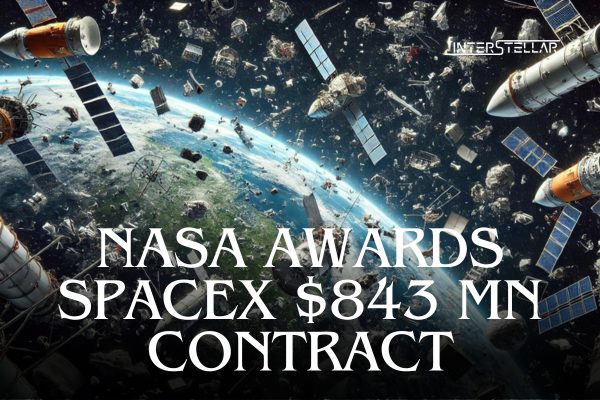
    NASA awards SpaceX

    NASA Chooses SpaceX to Deorbit ISS by 2030 in $843 Million Deal

    NASA has awarded SpaceX $843 million to develop a vehicle capable of deorbiting the International Space Station (ISS) for its planned destruction around 2030. This task was originally intended for Russia’s thrusters.

    New Deorbit Vehicle

    Under this new contract, SpaceX will build the U.S. Deorbit Vehicle, designed to safely guide the ISS into Earth’s atmosphere. NASA will own the craft and manage the deorbiting process to mitigate risks to populated areas.

    The ISS, primarily managed by the United States and Russia, has been continuously staffed by government astronauts for about 24 years. Due to its aging components, NASA and its international partners have set 2030 as the target retirement date.

    International Cooperation

    The ISS partnership includes the United States, Japan, Canada, and European Space Agency countries, all committed through 2030. Russia has agreed to remain involved until 2028, aligning with Roscosmos’ assessment of its hardware’s longevity.

    Despite geopolitical tensions, such as Russia’s war in Ukraine, scientific cooperation on the ISS has endured. The U.S.-Russian partnership is maintained through technical interdependency: Russian thrusters manage the station’s orbital altitude, while U.S. solar arrays provide power.

    Contingency Planning

    Initially, Russian thrusters were supposed to deorbit the ISS. However, NASA has sought its own deorbit capabilities in case Russia exits the alliance early or is unable to perform the task. Recent years have seen an accelerated U.S. deorbit plan due to strained relations with Russia, prompted by pressure from the White House and other government entities.

    Post-2030, NASA is investing in privately built space stations to maintain a U.S. presence in low-Earth orbit. Airbus and Jeff Bezos’ Blue Origin are involved in these developments. While the market for private space stations remains uncertain, U.S. officials view a commercial ISS replacement as essential for competing with China’s new space station.

    Future Space Endeavors

    Both NASA and China are racing to the moon. NASA is investing billions of dollars in partnerships with several countries and companies, including SpaceX, to return humans to the moon for the first time since 1972.

    Author

    • Arushi Pandey
      Arushi Pandey

      View all posts
    Featured
    Share. Facebook Twitter Pinterest LinkedIn Tumblr Email Reddit Telegram WhatsApp
    Arushi Pandey

      Keep Reading

      Space Is the New Flex: Why the U.S. Just Rewrote the Rules of War

      EU’s Draft Space Act Draws India’s Attention Ahead of 2026 India–EU Summit

      Scientists Find Deep-Earth Clues to Planet’s Origins and Early Life

      Two Anduril Drones Crash During U.S. Air Force Tests Amid Expansion Push

      EU Should Reject Biofuel Exemptions After 2035, Warns Transport & Environment

      India Sets January Deadline for Pharma Firms to Meet Global Safety Standards

      Add A Comment
      Leave A Reply Cancel Reply

      Anti Drone System (CUAS)
      Latest Posts

      Space Is the New Flex: Why the U.S. Just Rewrote the Rules of War

      November 30, 2025

      EU’s Draft Space Act Draws India’s Attention Ahead of 2026 India–EU Summit

      November 29, 2025

      Scientists Find Deep-Earth Clues to Planet’s Origins and Early Life

      November 29, 2025

      Two Anduril Drones Crash During U.S. Air Force Tests Amid Expansion Push

      November 28, 2025

      EU Should Reject Biofuel Exemptions After 2035, Warns Transport & Environment

      November 28, 2025

      India Sets January Deadline for Pharma Firms to Meet Global Safety Standards

      November 28, 2025

      Europe Approves €22.1 Billion Space Budget to Boost Independence and Innovation

      November 28, 2025

      China Releases Action Plan to Accelerate Commercial Space Industry Growth

      November 28, 2025

      Soyuz MS-28 Lifts Off with Russian and NASA Crew for ISS Mission

      November 28, 2025

      Leonardo Presents “Michelangelo Dome” to Protect Europe from Air and Missile Threats

      November 28, 2025

      Subscribe to News

      Get the latest sports news from NewsSite about world, sports and politics.

      • Astronomical Events
      • Space Missions
      • Industry News
      • Science
      StratNewsGlobal Tech
      Facebook X (Twitter) Instagram LinkedIn YouTube
      © 2025 StratNews Global, A unit of BharatShakti Communications LLP
      • About Us
      • Contributors
      • Copyright
      • Contact
      • Write for Us

      Type above and press Enter to search. Press Esc to cancel.