


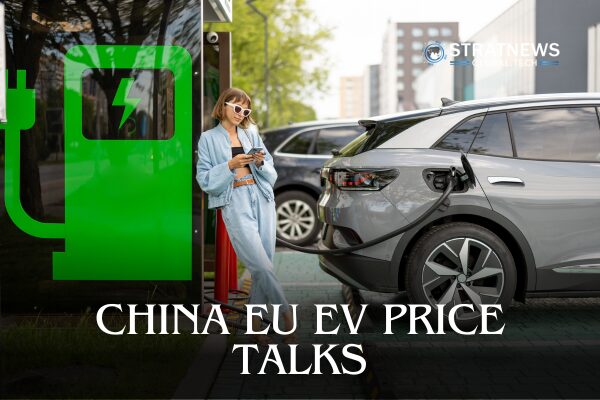
China and EU Resume Talks on Minimum Price Plan for Electric Vehicles
China’s commerce ministry confirmed on Thursday that negotiations with the European Union over a potential minimum price arrangement for Chinese-made electric vehicles (EVs) have resumed and will continue into next week. The talks mark a renewed attempt to ease tensions following the EU’s imposition of steep tariffs on Chinese EV imports earlier this year.
Renewed Dialogue After Tariff Dispute
The 27-member bloc introduced duties of up to 45.3% in October 2024, after the European Commission launched an investigation into whether Chinese EV manufacturers were benefiting from unfair state subsidies that could distort competition and flood the European market.
Beijing has repeatedly denied those allegations, maintaining that its EV producers are more efficient and competitive rather than state-dependent. It has urged Brussels to replace the tariffs with a minimum price mechanism—a measure that would allow Chinese automakers continued access to the European market while limiting undercutting on price.
“China welcomes the EU’s renewed commitment to restarting price undertaking negotiations and appreciates its return to the path of resolving differences through dialogue,” said commerce ministry spokesperson He Yadong during a press briefing. He added that talks had taken place in recent days and would continue into next week, though he did not share specific details.
Complex Path to Agreement
The European Commission has expressed scepticism over the feasibility of a uniform minimum price for such diverse and complex products. Previous price undertakings have been limited to standardised commodities, such as solar panels or steel, rather than advanced manufactured goods like electric vehicles.
Analysts note that the EU remains a crucial market for Chinese automakers, who face intensifying competition and narrowing profit margins at home due to ongoing price wars and deflationary pressures. Beijing’s push for a negotiated settlement reflects its desire to preserve export opportunities amid slowing domestic demand.
Strategic Implications for Both Sides
For Europe, the talks highlight a delicate balancing act between protecting local industry and maintaining stable trade relations with China, one of its largest economic partners. The resumption of dialogue signals both sides’ willingness to prevent an escalation that could further disrupt the global EV supply chain.
Despite the revived discussions, Brussels continues to emphasise the need for safeguards to prevent market distortions caused by subsidies. The European Commission has stated that any future arrangement must ensure fair competition and adequately address the impact of state support on EU manufacturers.
The outcome of the negotiations could shape the future of the global EV trade, influencing market access, pricing structures, and regulatory cooperation between two of the world’s largest economic blocs.
with inputs from Reuters

