

Close Menu
Stratnews GlobalStratnews Global
    Facebook X (Twitter) Instagram
    Trending
    • SpaceX Crew Returns Early After Astronaut’s Health Emergency
    • Musk’s Grok Faces Global Bans over Sexualised AI Deepfakes
    • SpaceX Capsule Returns Early to Earth After Astronaut Medical Emergency
    • Microsoft Strikes Record $228 Million Soil Carbon Deal to Boost Climate Goals
    • Trump Faces Criticism for Allowing Nvidia to Sell AI Chips to China
    • China Bans U.S. and Israeli Cybersecurity Firms over National Security Concerns
    • Trump Slaps 25% Tariff on AI Chips to Strengthen U.S. Semiconductor Industry
    • U.S. Approves Nvidia AI Chip Sales to China Under Strict New Rules
    Stratnews GlobalStratnews Global
    Write for Us
    Thursday, January 15
    • Space
    • Science
    • AI and Robotics
    • Industry News
    Stratnews GlobalStratnews Global
    Home » IAEA-FAO Experimented Crop Seeds Return To Earth From The International Space Station

    IAEA-FAO Experimented Crop Seeds Return To Earth From The International Space Station

    StratNewsGlobal Tech TeamBy StratNewsGlobal Tech TeamApril 19, 2023 Science No Comments3 Mins Read

    Seeds that the International Atomic Energy Agency (IAEA) and the Food and Agriculture Organization of the United Nations (FAO) had sent into space last year have successfully returned to Earth, marking a significant milestone in their efforts to develop crops that are more resilient to the effects of climate change. With global temperatures rising and the population increasing, farmers worldwide need help to meet the growing demand for food.

    Through their Joint FAO-IAEA Centre of Nuclear Techniques in Food and Agriculture, they sent seeds into space to explore cosmic radiation’s effects on accelerating crops’ natural genetic adaptation to changing environmental conditions. The successful return of the Arabidopsis and Sorghum seeds, which had spent around five months at the International Space Station (ISS), paves the way for scientists to begin analysing the results.

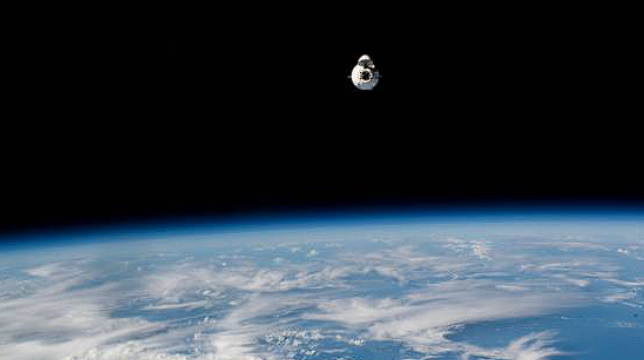
    Launched from NASA’s Wallops Flight Facility, Virginia, on November 7 last year, the seeds were chosen because there was already a large bank of scientific data available for comparison. After being released from the ISS in the SpaceX CRS-27 cargo craft on April 15 at 17:05 CEST, the seeds made a parachute-assisted splashdown near the Florida coast at 22:58 CEST. The seeds will now undergo screening and analysis for desirable traits in the Joint FAO/IAEA Centre laboratories in Seibersdorf, Austria.

    IAEA Director General Rafael Mariano Grossi called the cosmic crops project “very special”, adding that it could have a meaningful impact on people’s lives in the not-too-distant future by helping to grow stronger crops and feed more people. Meanwhile, FAO Director-General Qu Dongyu noted that the experiment could help develop crops that adapt to climate change and boost global food security.

    Laboratory radiation typically occurs in a machine using gamma rays or X-rays, which accelerates the process of spontaneous genetic variation. Scientists then work to identify positive traits in irradiated seeds and introduce those traits into future generations, allowing plants to evolve faster with desirable qualities such as disease resistance and drought tolerance. However, the wide range and heavier radiation in space, combined with microgravity and extreme temperature changes, could trigger genetic changes that are not generally encountered with radiation sources on Earth.

    The Arabidopsis seeds, which are easy and inexpensive to grow and produce many seeds, will be tested for drought, salt, and heat tolerance. Meanwhile, the nutrient-packed cereal grain Sorghum, which can grow on arid lands, will be tested for desirable traits for climate change resilience. The IAEA-FAO labs will grow the Sorghum and Arabidopsis seeds to the next generation before trait selection, and initial results could be available in October this year.

    DNA will be extracted and sequenced from both crop species to compare changes between the seeds irradiated in a laboratory, those positioned inside the ISS, and those positioned outside the ISS and exposed to full cosmic radiation, microgravity, and extreme temperatures. These comparisons and the analysis of plant biology will help scientists determine whether harsh space conditions have a uniquely beneficial effect on crop improvement that could benefit people on Earth.

    Author

    • StratNewsGlobal Tech Team
      StratNewsGlobal Tech Team

      View all posts
    Featured
    Share. Facebook Twitter Pinterest LinkedIn Tumblr Email Reddit Telegram WhatsApp
    StratNewsGlobal Tech Team
    • Website

    Keep Reading

    SpaceX Crew Returns Early After Astronaut’s Health Emergency

    Musk’s Grok Faces Global Bans over Sexualised AI Deepfakes

    SpaceX Capsule Returns Early to Earth After Astronaut Medical Emergency

    Microsoft Strikes Record $228 Million Soil Carbon Deal to Boost Climate Goals

    Trump Faces Criticism for Allowing Nvidia to Sell AI Chips to China

    China Bans U.S. and Israeli Cybersecurity Firms over National Security Concerns

    Add A Comment
    Leave A Reply Cancel Reply

    Anti Drone System (CUAS)
    Latest Posts

    SpaceX Crew Returns Early After Astronaut’s Health Emergency

    January 15, 2026

    Musk’s Grok Faces Global Bans over Sexualised AI Deepfakes

    January 15, 2026

    SpaceX Capsule Returns Early to Earth After Astronaut Medical Emergency

    January 15, 2026

    Microsoft Strikes Record $228 Million Soil Carbon Deal to Boost Climate Goals

    January 15, 2026

    Trump Faces Criticism for Allowing Nvidia to Sell AI Chips to China

    January 15, 2026

    China Bans U.S. and Israeli Cybersecurity Firms over National Security Concerns

    January 15, 2026

    Trump Slaps 25% Tariff on AI Chips to Strengthen U.S. Semiconductor Industry

    January 15, 2026

    U.S. Approves Nvidia AI Chip Sales to China Under Strict New Rules

    January 14, 2026

    NASA Orders Emergency Crew Return After ISS Medical Incident

    January 14, 2026

    Starlink Keeps Citizens Online Amid Nationwide Internet Blackout In Iran

    January 14, 2026

    Subscribe to News

    Get the latest sports news from NewsSite about world, sports and politics.

    • Astronomical Events
    • Space Missions
    • Industry News
    • Science
    StratNewsGlobal Tech
    Facebook X (Twitter) Instagram LinkedIn YouTube
    © 2026 StratNews Global, A unit of BharatShakti Communications LLP
    • About Us
    • Contributors
    • Copyright
    • Contact
    • Write for Us

    Type above and press Enter to search. Press Esc to cancel.