


On October 20, 2023, Chinese Premier Li Qiang shared a podium with the unelected Prime Minister Anwar ul Haq Kakar on his visit to China. The two oversaw Pakistan officially agreeing to join the China-led International Lunar Research Station – China’s base on the Moon that it wants to operate with junior partners. The agreement was signed by Zhang Kejian, the administrator of China National Space Administration and Moin ul Haque, Pakistan’s ambassador to China. So, what do they get from each other?
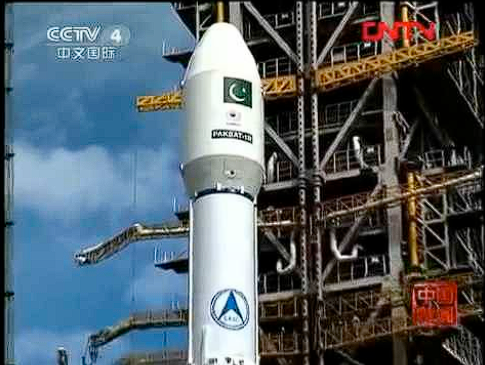
It is hard to determine the precise contributions of Pakistan’s space agency, SUPARCO, to the International Lunar Research Station, monetarily, technically or through human resources. Over the past ten years, SUPARCO has relied heavily on Chinese space capabilities. Pakistan’s PakTES-1A satellite, which it built with South African cooperation, was launched by China. China made and launched its remote-sensing satellite, the PRSS-1, and its communication satellite, the PakSat-1R.
Pakistan and China seek a spectacular demonstration of their lopsided friendship through a space mission to the Chinese space station carrying Pakistani astronauts on a Chinese rocket and a Chinese capsule with a mission control in China controlled by the PLA Strategic Support Forces. Pakistan’s SUPARCO and Defence Science and Technology Organization have nothing novel to offer. Instead, Beijing’s only intent is to ensure it becomes the greatest benefactor to Pakistan.
Beijing has created two propaganda platforms – the China-Pakistan Media Corridor and the China-Pakistan Rapid Response Information Network. China intends to use these two platforms for the complete Sinicization of news media in Pakistan by converting important news reports into Urdu language, penetrating Chinese embassy reports directly into Urdu-language media using Pakistan’s official press release systems, and responding to any criticism emerging in Pakistan about Chinese activities, actions and decisions. Beijing also intends to create, something they have been calling since 2021, a jointly-operated nerve centre to streamline inputs from Confucius Institutes in Pakistani universities, media companies, CPEC study centres, opinion-makers and influencers in Pakistani media, and Pakistani think tanks.
Pakistan is a noisy military junta often metamorphosing into a false democracy, with many lobbies and interest groups having networks in Europe, the Arab World, the non-Arab Islamic World, and the rest of the provinces. To that end, China wants to do something spectacular for Pakistan that will make a lasting impression in the minds of Pakistani people and could be leveraged for its geopolitical and geoeconomic ambitions. The control of information networks and the creation of nerve centres is Beijing’s attempt to reduce the noise created by other external players in Pakistan.
We all remember the various reactions from Pakistan after the success of the Chandrayaan-3 landing. Public opinions uploaded on social media showed tremendous respect for India’s organic achievement. It is well known that SUPARCO cannot deliver anything closer, and China can help give it a psychological but inconsequential upper hand. With the Rapid Response Information Network and the Media Corridor, the first significant propaganda would be that of carrying Pakistani astronauts to the Chinese space station or taking a cube-sat built by Pakistani educational institutions – the Institute of Space Technology – on the Chang’e-6 mission scheduled for launch in 2025-26. Interestingly, this same Pakistani institution has academic cooperation with Beihang University of Aeronautics and Astronautics, where the latter helps the former by training undergraduate and postgraduate students.
Pakistani leadership has decided to make their state a vassal of China. Its strategic initiatives, including the space programme and information systems, are now part of China’s extraterritorial ambitions, especially for the Global South. Undoubtedly, Beijing aims to cultivate sections within scientific institutions of Global South countries that would align with their interests. Perhaps all these countries will soon have internal turmoil between Western and Chinese factions and factions that are true to their national interests. The physical infrastructure aspect of the Belt and Road Initiative may have taken a beating due to the exposé of the debt-trap strategy. The tumultuous global economy and geopolitics will only embolden Beijing to take control of strategic assets and information channels of countries ready to sell them.
Had the Pakistani space program grown organically and peacefully, it would have helped its socio-economic indicators. Rawalpindi may enjoy a paltry piggy-backing joyride on Beijing’s behest; it may also want to score dismal brownies over India, whose space program is growing with indigenous strengths. Still, it won’t help the Pakistani society or economy. The Pakistani intellectual crème will continue to erode; it will migrate to the West as part of the larger migration pattern. However, the technical crème may move eastwards in Chengdu, Shenzhen, Hubei or Wuhan. Rawalpindi, suffering from economic troubles, is clearly taking a supplicating role as Beijing’s technological vassal.