

Close Menu
Stratnews GlobalStratnews Global
    Facebook X (Twitter) Instagram
    Trending
    • SpaceX IPO Could Top $1 Trillion as Investors Rush In
    • Time Names AI Architects as 2025 Person of the Year
    • NAACP Issues Framework to Prevent Bias in Healthcare AI
    • Cambridge Study Finds Fake Accounts Can Be Created for Just Cents
    • Caribbean Nations Unite to Harness Geothermal Energy Potential
    • U.S. Pushes to End Reliance on Chinese Lidar Technology
    • Trump Moves to Block Broadband Funds Over State AI Regulations
    Stratnews GlobalStratnews Global
    Write for Us
    Saturday, December 13
    • Space
    • Science
    • AI and Robotics
    • Industry News
    Stratnews GlobalStratnews Global
    Home » NASA’s DART Mission Unveils Secrets of Binary Asteroids

    NASA’s DART Mission Unveils Secrets of Binary Asteroids

    Arushi PandeyBy Arushi PandeyJuly 31, 2024Updated:July 31, 2024 Space No Comments3 Mins Read
    Nasa Dart Mission

    NASA’s DART Mission Reveals Insights into Binary Asteroid Systems

    In 2022, NASA’s DART mission conducted a significant planetary defence test by colliding with the asteroid Dimorphos. Before impact, DART captured high-resolution images of Dimorphos and its larger companion, Didymos. These images have provided valuable information about the formation and history of these two asteroids and binary asteroid systems in general.
    NASA
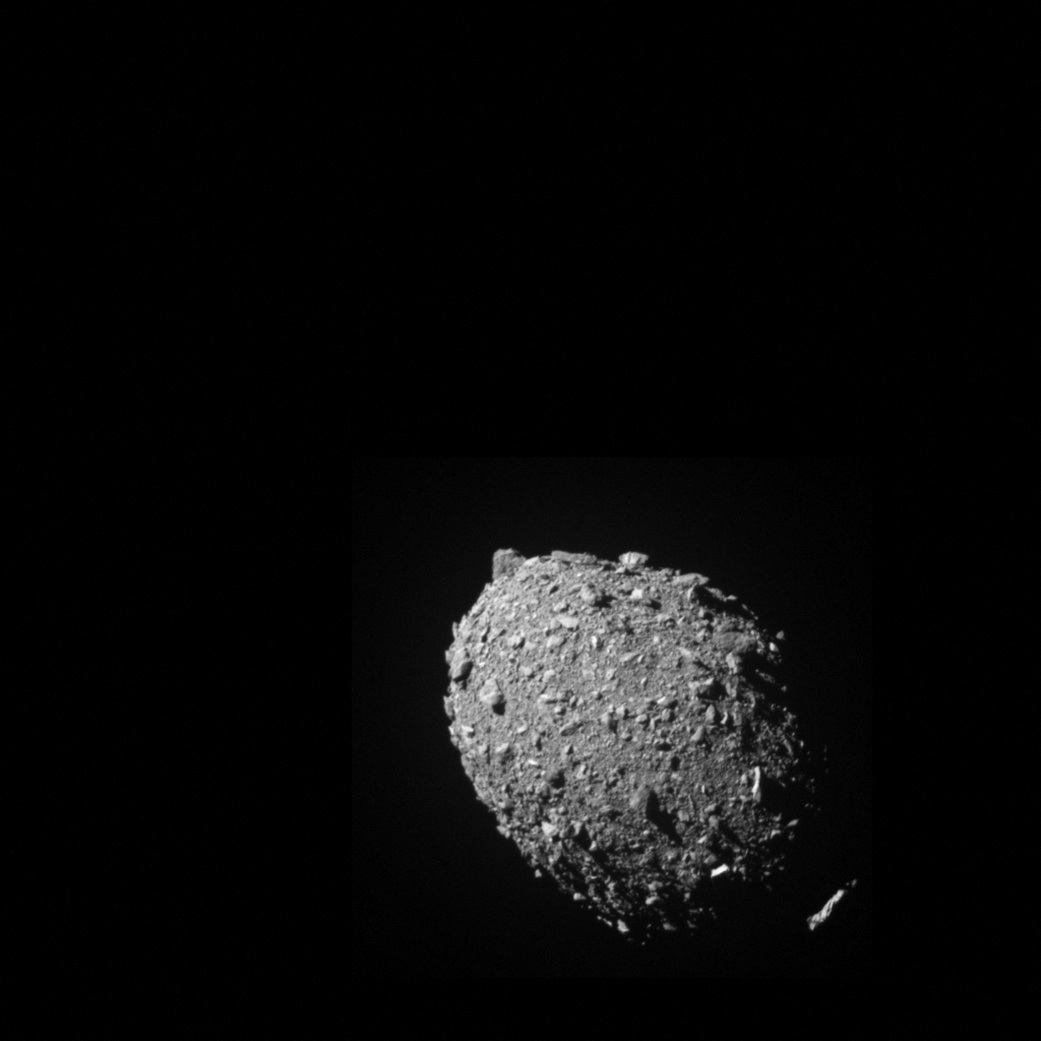
    FILE PHOTO: Asteroid moonlet Dimorphos as seen by the DART spacecraft 11 seconds before impact in this image taken by DART’s on board DRACO imager from a distance of 68 kilometers, and released September 26, 2022. NASA

    Formation and History of Didymos and Dimorphos

    The analysis of Didymos and Dimorphos revealed crucial insights into their formation. Scientists believe Didymos formed about 12.5 million years ago, likely originating in the main asteroid belt between Mars and Jupiter. It was later displaced into the inner solar system. In contrast, Dimorphos, which formed around 300,000 years ago, is thought to have been created from material ejected from Didymos due to its rapid spin.

    Composition and Structure of the Asteroids

    Both Didymos and Dimorphos are classified as “rubble pile” asteroids, consisting of rocky debris held together by gravity. Didymos, approximately half a mile (780 meters) in diameter, and Dimorphos, about 560 feet (170 meters) wide, exhibit surfaces covered with boulders. The largest boulder on Dimorphos is as big as a school bus, while Didymos’ largest boulder is the size of a soccer field.

    According to Olivier Barnouin, a planetary geologist at Johns Hopkins University, Didymos’ surface is smoother at the equator with rougher terrains and large boulders towards the poles. Dimorphos, on the other hand, has cracks and a weaker surface compared to loose sand. These characteristics suggest that both asteroids are aggregates of rocky fragments formed from the catastrophic destruction of a parent asteroid.
    NASA
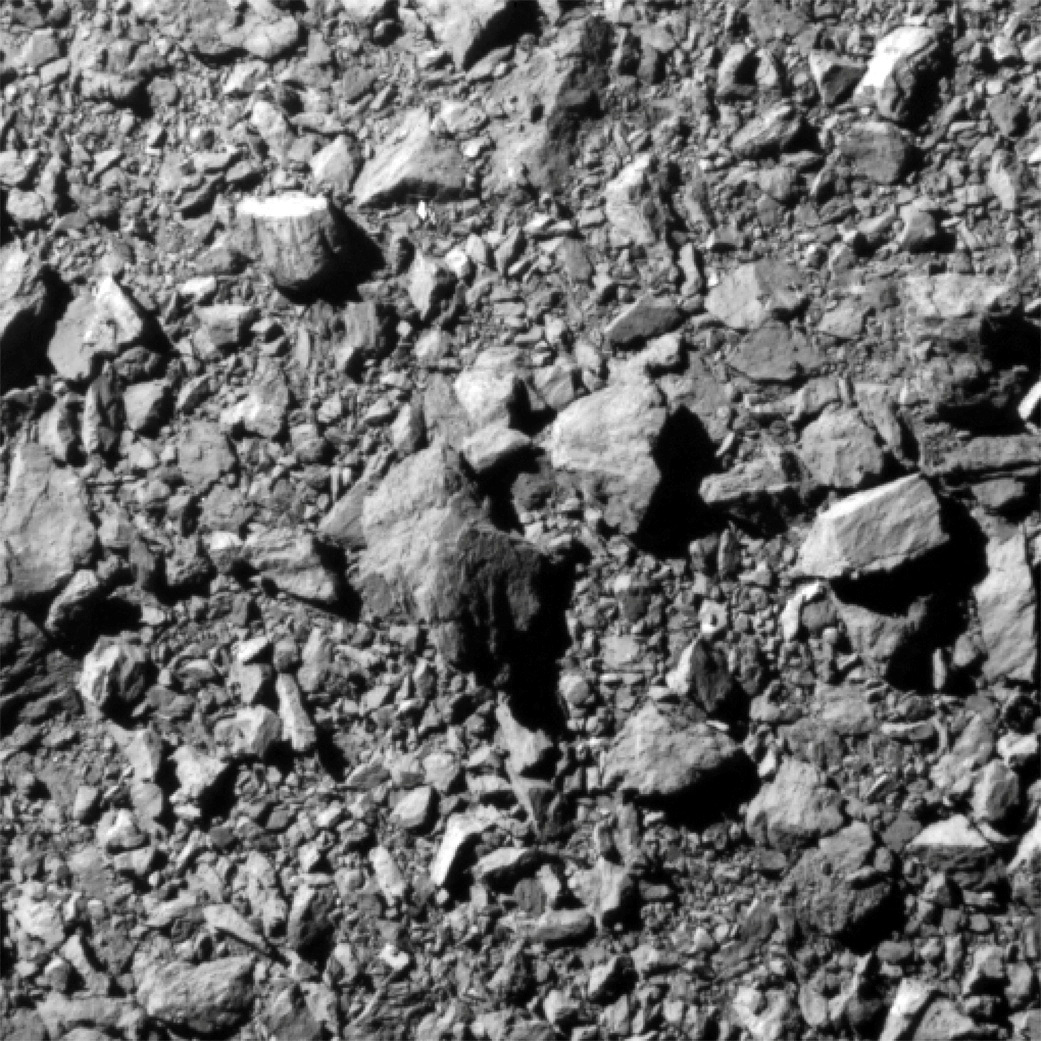
    FILE PHOTO: The last complete image of asteroid moonlet Dimorphos, taken by the DRACO imager on NASA’s DART mission 12 kilometers from the asteroid and 2 seconds before impact, showing a patch of the asteroid that is 31 meters across, released September 26, 2022. NASA

    Insights from the DART Mission

    NASA’s DART mission demonstrated the feasibility of altering an asteroid’s path using kinetic force. On September 26, 2022, DART impacted Dimorphos at a speed of approximately 14,000 miles per hour (22,530 kph), successfully changing its trajectory slightly. This test proved that a spacecraft could potentially redirect an asteroid on a collision course with Earth.

    The data collected from DART’s impact has enhanced our understanding of binary asteroid systems, which constitute about 10-15% of near-Earth asteroids. As Barnouin noted, each new observation contributes to our knowledge of asteroid formation and evolution, highlighting the complexities and similarities among these celestial bodies.

    Key Findings

    • Didymos and Dimorphos are “rubble pile” asteroids formed from the remnants of a larger parent asteroid.
    • Didymos likely originated in the main asteroid belt and moved to the inner solar system, forming Dimorphos from ejected material due to rapid spinning.
    • DART’s impact on Dimorphos demonstrated the potential for asteroid redirection, contributing valuable data for planetary defence strategies.

    Author

    • Arushi Pandey
      Arushi Pandey

      View all posts
    Featured
    Share. Facebook Twitter Pinterest LinkedIn Tumblr Email Reddit Telegram WhatsApp
    Arushi Pandey

      Keep Reading

      SpaceX IPO Could Top $1 Trillion as Investors Rush In

      Time Names AI Architects as 2025 Person of the Year

      NAACP Issues Framework to Prevent Bias in Healthcare AI

      Cambridge Study Finds Fake Accounts Can Be Created for Just Cents

      Caribbean Nations Unite to Harness Geothermal Energy Potential

      U.S. Pushes to End Reliance on Chinese Lidar Technology

      Add A Comment
      Leave A Reply Cancel Reply

      Anti Drone System (CUAS)
      Latest Posts

      SpaceX IPO Could Top $1 Trillion as Investors Rush In

      December 12, 2025

      Time Names AI Architects as 2025 Person of the Year

      December 12, 2025

      NAACP Issues Framework to Prevent Bias in Healthcare AI

      December 12, 2025

      Cambridge Study Finds Fake Accounts Can Be Created for Just Cents

      December 12, 2025

      Caribbean Nations Unite to Harness Geothermal Energy Potential

      December 12, 2025

      U.S. Pushes to End Reliance on Chinese Lidar Technology

      December 12, 2025

      Trump Moves to Block Broadband Funds Over State AI Regulations

      December 12, 2025

      December 11, 2025

      Financial Inclusion Revisited: Counting Lives Changed

      December 11, 2025

      DAE Reports Record Nuclear Power Generation and Scientific Milestones in 2025

      December 11, 2025

      Subscribe to News

      Get the latest sports news from NewsSite about world, sports and politics.

      • Astronomical Events
      • Space Missions
      • Industry News
      • Science
      StratNewsGlobal Tech
      Facebook X (Twitter) Instagram LinkedIn YouTube
      © 2025 StratNews Global, A unit of BharatShakti Communications LLP
      • About Us
      • Contributors
      • Copyright
      • Contact
      • Write for Us

      Type above and press Enter to search. Press Esc to cancel.