


Crew-12 Arrives At International Space Station For Eight Month Science Mission
A crew of four astronauts arrived at the International Space Station on Saturday, February 14, to begin an eight month science mission in orbit. Notably, two members of the team are travelling to space for the first time. The mission adds another chapter to ongoing international efforts aboard the station.
The astronauts travelled in a Dragon capsule named Freedom. SpaceX launched the spacecraft from Florida on Friday, February 13. After a smooth journey, the capsule docked successfully with the orbiting laboratory. As a result, the new arrivals joined the existing crew without incident.
NASA designated the mission as Crew-12. It marks the 12th long duration ISS team that NASA has flown aboard a SpaceX launch vehicle. Since May 2020, the private rocket company founded by Elon Musk in 2002 has transported US astronauts to orbit on a regular basis. Therefore, Crew-12 continues a partnership that has reshaped how NASA reaches the station.
Leadership And Experience On Board
Jessica Meir, 48, leads Crew-12. She previously flew to the space station and brings both scientific and operational experience to the role. Nearly seven years ago, she made history alongside NASA colleague Christina Koch when they completed the first all female spacewalk. In addition, Meir’s background as a marine biologist strengthens the team’s scientific expertise.
Joining her is Jack Hathaway, 43, a former US Navy fighter pilot and rookie astronaut. Meanwhile, European Space Agency astronaut Sophie Adenot, also 43, arrives as a master helicopter pilot from France. Andrey Fedyaev, a Russian cosmonaut and former military pilot, completes the team on his second ISS mission. Together, the crew combines fresh perspectives with proven spaceflight experience.
Welcome Aboard The Orbiting Laboratory
Three current ISS occupants welcomed Crew-12. NASA astronaut Chris Williams greeted the newcomers, alongside Roscosmos cosmonauts Sergey Kud-Sverchkov and Sergei Mikaev. Consequently, the station now hosts a larger team prepared to carry out a demanding research schedule.
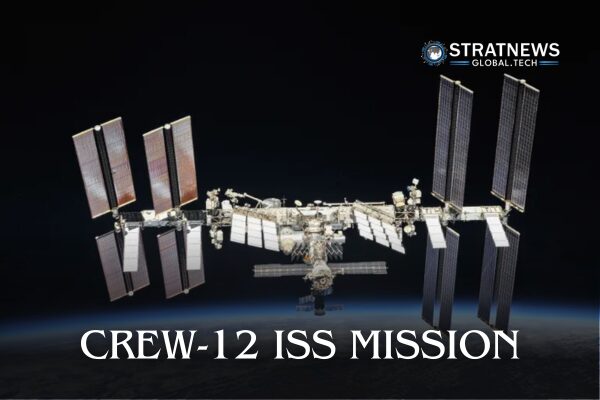
The International Space Station stretches the length of a football field and remains the largest human made object in space. A US and Russian led consortium operates the station continuously, with participation from Canada, Japan and 11 European countries. Through this collaboration, the ISS continues to serve as a platform for research and international cooperation.
With inputs from Reuters

