


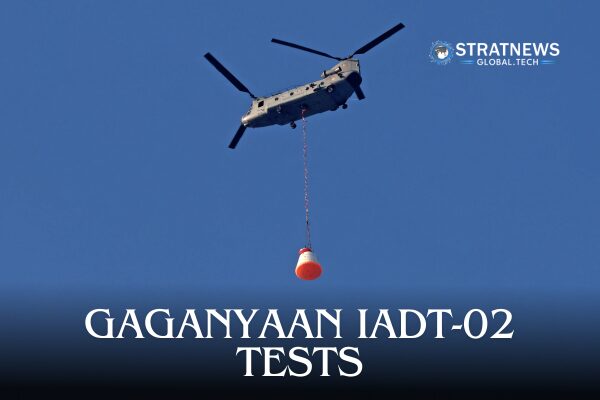
Gaganyaan IADT-02 Test Successfully Demonstrates Crew Module Recovery Systems
The second Integrated Air Drop Test, known as IADT-02, for the Gaganyaan mission was successfully carried out at Satish Dhawan Space Centre in Sriharikota on April 10, 2026. This test formed a crucial part of preparations for India’s upcoming human spaceflight programme. It focused on validating the parachute-based recovery systems designed for the Crew Module.
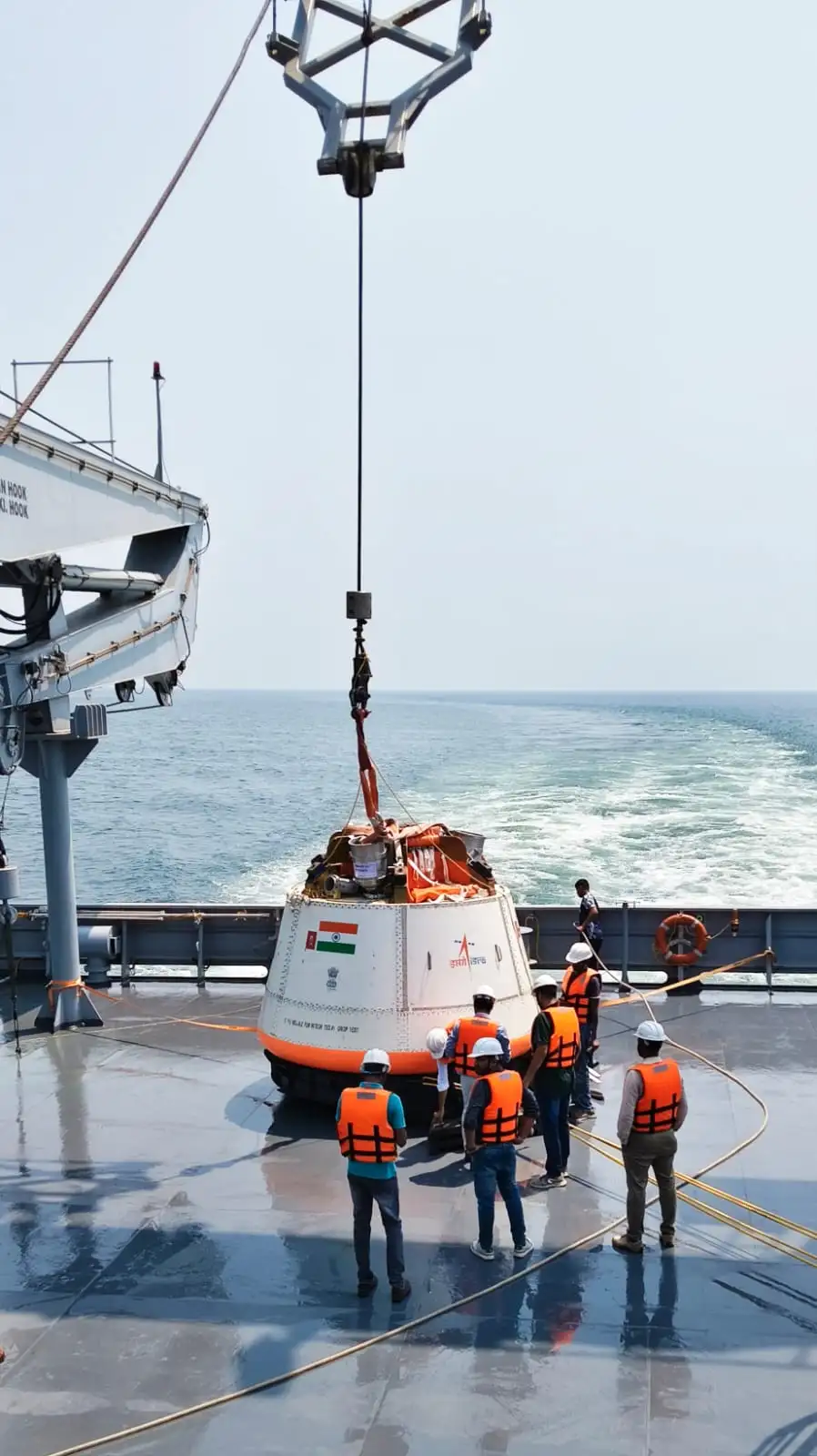
During the test, a simulated Crew Module weighing approximately 5.7 tonnes was used. This mass closely matches the Crew Module planned for the first uncrewed Gaganyaan mission, referred to as G1. The module was lifted by an Indian Air Force Chinook helicopter to an altitude of about 3 kilometres. It was then released over a designated drop zone in the sea near the Sriharikota coast.
Controlled Descent Through Sequential Parachute Deployment
Following its release, the Crew Module underwent a carefully controlled descent. Ten parachutes of four different types deployed in a precise and pre-determined sequence. Each stage of deployment played a specific role in gradually reducing the module’s velocity.
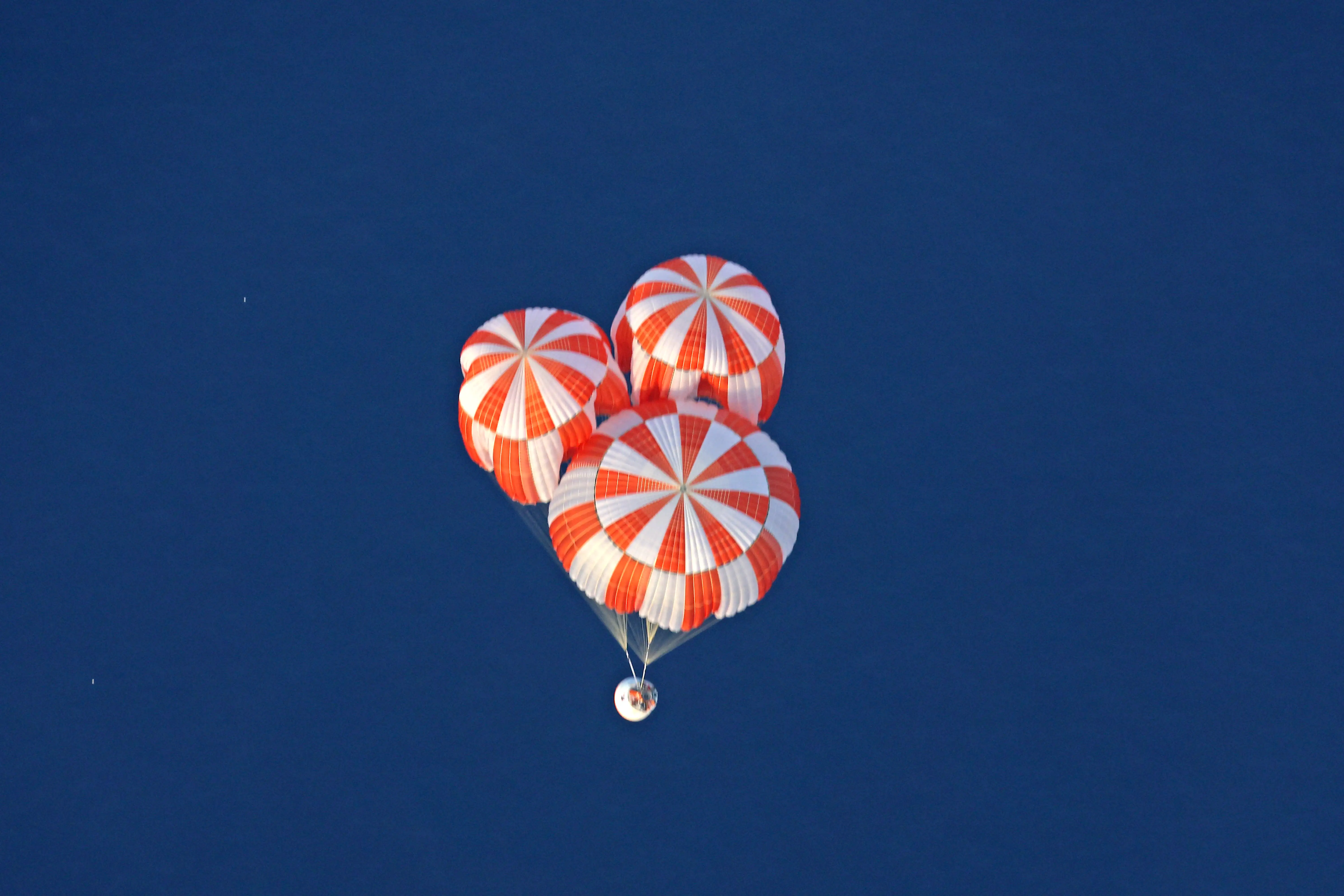
As a result, the system ensured a stable and safe descent before touchdown. The successful sequencing of parachutes demonstrated the reliability of the deceleration system under realistic conditions. This validation is essential for ensuring astronaut safety during future missions.
Coordinated Recovery Operation At Sea
After the module touched down in the sea, recovery operations were promptly initiated. The simulated Crew Module was successfully retrieved through coordinated efforts involving the Indian Navy. This phase of the test confirmed the effectiveness of post-landing recovery procedures.
Moreover, the seamless coordination between multiple agencies highlighted the preparedness required for complex mission scenarios. The integration of aerial deployment and maritime recovery reflects the mission’s comprehensive planning approach.
Advancing Readiness For Gaganyaan G1 Mission
The successful completion of IADT-02 marks another important milestone in the Gaganyaan programme. It confirms the readiness of critical systems needed for the G1 mission. In addition, it demonstrates strong collaboration between the Indian Air Force, the Indian Navy, and the Defence Research and Development Organisation.
Furthermore, this achievement reinforces confidence in the mission’s progress towards human spaceflight capability. Each successful test contributes to refining technologies and operational procedures. Consequently, the programme moves closer to its goal of safely sending humans into space.
With inputs from Reuters