


Close Menu
Stratnews GlobalStratnews Global
    Facebook X (Twitter) Instagram
    Trending
    • Airbus Restores A320 Operations After Fixing Solar Flare Software Bug
    • South Korea Probes Coupang Data Breach Affecting 33 Million Users
    • India Orders Mandatory Cyber Security App on All New Smartphones
    • China Sets Up New Department to Regulate Commercial Space Industry
    • 2026: A Landmark Year for India’s Aditya-L1 Sun Mission
    • Scientists Record Lightning on Mars for the First Time
    • Space Is the New Flex: Why the U.S. Just Rewrote the Rules of War
    • EU’s Draft Space Act Draws India’s Attention Ahead of 2026 India–EU Summit
    Stratnews GlobalStratnews Global
    Write for Us
    Tuesday, December 2
    • Space
    • Science
    • AI and Robotics
    • Industry News
    Stratnews GlobalStratnews Global
    Home » ISRO’s 100th Mission: GSLV-F15 Launches Advanced NVS-02 Satellite

    ISRO’s 100th Mission: GSLV-F15 Launches Advanced NVS-02 Satellite

    Kanika SharmaBy Kanika SharmaJanuary 29, 2025Updated:January 29, 2025 Space No Comments2 Mins Read
    ISRO's 100th Mission

    ISRO’s 100th Mission with NVS-02 Satellite Now Orbiting

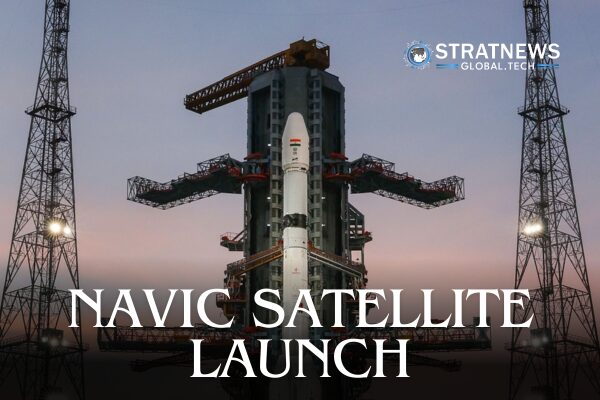
    The Indian Space Research Organisation (ISRO) marked a significant milestone with the success of ISRO’s 100th mission on January 29. The 2,250-kg NVS-02 satellite was launched aboard the GSLV-F15 from Sriharikota at 6:23 AM and is now enhancing India’s navigation capabilities from orbit.

    Advancements with NVS-02

    The NVS-02 satellite, the second of five second-generation satellites, is a major step forward in upgrading the Indian Regional Navigation Satellite System (IRNSS), also known as NavIC. Featuring advanced indigenously developed atomic clocks and utilizing the L1 frequency — commonly used in the US Global Positioning System (GPS) — the satellite aims to broaden the adoption of NavIC services among compact devices such as fitness trackers.

    These satellites, each with a 12-year lifespan, join India’s constellation providing positioning, navigation, and timing services over the Indian mainland and within 1,500 km of its surroundings. The original satellite, IRNSS-1A, launched in 2013, necessitated earlier replacements due to atomic clock malfunctions.

    Details of the Successful Launch

    The NVS-02 launch also noted the 17th flight of the GSLV vehicle and the 11th mission to feature ISRO’s indigenous cryogenic engine. The satellite was accurately deployed into a Geostationary Transfer Orbit (GTO) at 170 x 36,577 km, achieving its precise orbital position within just 19 minutes.

    ISRO’s journey with the second-generation NavIC satellites began with the launch of NVS-01 in 2023, aiming to extend NavIC’s reach and enhance its functionality. This has spurred the development of various user receivers and applications, enabling smartphones with compatible chipsets to access NavIC signals.

    Overcoming Early Challenges

    Despite early setbacks, such as the 2017 launch failure of replacement satellite IRNSS-1H due to a malfunctioning PSLV heat shield, and concerns raised by the Comptroller and Auditor General (CAG) in 2018 about delays in user receiver development, ISRO has made considerable progress. The integration of the L1 frequency and the deployment of improved satellites are expected to significantly increase NavIC’s presence in consumer electronics, from smartphones to fitness devices.


    Author

    • Kanika Sharma
      Kanika Sharma

      View all posts
    Featured
    Share. Facebook Twitter Pinterest LinkedIn Tumblr Email Reddit Telegram WhatsApp
    Kanika Sharma
    Kanika Sharma

      Keep Reading

      Airbus Restores A320 Operations After Fixing Solar Flare Software Bug

      South Korea Probes Coupang Data Breach Affecting 33 Million Users

      India Orders Mandatory Cyber Security App on All New Smartphones

      China Sets Up New Department to Regulate Commercial Space Industry

      2026: A Landmark Year for India’s Aditya-L1 Sun Mission

      Scientists Record Lightning on Mars for the First Time

      Add A Comment
      Leave A Reply Cancel Reply

      Anti Drone System (CUAS)
      Latest Posts

      Airbus Restores A320 Operations After Fixing Solar Flare Software Bug

      December 1, 2025

      South Korea Probes Coupang Data Breach Affecting 33 Million Users

      December 1, 2025

      India Orders Mandatory Cyber Security App on All New Smartphones

      December 1, 2025

      China Sets Up New Department to Regulate Commercial Space Industry

      December 1, 2025

      2026: A Landmark Year for India’s Aditya-L1 Sun Mission

      December 1, 2025

      Scientists Record Lightning on Mars for the First Time

      December 1, 2025

      Space Is the New Flex: Why the U.S. Just Rewrote the Rules of War

      November 30, 2025

      EU’s Draft Space Act Draws India’s Attention Ahead of 2026 India–EU Summit

      November 29, 2025

      Scientists Find Deep-Earth Clues to Planet’s Origins and Early Life

      November 29, 2025

      Two Anduril Drones Crash During U.S. Air Force Tests Amid Expansion Push

      November 28, 2025

      Subscribe to News

      Get the latest sports news from NewsSite about world, sports and politics.

      • Astronomical Events
      • Space Missions
      • Industry News
      • Science
      StratNewsGlobal Tech
      Facebook X (Twitter) Instagram LinkedIn YouTube
      © 2025 StratNews Global, A unit of BharatShakti Communications LLP
      • About Us
      • Contributors
      • Copyright
      • Contact
      • Write for Us

      Type above and press Enter to search. Press Esc to cancel.