

Close Menu
Stratnews GlobalStratnews Global
    Facebook X (Twitter) Instagram
    Trending
    • SpaceX IPO Could Top $1 Trillion as Investors Rush In
    • Time Names AI Architects as 2025 Person of the Year
    • NAACP Issues Framework to Prevent Bias in Healthcare AI
    • Cambridge Study Finds Fake Accounts Can Be Created for Just Cents
    • Caribbean Nations Unite to Harness Geothermal Energy Potential
    • U.S. Pushes to End Reliance on Chinese Lidar Technology
    • Trump Moves to Block Broadband Funds Over State AI Regulations
    Stratnews GlobalStratnews Global
    Write for Us
    Saturday, December 13
    • Space
    • Science
    • AI and Robotics
    • Industry News
    Stratnews GlobalStratnews Global
    Home » Nancy Grace Roman Space Telescope Reaches Key Milestone

    Nancy Grace Roman Space Telescope Reaches Key Milestone

    Arushi PandeyBy Arushi PandeyDecember 13, 2024 Space No Comments3 Mins Read
    Nancy Grace Roman Telescope

    Completion of Roman’s Payload

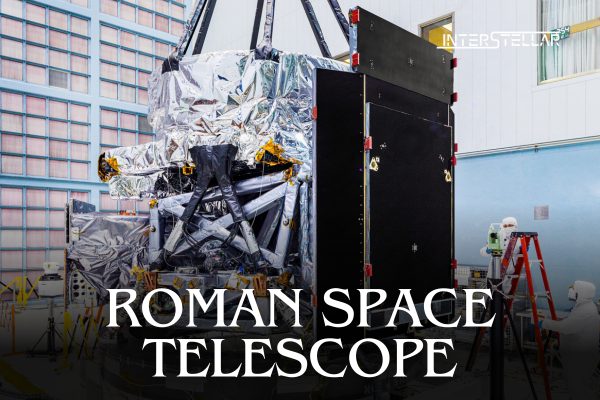
    NASA’s Nancy Grace Roman Space Telescope has achieved a major milestone in its mission preparation. The team at NASA’s Goddard Space Flight Center successfully integrated the telescope and its two primary instruments onto the instrument carrier, completing the Roman payload. Work is now underway to attach the payload to the spacecraft, a crucial step toward the telescope’s launch in 2027.

    “We’re at an exciting stage,” said Jody Dawson, Roman systems engineer at NASA Goddard. “All components are at Goddard, and integration is progressing rapidly. We expect to join the telescope and instruments with the spacecraft before year-end.”

    Instruments for a Revolutionary Mission

    The Roman Space Telescope boasts advanced technology that will enable groundbreaking discoveries. Engineers began by integrating the Coronagraph Instrument, a technological demonstration designed to capture images of exoplanets by masking the intense glare of their host stars. This innovation will help scientists study worlds beyond our solar system in unprecedented detail.

    Next came the Optical Telescope Assembly, which includes a massive 7.9-foot (2.4-meter) primary mirror and nine additional mirrors. This assembly will focus light from the cosmos, enabling Roman to observe billions of objects across space and time. It is designed to be the most stable large telescope ever built—10 times more stable than NASA’s James Webb Space Telescope and 100 times more stable than Hubble—allowing scientists to investigate phenomena like dark energy, dark matter, and distant exoplanets with unmatched precision.

    Finally, engineers installed the Wide Field Instrument, a 300-megapixel infrared camera capable of capturing panoramic views of the universe. This camera can image vast areas of the sky 1,000 times faster than Hubble while maintaining equally sharp and sensitive image quality. It will enable surveys of distant galaxies, stars, black holes, and more, revolutionising our understanding of the universe.

    Preparing for the Final Steps

    With its instruments mounted and aligned, the telescope assembly is being attached to the Roman spacecraft, which will transport it to orbit and support its operations. Meanwhile, the team is integrating the deployable aperture cover, a protective visor designed to shield the telescope from stray light, with the telescope’s outer barrel assembly.

    The next steps include rigorous testing of the payload and spacecraft together and attaching solar panels to the telescope’s exoskeleton. Bear Witherspoon, a Roman systems engineer, emphasised the team’s enthusiasm for the project: “It’s been an incredible year, and we’re looking forward to another one!”

    Roman remains on track for completion by autumn 2026 and a launch no later than May 2027. Once operational, the telescope will open new frontiers in astronomy, with capabilities that will address some of the universe’s greatest mysteries.

    Author

    • Arushi Pandey
      Arushi Pandey

      View all posts
    Featured
    Share. Facebook Twitter Pinterest LinkedIn Tumblr Email Reddit Telegram WhatsApp
    Arushi Pandey

      Keep Reading

      SpaceX IPO Could Top $1 Trillion as Investors Rush In

      Time Names AI Architects as 2025 Person of the Year

      NAACP Issues Framework to Prevent Bias in Healthcare AI

      Cambridge Study Finds Fake Accounts Can Be Created for Just Cents

      Caribbean Nations Unite to Harness Geothermal Energy Potential

      U.S. Pushes to End Reliance on Chinese Lidar Technology

      Add A Comment
      Leave A Reply Cancel Reply

      Anti Drone System (CUAS)
      Latest Posts

      SpaceX IPO Could Top $1 Trillion as Investors Rush In

      December 12, 2025

      Time Names AI Architects as 2025 Person of the Year

      December 12, 2025

      NAACP Issues Framework to Prevent Bias in Healthcare AI

      December 12, 2025

      Cambridge Study Finds Fake Accounts Can Be Created for Just Cents

      December 12, 2025

      Caribbean Nations Unite to Harness Geothermal Energy Potential

      December 12, 2025

      U.S. Pushes to End Reliance on Chinese Lidar Technology

      December 12, 2025

      Trump Moves to Block Broadband Funds Over State AI Regulations

      December 12, 2025

      December 11, 2025

      Financial Inclusion Revisited: Counting Lives Changed

      December 11, 2025

      DAE Reports Record Nuclear Power Generation and Scientific Milestones in 2025

      December 11, 2025

      Subscribe to News

      Get the latest sports news from NewsSite about world, sports and politics.

      • Astronomical Events
      • Space Missions
      • Industry News
      • Science
      StratNewsGlobal Tech
      Facebook X (Twitter) Instagram LinkedIn YouTube
      © 2025 StratNews Global, A unit of BharatShakti Communications LLP
      • About Us
      • Contributors
      • Copyright
      • Contact
      • Write for Us

      Type above and press Enter to search. Press Esc to cancel.