

Close Menu
Stratnews GlobalStratnews Global
    Facebook X (Twitter) Instagram
    Trending
    • Kenya Signs $311 Million Deal with Africa50 and India’s PowerGrid for Power Lines
    • JetBlue Flight Avoids Mid-Air Collision with U.S. Air Force Jet Near Venezuela
    • Ford Records $19.5 Billion Charge as It Retreats from Electric Vehicle Plans
    • Italian Scientists Create 3D-Printed Snacks from Lab-Grown Plant Cells
    • Korea Zinc to Build $7.4 Billion U.S.-Backed Smelter in Tennessee
    • Tesla Directors Earn $3 Billion from Stock Options, Raising Governance Concerns
    • Lawmaker Seeks Details on Trump’s Approval of Nvidia H200 Exports
    • Google to Lay Australia-Funded Subsea Cables in Papua New Guinea
    Stratnews GlobalStratnews Global
    Write for Us
    Tuesday, December 16
    • Space
    • Science
    • AI and Robotics
    • Industry News
    Stratnews GlobalStratnews Global
    Home » NASA’s Lunar Trailblazer Satellite Launched to Map Moon’s Water Reserves

    NASA’s Lunar Trailblazer Satellite Launched to Map Moon’s Water Reserves

    StratNewsGlobal Tech TeamBy StratNewsGlobal Tech TeamFebruary 27, 2025Updated:February 27, 2025 Space No Comments2 Mins Read
    Lunar Trailblazer

    SpaceX Falcon 9 Carries NASA’s Lunar Orbiter into Space

    NASA successfully launched its Lunar Trailblazer satellite on Wednesday, February 26, from Florida. A SpaceX Falcon 9 rocket lifted off from Kennedy Space Center in Cape Canaveral, carrying the small satellite as a secondary payload. The primary payload on the rocket was a lunar lander mission led by Intuitive Machines.

    The Lunar Trailblazer, built by Lockheed Martin’s space division, aims to locate and map water on the moon’s surface. Scientists believe that water could exist in permanently shadowed regions, particularly in deep craters at the lunar poles.
    Lunar Trailblazer
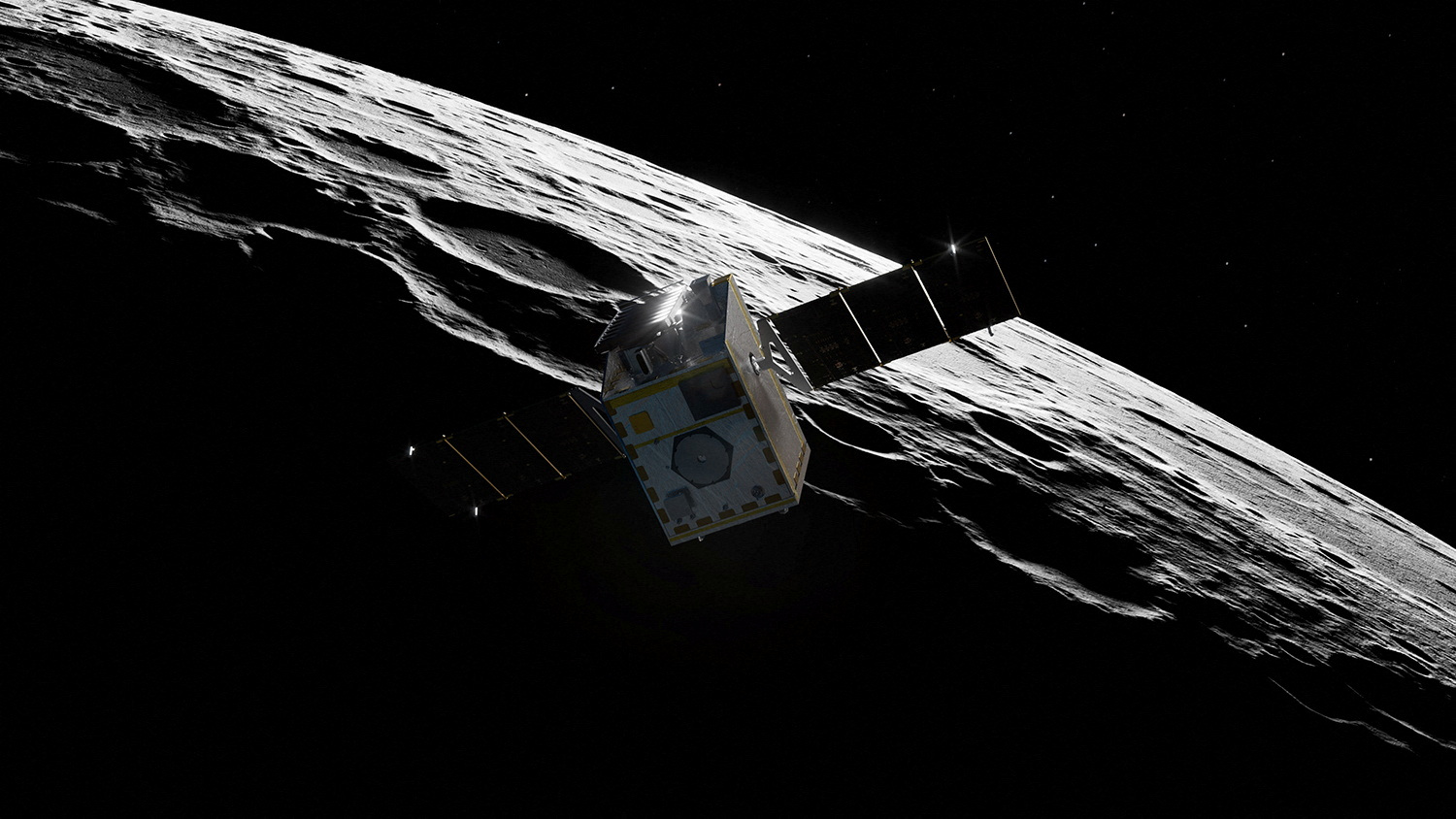
    An illustration shows NASA’s Lunar Trailblazer approaching the moon as it enters its science orbit in this artist’s concept. The small satellite will orbit about 60 miles (100 kilometers) above the lunar surface, producing the best maps of water on the moon to date. Lockheed Martin Space/Handout via REUTERS

    Understanding the Moon’s Water Presence

    Although the moon is often considered dry, past research has detected small amounts of water, even in sunlit areas. However, scientists suspect that larger reserves of water ice could be trapped in the freezing, shadowed craters near the poles. If confirmed, these ice deposits could provide crucial resources for future lunar missions.

    The Lunar Trailblazer satellite, weighing approximately 440 pounds (200 kg) and measuring 11.5 feet (3.5 meters) wide with its solar panels extended, will scan the moon’s surface to identify and map these water deposits. This data will help scientists understand how water is distributed across the lunar surface.

    The Importance of Lunar Water for Future Missions

    Water is a key resource for future moon exploration and potential long-term lunar bases. If enough ice is found, it could be used for drinking water, converted into breathable oxygen, and even processed into hydrogen fuel for rockets. This could reduce the need to transport supplies from Earth, making deep-space missions more sustainable.

    NASA’s Lunar Trailblazer mission marks an important step in preparing for human and robotic exploration on the moon. By identifying water sources, the mission could pave the way for long-term lunar habitation and further space exploration.

    With inputs from Reuters

    Author

    • StratNewsGlobal Tech Team
      StratNewsGlobal Tech Team

      View all posts
    Featured
    Share. Facebook Twitter Pinterest LinkedIn Tumblr Email Reddit Telegram WhatsApp
    StratNewsGlobal Tech Team
    • Website

    Keep Reading

    Kenya Signs $311 Million Deal with Africa50 and India’s PowerGrid for Power Lines

    JetBlue Flight Avoids Mid-Air Collision with U.S. Air Force Jet Near Venezuela

    Ford Records $19.5 Billion Charge as It Retreats from Electric Vehicle Plans

    Italian Scientists Create 3D-Printed Snacks from Lab-Grown Plant Cells

    Korea Zinc to Build $7.4 Billion U.S.-Backed Smelter in Tennessee

    Tesla Directors Earn $3 Billion from Stock Options, Raising Governance Concerns

    Add A Comment
    Leave A Reply Cancel Reply

    Anti Drone System (CUAS)
    Latest Posts

    Kenya Signs $311 Million Deal with Africa50 and India’s PowerGrid for Power Lines

    December 16, 2025

    JetBlue Flight Avoids Mid-Air Collision with U.S. Air Force Jet Near Venezuela

    December 16, 2025

    Ford Records $19.5 Billion Charge as It Retreats from Electric Vehicle Plans

    December 16, 2025

    Italian Scientists Create 3D-Printed Snacks from Lab-Grown Plant Cells

    December 15, 2025

    Korea Zinc to Build $7.4 Billion U.S.-Backed Smelter in Tennessee

    December 15, 2025

    Tesla Directors Earn $3 Billion from Stock Options, Raising Governance Concerns

    December 15, 2025

    Lawmaker Seeks Details on Trump’s Approval of Nvidia H200 Exports

    December 15, 2025

    Google to Lay Australia-Funded Subsea Cables in Papua New Guinea

    December 15, 2025

    Protesters in Tomsk Rally Against Russia’s Roblox Ban

    December 15, 2025

    NTT Chief Urges Japan to Focus on Niche Semiconductor Strategy

    December 15, 2025

    Subscribe to News

    Get the latest sports news from NewsSite about world, sports and politics.

    • Astronomical Events
    • Space Missions
    • Industry News
    • Science
    StratNewsGlobal Tech
    Facebook X (Twitter) Instagram LinkedIn YouTube
    © 2025 StratNews Global, A unit of BharatShakti Communications LLP
    • About Us
    • Contributors
    • Copyright
    • Contact
    • Write for Us

    Type above and press Enter to search. Press Esc to cancel.