

Close Menu
Stratnews GlobalStratnews Global
    Facebook X (Twitter) Instagram
    Trending
    • Bezos Earth Fund Donates $24.5 Million to Create First Cross-Border Marine Reserve
    • Australia Enforces World’s First Social Media Ban for Under-16s
    • Bitcoin Faces Volatile Year-End in 2025 as Correlation with Equities Strengthens
    • Europe Steps Up Crackdown on Big Tech with New Investigations and Fines
    • ICEBlock Developer Sues Trump Administration Over Free Speech Violation
    • U.S. Allows Nvidia to Export H200 AI Chips to China with 25% Fee
    • Paramount Challenges Netflix with $108 Billion Hostile Bid for Warner Bros Discovery
    • Jonny Kim and Crew Return to Earth After 245 Days on ISS
    Stratnews GlobalStratnews Global
    Write for Us
    Tuesday, December 9
    • Space
    • Science
    • AI and Robotics
    • Industry News
    Stratnews GlobalStratnews Global
    Home » Queqiao-2 Satellite Launch Marks New Era in China’s Lunar Communication

    Queqiao-2 Satellite Launch Marks New Era in China’s Lunar Communication

    StratNewsGlobal Tech TeamBy StratNewsGlobal Tech TeamApril 12, 2024 Space No Comments2 Mins Read
    Queqiao-2 Satellite Launch

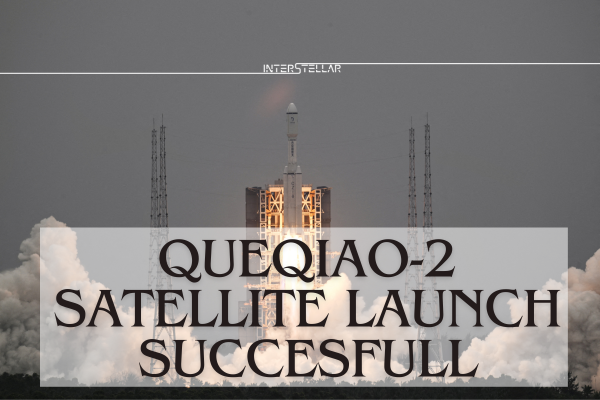
    China has achieved a significant milestone in its lunar exploration programme with the successful launch of the Queqiao-2 satellite, hailed as a “complete success” by the China National Space Administration (CNSA). This development marks a critical step in enhancing communication for China’s future lunar probe missions, according to reports from state media.

    Launched on March 20, the Queqiao-2 satellite, named after a mythical magpie bridge, is designed to act as a communication bridge between Earth and the far side of the Moon. This side of the Moon, permanently out of direct sight from Earth due to its synchronous rotation, cannot directly transmit data to Earth, thus necessitating such a relay satellite.

    Xiong Liang, the researcher and developer of Queqiao-2, likened the satellite to “the main switch” for the forthcoming fourth phase of lunar missions. “Only when the main switch is flipped on, all the communications can kick off,” Xiong stated on state television CCTV. The satellite will serve pivotal upcoming missions, including the Chang’e-6 mission scheduled for May, which aims to retrieve samples from the Moon’s far side—a first in lunar exploration.

    Furthermore, Queqiao-2 is slated to support the Chang’e-7 mission in 2026 and the Chang’e-8 mission in 2028. It entered its designated elliptical orbit around the Moon on April 2, following a series of manoeuvres including correction, near-moon braking, and an orbital adjustment.

    In addition to its primary communication role, Queqiao-2 has also successfully established contact with the Chang’e-4 probe, which performed a historic soft landing on the far side of the Moon and is still operational. It has also communicated with the Chang’e-6 probe, which is currently on the ground.

    This launch follows the unfortunate failure of another significant project, the DRO-A/B satellites, intended for the Moon’s distant retrograde orbit. The future of these satellites remains uncertain as CNSA has not confirmed whether they can be retrieved.

    Overall, the capabilities and performance of Queqiao-2 meet the mission requirements and will provide essential relay communication services for China’s lunar exploration efforts and potentially for other international lunar missions in the future.

    Author

    • StratNewsGlobal Tech Team
      StratNewsGlobal Tech Team

      View all posts
    Featured
    Share. Facebook Twitter Pinterest LinkedIn Tumblr Email Reddit Telegram WhatsApp
    StratNewsGlobal Tech Team
    • Website

    Keep Reading

    Bezos Earth Fund Donates $24.5 Million to Create First Cross-Border Marine Reserve

    Australia Enforces World’s First Social Media Ban for Under-16s

    Bitcoin Faces Volatile Year-End in 2025 as Correlation with Equities Strengthens

    Europe Steps Up Crackdown on Big Tech with New Investigations and Fines

    ICEBlock Developer Sues Trump Administration Over Free Speech Violation

    U.S. Allows Nvidia to Export H200 AI Chips to China with 25% Fee

    Add A Comment
    Leave A Reply Cancel Reply

    Anti Drone System (CUAS)
    Latest Posts

    Bezos Earth Fund Donates $24.5 Million to Create First Cross-Border Marine Reserve

    December 9, 2025

    Australia Enforces World’s First Social Media Ban for Under-16s

    December 9, 2025

    Bitcoin Faces Volatile Year-End in 2025 as Correlation with Equities Strengthens

    December 9, 2025

    Europe Steps Up Crackdown on Big Tech with New Investigations and Fines

    December 9, 2025

    ICEBlock Developer Sues Trump Administration Over Free Speech Violation

    December 9, 2025

    U.S. Allows Nvidia to Export H200 AI Chips to China with 25% Fee

    December 9, 2025

    Paramount Challenges Netflix with $108 Billion Hostile Bid for Warner Bros Discovery

    December 9, 2025

    Jonny Kim and Crew Return to Earth After 245 Days on ISS

    December 9, 2025

    Meta to Give EU Users Real Choice on Personalised Ads

    December 8, 2025

    Trump Signals He Will Review Netflix–Warner Bros Merger

    December 8, 2025

    Subscribe to News

    Get the latest sports news from NewsSite about world, sports and politics.

    • Astronomical Events
    • Space Missions
    • Industry News
    • Science
    StratNewsGlobal Tech
    Facebook X (Twitter) Instagram LinkedIn YouTube
    © 2025 StratNews Global, A unit of BharatShakti Communications LLP
    • About Us
    • Contributors
    • Copyright
    • Contact
    • Write for Us

    Type above and press Enter to search. Press Esc to cancel.