


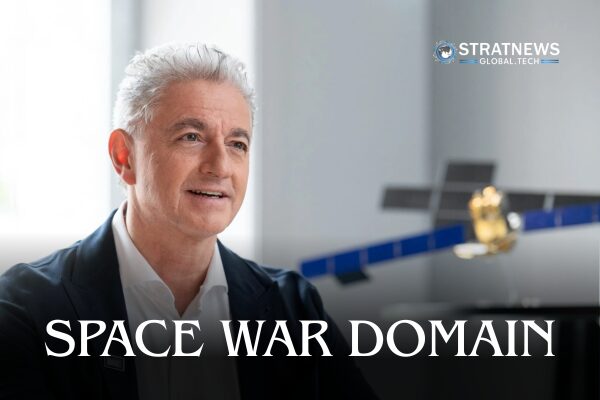
Space has become a contested war zone that demands military dominance across every orbit, the chief executive of SES said on Monday, as the satellite operator’s shares rose 4 percent following its annual results. The gain reflected a wider rally in Europe’s defence linked stocks amid an escalating conflict in the Middle East.
Investors have increasingly turned their attention to space based missile defence systems. Analysts at Citi noted that interest in initiatives such as US President Donald Trump’s Golden Dome plan will likely intensify as the conflict expands. Consequently, companies with exposure to orbital infrastructure have drawn renewed scrutiny.
Space As A War Fighting Domain
During a post earnings call, SES chief executive Adel Al Saleh stressed that modern military systems depend on real time intelligence sharing across defence units. Therefore, satellite connectivity now underpins operational coordination across land, sea and air.
He pointed to France’s nuclear aircraft carrier Charles de Gaulle as an example. Last year, the vessel led a multi ship mission in the Pacific Ocean that relied on SES satellite networks for communication and coordination.
Al Saleh told investors that militaries now treat space capabilities with the same importance as air superiority, naval power or cybersecurity. As a result, governments increasingly view orbital infrastructure as a core defence asset rather than a supporting tool.
Sovereign Networks And Strategic Autonomy
According to Al Saleh, SES offers sovereign network slices that give governments full operational control. This model allows states to manage sensitive communications independently. In turn, the approach aligns with Europe’s growing emphasis on strategic autonomy.
He said nations worldwide, particularly the United States and the European Union, are accelerating efforts to scale up space based defence capabilities. Moreover, European policymakers increasingly count space spending towards NATO related defence targets. This shift reflects a broader push to build independent military capacity.
Although current conflicts have accelerated investment, Al Saleh emphasised that sovereign capability remains a long term priority. Even without active hostilities, governments continue to strengthen national resilience in critical domains.
Vertical Integration And Dual Use Strategy
Looking ahead, SES plans to pursue aggressive vertical integration. The company aims to take greater control over supply chains that it considers vital for innovation. By doing so, it intends to reduce external dependencies and safeguard technological development.
At the same time, SES is investing in dual use satellites that combine military and commercial applications. This blended approach enables the company to serve defence customers while maintaining a commercial revenue base. Consequently, SES positions itself at the intersection of security and connectivity.
As geopolitical tensions intensify, space based infrastructure continues to gain strategic importance. Investors, policymakers and defence planners now treat orbital dominance as a defining element of modern military power.
With inputs from Reuters