


Steam Propulsion Emerges As A New Space Age Technology
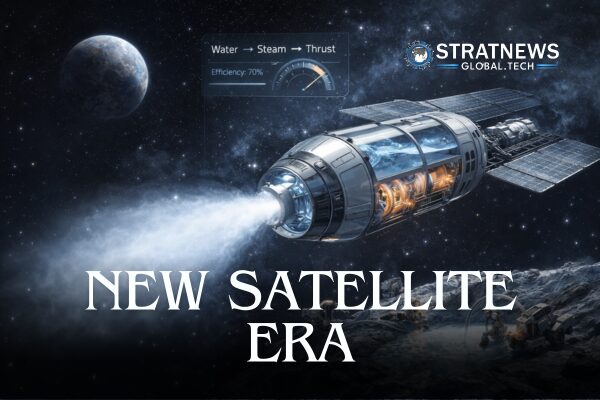
More than 200 years after the first steam-powered machines transformed industry, a new era of steam technology is taking shape in space. This time, engineers are adapting steam propulsion to power small satellites, offering a simple yet effective solution for orbital manoeuvring.
Steam-powered thrusters, equipped with compact water tanks, are already operating in orbit. Moreover, this technology could redefine propulsion for the rapidly expanding CubeSat and small satellite sector. As thousands of small satellites launch each year, demand for efficient and compact propulsion systems continues to rise.
Steam Thrusters Power Small Satellite Innovation
Among the companies advancing this technology is British startup SteamJet Space Systems. The firm has developed the TunaCan Thruster, named for its compact size similar to a tuna can. Despite its small form, the device carries only 130 grams of water yet can extend a satellite’s operational life by years.
Dr Marco Pavan, co-founder and chief executive of SteamJet Space Systems, described the system as a “space kettle”. He explained that the thruster works by heating water to create steam and then ejecting it to generate thrust.
In addition, the company has introduced Steam Thruster One, which supports both CubeSats and slightly larger small satellites. These innovations aim to maximise efficiency while maintaining minimal size and weight.
Practical Design Supports Satellite Performance
The TunaCan Thruster is specifically designed for the smallest CubeSats, which measure just 10 centimetres across. Furthermore, its external mounting allows satellite operators to preserve valuable internal space for payloads and onboard systems.
This design approach ensures that satellites can carry essential instruments without compromise. At the same time, it enables operators to integrate propulsion without redesigning core structures. Consequently, the technology offers flexibility for a wide range of missions.
Pavan emphasised the importance of onboard propulsion systems. He noted that satellites must be able to adjust their orbits, especially when facing potential collisions. Therefore, active propulsion plays a critical role in maintaining safe and sustainable operations in space.
Water Propulsion Offers Cost And Environmental Benefits
SteamJet Space Systems highlights water as a key advantage of its propulsion method. Compared with traditional chemical propellants, water is cheaper, easier to handle, and significantly more environmentally friendly.
Additionally, the system delivers thrust at speeds comparable to existing technologies. This balance of performance and sustainability makes steam propulsion an attractive option for future satellite missions.
Currently, seven of the company’s thrusters are already in orbit. Furthermore, the propulsion system is set to fly on a secondary CubeSat payload during NASA’s Artemis II mission, scheduled for April 2026. This milestone underscores growing confidence in steam-based propulsion as a viable solution for space exploration.
With inputs from Reuters