


Italian Scientists Develop 3D-Printed Sweet Snacks from Lab-Grown Plant Cells
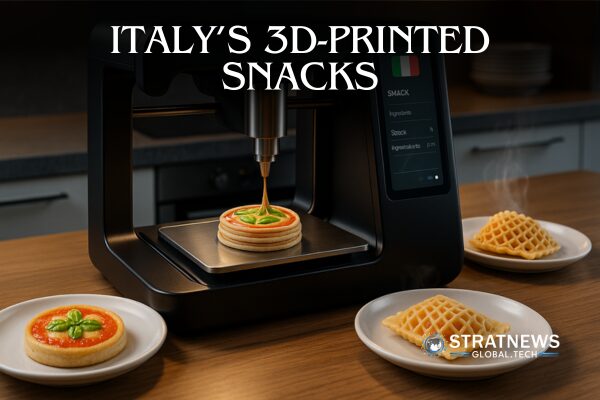
Scientists in Italy are experimenting with lab-grown plant cells and fruit residues to create 3D-printed sweet snacks with high nutritional value, blending tradition with futuristic food innovation. The Nutri3D project, led by Italy’s National Agency for New Technologies, Energy and Sustainable Economic Development (ENEA), aims to design sustainable treats that retain familiar flavours while addressing global food security challenges.
Reinventing Pastries for a Changing World
Italy’s culinary heritage was recently added to UNESCO’s list of intangible cultural traditions, yet researchers are already looking ahead. The Nutri3D team is developing nutrient-rich prototypes such as snack bars and glossy “honey pearls,” designed to preserve both flavour and nutritional content.
“In a world where arable land is shrinking and climate change forces us to rethink food production, the goal is to keep making what we are used to eating,” said Silvia Massa, head of ENEA’s Agriculture 4.0 laboratory. “The aim is not to grow the plant itself, but its cells.”
Merging Science with Sustainability
While northern European scientists have pioneered similar technologies—producing cell-based fruit compotes in Finland and cocoa-like flavourings in Zurich—Italy’s approach stands out for combining innovation with resource recovery. “We Italians add creativity, combining cellular food with recovered by-products,” Massa explained, referring to fruit residues left over from jam production.
The project is being developed in collaboration with EltHub, a private R&D firm within the ELT Group, and Rigoni di Asiago, a family-owned producer of organic foods. At EltHub’s facility in the Abruzzo region, ENEA’s plant-based “inks” are used in 3D printers to shape experimental snacks.
From Earth to Space: The Future of 3D Food
An ENEA survey found that 59% of Italians are open to trying such foods. The technology could have broader applications beyond everyday nutrition. EltHub director Ermanno Petricca said the method could prove invaluable in environments where resources are scarce, such as space missions or conflict zones, describing the new snacks as “fruit for astronauts.”
ENEA is also testing microgreens and miniature tomatoes for potential space cultivation. On Earth, 3D-printed foods could enable personalised nutrition for people with specific dietary needs. Rome’s Impact Food restaurant has already introduced 3D-printed plant-based meat slices, signalling how advanced food technology is starting to enter mainstream dining.
with inputs from Reuters