


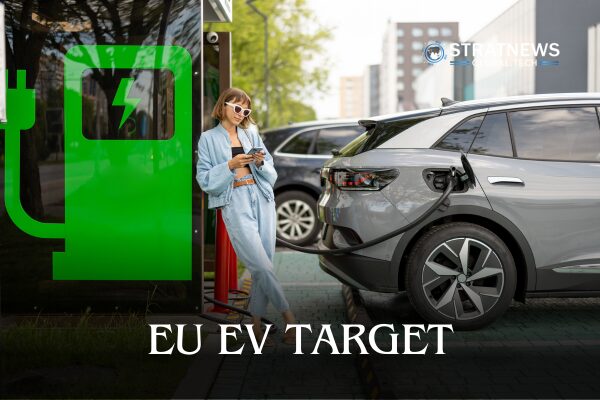
EU Poised to Roll Back 2035 Ban on Combustion-Engine Cars
The European Commission is preparing to reverse its landmark 2035 ban on new combustion-engine car sales, marking a major policy shift under pressure from Germany, Italy and leading automakers facing tough competition from Chinese and U.S. rivals.
According to EU and industry sources, the revised plan—expected to be unveiled on Tuesday—could delay the ban by up to five years or relax it indefinitely. The decision would represent the most significant retreat from the bloc’s green agenda in recent years, signalling a recalibration of climate goals amid economic and industrial challenges.
Pushback from Carmakers and Member States
Manfred Weber, head of the European People’s Party, confirmed the Commission’s plans to “abolish the ban on combustion engines,” calling the original 2023 law a “serious industrial policy mistake.” The law had required that all new cars and vans sold across the European Union be CO₂ emission-free from 2035, a measure designed to speed up the transition to electric mobility.
Traditional automakers such as Volkswagen and Stellantis have lobbied for looser emission targets, arguing that sluggish EV demand, high costs, and limited charging infrastructure make the current goals unrealistic. “It’s not a sustainable reality today in Europe,” said Ford CEO Jim Farley, adding that industry needs were “not well balanced” with EU carbon targets.
The Commission had already granted automakers limited flexibility earlier this year, allowing them to meet 2025 emission targets over a three-year period. However, carmakers continue to seek approval to sell combustion-engine models running on synthetic or biofuels, as well as plug-in hybrids and range extenders.
Debate Over E-Fuels and Industry Competitiveness
The European Commission, led by President Ursula von der Leyen, is expected to back the use of e-fuels and advanced biofuels made from agricultural residues and waste oils as part of a “multi-technology approach.” Industry advocates argue this will preserve jobs and industrial capacity while supporting Europe’s energy transition.
Todd Anderson, chief technology officer at Phinia, said internal combustion engines “will be around for the rest of the century,” predicting a diversified energy landscape rather than an all-electric future.
However, environmental groups warn that biofuels are scarce, costly, and not truly carbon-neutral. “Europe needs to stay the course on electric,” said William Todts, executive director of clean transport campaign group Transport & Environment. “It’s clear electric is the future.”
EV Sector Fears Setback in Global Race
The electric vehicle industry has criticised the potential rollback, warning it could undermine investor confidence and leave Europe lagging behind China in the transition to clean mobility. Polestar CEO Michael Lohscheller argued, “The technology is ready, charging infrastructure is ready, and consumers are ready—so what are we waiting for?”
The European Commission is expected to accompany its policy revision with a new plan to accelerate EV adoption in corporate fleets, which account for about 60% of new car sales across Europe. It may also introduce incentives for small, low-cost EVs, creating a separate regulatory category to make them more affordable and attractive to consumers.
As the debate intensifies, the EU faces the challenge of balancing environmental commitments with industrial competitiveness, consumer realities and energy security in an increasingly fragmented global market.
with inputs from Reuters

