


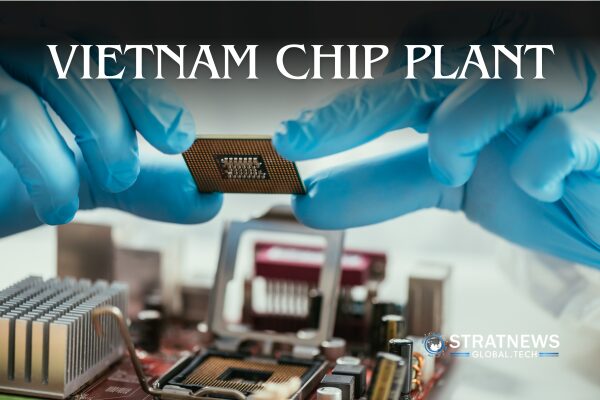
Viettel Begins Construction of Vietnam’s First Semiconductor Fabrication Plant
Vietnam’s military-owned telecom giant Viettel has broken ground on the country’s first semiconductor fabrication plant, marking a significant step in its ambition to build a self-sufficient chip manufacturing ecosystem. Trial production at the facility is expected to begin by late 2027, according to a company statement issued on Friday.
Building Vietnam’s Chipmaking Capability
The 27-hectare plant is being built in the Hoa Lac Hi-Tech Park, on the outskirts of Hanoi. Viettel said the site will complete construction and technology transfer by the end of next year, followed by a trial operation phase running until 2030. During this period, the company will fine-tune production processes and upgrade equipment to meet advanced semiconductor standards.
Once operational, the facility will allow Vietnam to participate in all six stages of the semiconductor value chain, including wafer fabrication—a technically demanding process that has so far not been carried out domestically. The plant will support chip research, design, manufacturing, and testing for applications in aerospace, telecommunications, medical technology, and the automotive industry. Viettel has not disclosed the total investment value of the project.
Strengthening Vietnam’s Semiconductor Ecosystem
Vietnam has already established itself as an emerging hub for semiconductor testing and packaging, attracting major multinational companies such as Intel, Samsung Electronics, Amkor Technology, Qualcomm, and Marvell Technology. Although China and Taiwan continue to dominate global back-end manufacturing, Vietnam’s growth in the sector has been rapid.
A 2024 report by the U.S. Semiconductor Industry Association and Boston Consulting Group projects that Vietnam’s share of global assembly, testing, and packaging capacity could rise from 1% in 2022 to between 8% and 9% by 2032.
Government Support and Long-Term Vision
Viettel Chairman Tao Duc Thang said the new plant will have future capacity to integrate emerging technologies, aligning with Vietnam’s broader national strategy to expand its semiconductor capabilities. The government plans to train 50,000 chip design engineers by 2030 and increase the total semiconductor workforce to over 100,000 by 2040.
These initiatives reflect Vietnam’s determination to establish itself as a competitive player in the global semiconductor landscape, strengthening supply chain resilience and advancing technological innovation.
with inputs from Reuters

