

Close Menu
Stratnews GlobalStratnews Global
    Facebook X (Twitter) Instagram
    Trending
    • University of Surrey Engineers Develop Smart Flooring to Reduce Fall Injuries
    • Global Smartphone Shipments Set to Drop 2.1% in 2026 amid Chip Shortages
    • Blue Origin Developing Space-Based Data Centres for AI, Report Says
    • Suspected Cyberattack Hits German Parliament During U.S.-Ukraine Talks
    • EU Defence Flagship Projects Stall as Member States Resist Drone Wall Plan
    • Kenya Signs $311 Million Deal with Africa50 and India’s PowerGrid for Power Lines
    • JetBlue Flight Avoids Mid-Air Collision with U.S. Air Force Jet Near Venezuela
    • Ford Records $19.5 Billion Charge as It Retreats from Electric Vehicle Plans
    Stratnews GlobalStratnews Global
    Write for Us
    Tuesday, December 16
    • Space
    • Science
    • AI and Robotics
    • Industry News
    Stratnews GlobalStratnews Global
    Home » Chang’e-6 Unveils Deep Chemical Differences in Moon’s Mantle

    Chang’e-6 Unveils Deep Chemical Differences in Moon’s Mantle

    ReshamBy ReshamAugust 11, 2025 Space No Comments2 Mins Read
    Chang’e-6

    Chang’e-6 Samples Reveal Chemically ‘Super-Reduced’ Lunar Mantle

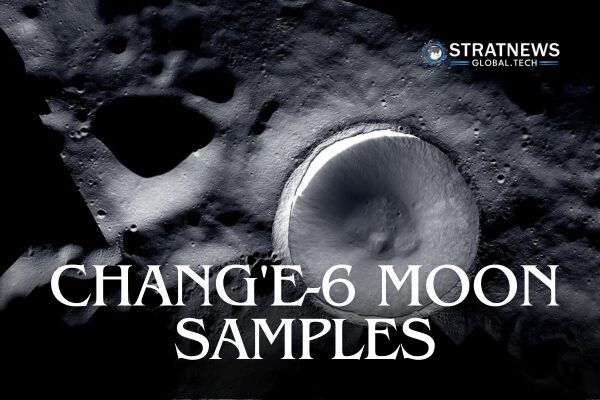
    Chinese scientists have found evidence of a “super-reduced” state in the Moon’s mantle after analysing samples collected from the lunar far side by the Chang’e-6 mission. The discovery, announced by the China National Space Administration’s Lunar Exploration and Space Engineering Centre, offers new insight into the Moon’s deep composition and its evolutionary history.

    A Drier, More Chemically Reduced Mantle

    Published in Nature Communications, the study shows that mantle material beneath the Chang’e-6 landing site is not only drier and more depleted than samples from the Moon’s near side, but also exists in a more chemically reduced state. This means elements are found in lower oxidation states.

    “It either hasn’t undergone oxidation, or became more reduced later, possibly due to a major impact event,” explained Yang Wei, a researcher at the Chinese Academy of Sciences’ Institute of Geology and Geophysics. “The redox state of planetary bodies is a key indicator for understanding their internal processes and surface habitability.”

    Differences Run Deep Between Lunar Sides

    The Moon’s mantle, around 1,000 km thick, accounts for more than half of its volume and drives volcanic and magmatic activity. While scientists have long noted differences between the near side and far side from imaging data, the new analysis confirms these variations extend hundreds of kilometres into the mantle.

    “Previously, we could only observe these differences through surface images,” said Yang. “Our current results prove they persist even deep into the interior.”

    Historic Chang’e-6 Mission and Broader Impact

    In 2024, Chang’e-6 returned 1,935.3 grams of far-side lunar material to Earth. The samples were collected from the South Pole–Aitken Basin, the Moon’s largest, deepest, and oldest impact basin. This location offered an unprecedented opportunity to study compositional asymmetry between the two hemispheres and investigate its origins.

    Researchers say the findings not only deepen understanding of lunar formation and evolution but also provide valuable guidance for future resource exploration and utilisation on the Moon. The results could have broader implications for planetary science beyond Earth’s nearest neighbour.

    with inputs from Reuters

    Author

    • Resham
      Resham

      Research Associate at Interstellar.| China Scholar | China Social Media & Foreign Affairs|

      View all posts
    Featured
    Share. Facebook Twitter Pinterest LinkedIn Tumblr Email Reddit Telegram WhatsApp
    Resham
    • X (Twitter)

    Research Associate at Interstellar.| China Scholar | China Social Media & Foreign Affairs|

    Keep Reading

    University of Surrey Engineers Develop Smart Flooring to Reduce Fall Injuries

    Global Smartphone Shipments Set to Drop 2.1% in 2026 amid Chip Shortages

    Blue Origin Developing Space-Based Data Centres for AI, Report Says

    Suspected Cyberattack Hits German Parliament During U.S.-Ukraine Talks

    EU Defence Flagship Projects Stall as Member States Resist Drone Wall Plan

    Kenya Signs $311 Million Deal with Africa50 and India’s PowerGrid for Power Lines

    Add A Comment
    Leave A Reply Cancel Reply

    Anti Drone System (CUAS)
    Latest Posts

    University of Surrey Engineers Develop Smart Flooring to Reduce Fall Injuries

    December 16, 2025

    Global Smartphone Shipments Set to Drop 2.1% in 2026 amid Chip Shortages

    December 16, 2025

    Blue Origin Developing Space-Based Data Centres for AI, Report Says

    December 16, 2025

    Suspected Cyberattack Hits German Parliament During U.S.-Ukraine Talks

    December 16, 2025

    EU Defence Flagship Projects Stall as Member States Resist Drone Wall Plan

    December 16, 2025

    Kenya Signs $311 Million Deal with Africa50 and India’s PowerGrid for Power Lines

    December 16, 2025

    JetBlue Flight Avoids Mid-Air Collision with U.S. Air Force Jet Near Venezuela

    December 16, 2025

    Ford Records $19.5 Billion Charge as It Retreats from Electric Vehicle Plans

    December 16, 2025

    Italian Scientists Create 3D-Printed Snacks from Lab-Grown Plant Cells

    December 15, 2025

    Korea Zinc to Build $7.4 Billion U.S.-Backed Smelter in Tennessee

    December 15, 2025

    Subscribe to News

    Get the latest sports news from NewsSite about world, sports and politics.

    • Astronomical Events
    • Space Missions
    • Industry News
    • Science
    StratNewsGlobal Tech
    Facebook X (Twitter) Instagram LinkedIn YouTube
    © 2025 StratNews Global, A unit of BharatShakti Communications LLP
    • About Us
    • Contributors
    • Copyright
    • Contact
    • Write for Us

    Type above and press Enter to search. Press Esc to cancel.