

Close Menu
Stratnews GlobalStratnews Global
    Facebook X (Twitter) Instagram
    Trending
    • Italian Scientists Create 3D-Printed Snacks from Lab-Grown Plant Cells
    • Korea Zinc to Build $7.4 Billion U.S.-Backed Smelter in Tennessee
    • Tesla Directors Earn $3 Billion from Stock Options, Raising Governance Concerns
    • Lawmaker Seeks Details on Trump’s Approval of Nvidia H200 Exports
    • Google to Lay Australia-Funded Subsea Cables in Papua New Guinea
    • Protesters in Tomsk Rally Against Russia’s Roblox Ban
    • NTT Chief Urges Japan to Focus on Niche Semiconductor Strategy
    • EU set to roll back 2035 ban on petrol and diesel cars amid automaker pressure
    Stratnews GlobalStratnews Global
    Write for Us
    Tuesday, December 16
    • Space
    • Science
    • AI and Robotics
    • Industry News
    Stratnews GlobalStratnews Global
    Home » Tiangong Astronauts Heat Tungsten to 3,100°C in Space Materials Breakthrough

    Tiangong Astronauts Heat Tungsten to 3,100°C in Space Materials Breakthrough

    ReshamBy ReshamAugust 25, 2025 Space No Comments2 Mins Read
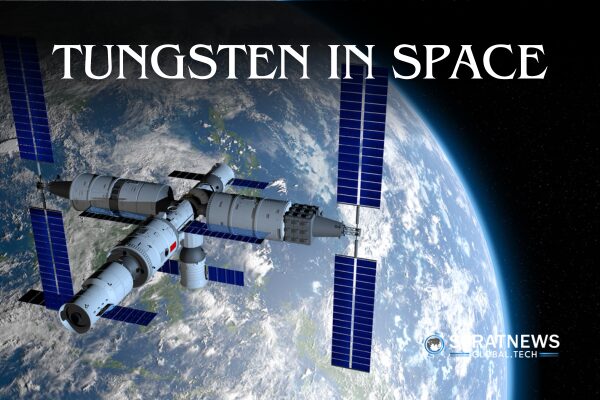
    tiangong space station

    Tiangong Space Station Breaks Record in Tungsten Alloy Experiment

    Astronauts aboard China’s Tiangong space station have set a new benchmark in space materials science. In a groundbreaking experiment, they successfully heated tungsten alloy to over 3,100 degrees Celsius, working closely with ground-based researchers.

    Space-Based Research Achieves Record-High Temperatures

    This experiment, conducted in coordination with the Chinese Academy of Sciences’ space application system, is part of a broader scientific initiative. Since the start of the year, 58 research and application projects have been carried out in orbit, marking notable advancements.

    The tungsten heating experiment was led by scientists from the School of Physical Science and Technology at Northwestern Polytechnical University. The team first designed and tested the experiment on Earth using an electrostatic levitation device. This technology counteracts gravity using electric force, keeping the material suspended without contact. The same system was then adapted for use on the space station.

    Why Tungsten in Space?

    Professor Hu Liang explained the benefits of conducting such tests in microgravity. In space, melted tungsten naturally forms a perfect sphere, which helps researchers analyse its physical and chemical traits with greater accuracy.

    Moreover, creating tungsten alloys in space solves a key issue found on Earth. Tungsten’s high density often leads to uneven alloy structures, as heavier elements sink. However, in microgravity, the resulting material is much more uniform. This uniformity significantly improves alloy performance, especially in demanding environments.

    Tungsten holds the record for the highest known melting point at 3,412 degrees Celsius. Its extreme heat resistance makes it valuable in sectors like nuclear fusion and aerospace.

    A Leap Forward in Material Science

    Using the space station’s advanced containerless experiment cabinet, the team heated tungsten alloy beyond 3,100 degrees Celsius—setting a new world record for in-space experiments of this kind. The cabinet keeps materials suspended during testing, preventing distortion caused by contact with container surfaces.

    According to Professor Hu, the results validate the strength of China’s homegrown space materials technology. The successful heating of tungsten alloy provides essential data for improving next-generation materials. This progress is expected to benefit both nuclear industry applications and high-temperature aerospace technologies.

    with inputs from Reuters

    Author

    • Resham
      Resham

      Research Associate at Interstellar.| China Scholar | China Social Media & Foreign Affairs|

      View all posts
    Featured
    Share. Facebook Twitter Pinterest LinkedIn Tumblr Email Reddit Telegram WhatsApp
    Resham
    • X (Twitter)

    Research Associate at Interstellar.| China Scholar | China Social Media & Foreign Affairs|

    Keep Reading

    Italian Scientists Create 3D-Printed Snacks from Lab-Grown Plant Cells

    Korea Zinc to Build $7.4 Billion U.S.-Backed Smelter in Tennessee

    Tesla Directors Earn $3 Billion from Stock Options, Raising Governance Concerns

    Lawmaker Seeks Details on Trump’s Approval of Nvidia H200 Exports

    Google to Lay Australia-Funded Subsea Cables in Papua New Guinea

    Protesters in Tomsk Rally Against Russia’s Roblox Ban

    Add A Comment
    Leave A Reply Cancel Reply

    Anti Drone System (CUAS)
    Latest Posts

    Italian Scientists Create 3D-Printed Snacks from Lab-Grown Plant Cells

    December 15, 2025

    Korea Zinc to Build $7.4 Billion U.S.-Backed Smelter in Tennessee

    December 15, 2025

    Tesla Directors Earn $3 Billion from Stock Options, Raising Governance Concerns

    December 15, 2025

    Lawmaker Seeks Details on Trump’s Approval of Nvidia H200 Exports

    December 15, 2025

    Google to Lay Australia-Funded Subsea Cables in Papua New Guinea

    December 15, 2025

    Protesters in Tomsk Rally Against Russia’s Roblox Ban

    December 15, 2025

    NTT Chief Urges Japan to Focus on Niche Semiconductor Strategy

    December 15, 2025

    EU set to roll back 2035 ban on petrol and diesel cars amid automaker pressure

    December 15, 2025

    U.S. Bill Targets Chinese Lidar Sensors Over Fear of Space Hack

    December 15, 2025

    President Murmu honours winners at National Energy Conservation Awards 2025

    December 15, 2025

    Subscribe to News

    Get the latest sports news from NewsSite about world, sports and politics.

    • Astronomical Events
    • Space Missions
    • Industry News
    • Science
    StratNewsGlobal Tech
    Facebook X (Twitter) Instagram LinkedIn YouTube
    © 2025 StratNews Global, A unit of BharatShakti Communications LLP
    • About Us
    • Contributors
    • Copyright
    • Contact
    • Write for Us

    Type above and press Enter to search. Press Esc to cancel.