


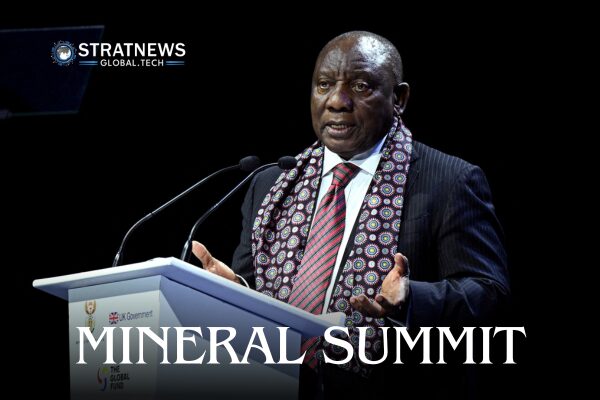
Africa’s Critical Minerals Take Centre Stage at Historic G20 Summit in Johannesburg
As world leaders gather in Johannesburg for the first-ever G20 summit on African soil, hundreds of climate activists marched through the streets demanding that Africa’s vast reserves of critical minerals — such as lithium, cobalt and nickel — benefit local communities rather than foreign corporations.
The protesters, representing movements from Uganda to Zimbabwe, called for greater transparency and community control over the continent’s mineral wealth. “We are so rich in resources. This should mean job creation and skills transfer — our own energy sector,” said Lazola Kati, campaign manager for Fossil Ad Ban, an initiative under Fossil Free South Africa.
Calls for Equitable Development and Industrialisation
Africa holds 30% of the world’s critical minerals, essential for the clean energy transition and the growing AI-driven digital economy. Yet, the continent captures less than 5% of the value generated from global energy technologies, according to the International Energy Agency (IEA).
Experts and policymakers see the G20 summit as a chance for African nations to negotiate a fairer share of this value. Maxwell Gomera, UNDP’s resident representative in South Africa, urged leaders to push for local mineral processing rather than exporting raw materials. “Selling raw cobalt is like exporting flour when you could be exporting bread,” he said. “The world is in a new scramble for Africa’s minerals — we must ensure the new green order doesn’t become the old colonial order.”
The African Union (AU), now a permanent G20 member, aims to use its new position to strengthen Africa’s collective voice. Deprose Muchena of the Open Society Foundations stressed that the AU’s inclusion allows the “powerful industrialisation message” to continue even after the summit.
The Africa Green Minerals Strategy
The Africa Green Minerals Strategy, endorsed by the AU in 2025, promotes responsible mining, skills development, and investment in local processing. Over a dozen countries — including the Democratic Republic of Congo (DRC), Nigeria, and Namibia — have already restricted or banned raw mineral exports to encourage beneficiation.
In line with this, Zambia and the DRC are creating special economic zones to manufacture battery components from local minerals. South Africa, meanwhile, signed an “unprecedented” critical minerals agreement with the European Union, which President Cyril Ramaphosa said would help the country “move up the value chain.”
Protests and Political Undercurrents
Despite the summit’s significance, several global leaders, including US President Donald Trump and China’s Xi Jinping, have chosen not to attend. Both nations hold major stakes in Africa’s mineral supply chains. Some activists welcomed their absence. “This is the time to define development and investment on African terms,” said Kati.
At the protest, Raphael Bahebwa, a Congolese bishop and activist, condemned the exploitation behind cobalt mining. “Everyone carrying a cellphone is carrying the blood of our people,” he said. “Communities must be honoured on their land so they can benefit as well.”
Managing a Finite Resource
While enthusiasm for mineral-driven industrialisation runs high, experts warn against overreliance on extractive industries. “Resources are finite,” said Muchena. “At some point, the demand for critical minerals will fall, just as diamonds have been replaced by synthetics.”
Between 2023 and 2024, Africa exported around $250 billion in critical minerals, with revenues expected to reach $1.6 trillion over the next 25 years. Muchena urged leaders to channel this wealth into local communities, particularly the 600 million Africans still lacking reliable electricity.
As Africa hosts the G20 for the first time, the message from the streets is clear: the continent’s mineral wealth must power its own development, not another cycle of dependency.
with inputs from Reuters

