


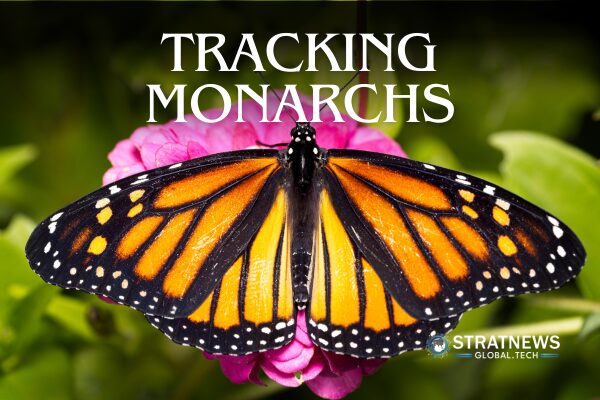
Scientists in Florida are deploying newly developed tracking technology to follow monarch butterflies in real time, a breakthrough that researchers say could reshape how insect migration and behaviour are studied.
Researchers from the University of Miami and Princeton University are fitting monarch butterflies with extremely small and lightweight radio tags. These tags transmit location data as the insects travel across North America. Small enough to rest on a monarch’s back, the devices allow scientists to follow movements that were previously reconstructed only through sightings and recovered tags.
Ordinary tracking methods have long limited the study of insect migration. However, this new approach provides continuous, precise data and opens the door to answering questions that have remained unresolved for decades.
New technology meets biological expertise
The project emerged from a collaboration that combined biological knowledge with technological innovation. Dr Neil Rosser, an evolutionary biologist and professor at the University of Miami, said the partnership developed naturally.
“We knew my expertise was butterflies and Isla’s expertise was tech and drones and AI, and we thought, what can we do together,” Rosser said. “Serendipitously, this new technology came on the market where you could put these tiny little tags on butterflies and track them through space.”
The tags are manufactured by Cellular Tracking Technologies and rely on Bluetooth signals rather than traditional batteries. Small solar panels power the devices, allowing them to transmit data for the butterfly’s entire lifespan. Any receiver within range, including smartphones, can detect the signal, greatly expanding the potential network of data collection.
Unlocking monarch migration mysteries
According to Isla Duporge, a postdoctoral research fellow at Princeton University, the technology has the potential to revolutionise monarch research.
“Being able to put tags on monarchs and track them in real time opens the floodgates,” Duporge said. Monarch butterflies migrate thousands of miles from Canada and the northern United States to overwintering sites in Mexico. This journey represents the longest known migration of any insect, despite the fact that individual butterflies have never made the trip before.
Even so, scientists still lack clear answers about the exact routes monarchs follow, how many pathways they use, and how migratory populations differ from monarchs that remain in one region year round.
Real time data and wider applications
Data collected from the tags appears on interactive maps that show detailed movement paths. As a result, researchers can see where monarchs travel, where they stop to rest, and how weather or environmental conditions influence their decisions.
Beyond monarchs, scientists say the same technology could soon be applied to other insects such as dragonflies and locusts. This could support broader ecological research and even humanitarian efforts by helping track destructive insect swarms.
“It really is a game changer,” Rosser said. “Not just for monarchs, but for understanding how animals move through the world.”
With inputs from Reuters

