


A fresh analysis of radar data collected more than three decades ago by NASA’s Magellan spacecraft has revealed what scientists say is the first-ever detection of a subsurface geological feature on Venus. The findings point to the presence of a large underground cavity likely formed by volcanic activity, offering new insight into the hidden interior of Earth’s closest planetary neighbour.
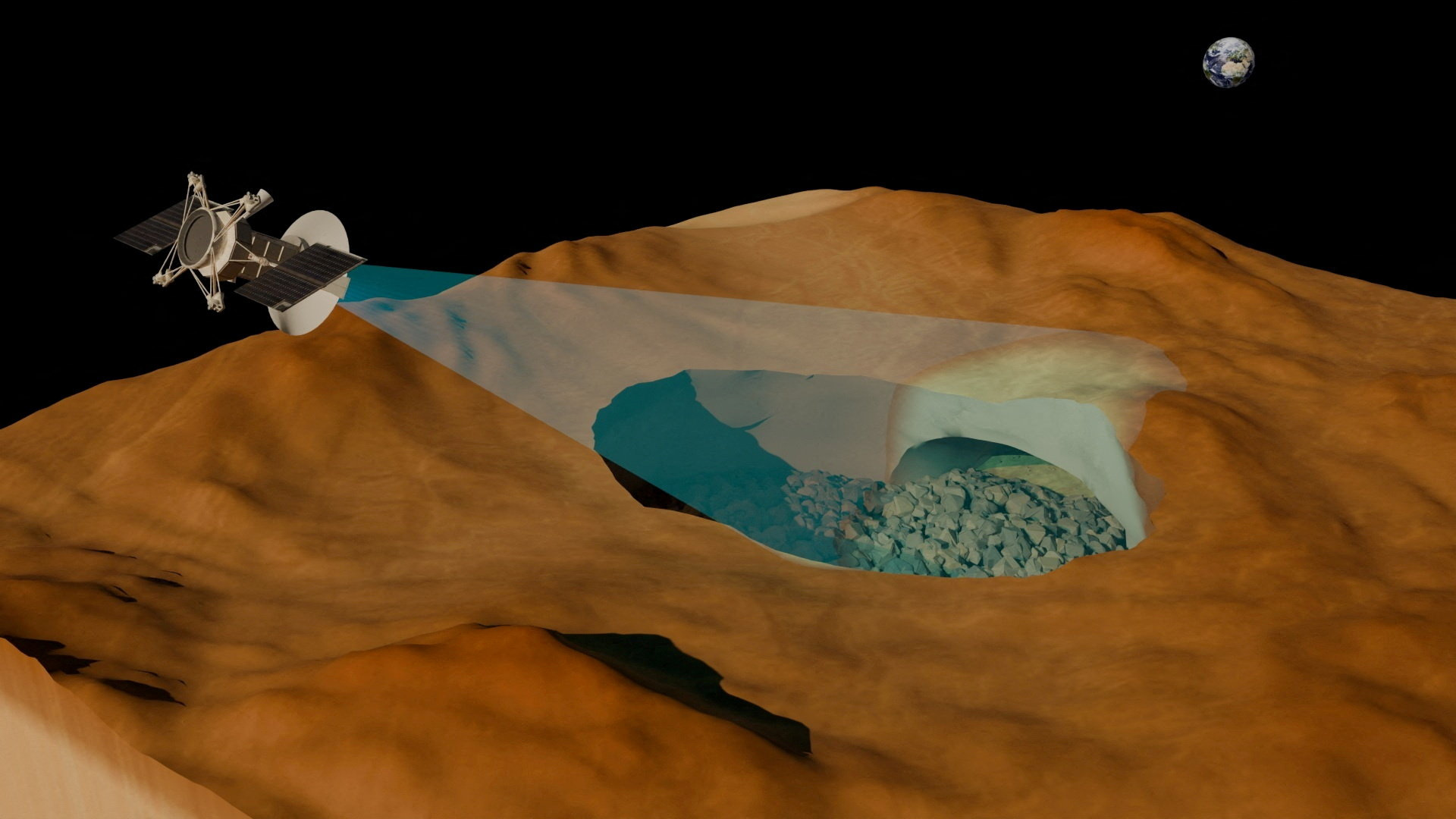
The study, published in Nature Communications, examined radar observations made between 1990 and 1992 by Magellan’s Synthetic Aperture Radar instrument. Venus’s surface is permanently obscured by thick, toxic clouds, making radar the only viable method for studying its geology. Using a newly developed analytical technique designed to identify underground voids, researchers detected signals consistent with an empty lava tube beneath the planet’s surface.
Venus Lava Tube Discovery on Nyx Mons Volcano
The structure is located on the western flank of Nyx Mons, a massive shield volcano roughly 362 kilometres wide in Venus’s northern hemisphere. The region is marked by numerous surface pits, believed to be caused by collapses above underground cavities. According to the researchers, these collapse features provided an initial clue that lava tubes might exist beneath the surface.
Radar reflections detected by Magellan suggest the cavity has an average diameter of around one kilometre, a roof thickness of at least 150 metres and an empty internal height exceeding 375 metres. While only a short section of the structure could be directly observed due to limitations in the original data, scientists believe the lava tube could extend for several kilometres.
Why Lava Tubes Matter for Venus Science
Lava tubes are natural tunnels formed when molten lava continues to flow beneath a hardened surface crust. Such features are well documented on Earth and the Moon and are thought to exist on Mars. Their presence on Venus had long been theorised due to the planet’s extensive volcanic history, but until now there had been no direct observational evidence.
Researchers noted that the Venusian lava tube appears larger than those typically found on Earth and Mars, and comparable to the largest examples seen on the Moon. This is consistent with observations that lava channels on Venus are generally longer and broader than those on other rocky bodies.
Future Missions Set to Probe Deeper
Venus has received relatively limited scientific attention compared with Mars, but that is set to change. Upcoming missions such as the European Space Agency’s Envision and NASA’s Veritas spacecraft will carry advanced radar instruments capable of higher-resolution surface imaging. Envision will also deploy a ground-penetrating radar system able to probe hundreds of metres beneath the surface.
Scientists say the Venus lava tube discovery represents a major step forward, transforming long-standing theory into direct observation and opening new avenues for understanding the planet’s geology, volcanic history and internal structure in the decade ahead.

