


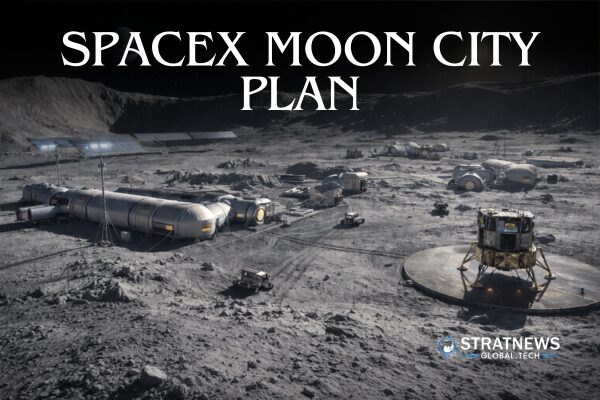
Elon Musk said on Sunday that SpaceX has shifted its strategic focus towards building a “self-growing city” on the Moon, marking a significant change in the company’s long-term space ambitions. According to Musk, such a lunar settlement could be achieved in less than a decade and is now viewed as a faster and more practical step towards safeguarding the future of human civilisation.
Writing on his X social media platform, Musk said SpaceX still intends to pursue its long-standing goal of establishing a city on Mars within five to seven years. However, he described lunar development as the overriding priority, arguing that reaching the Moon offers a quicker path to building a sustainable off-Earth presence.
The comments align with a recent Wall Street Journal report which said SpaceX had told investors it would prioritise lunar missions before attempting a crewed Mars journey. The report added that the company is targeting March 2027 for an uncrewed landing on the Moon.
SpaceX Moon City Plan Marks Departure from Mars-First Strategy
The shift represents a notable departure from Musk’s previous stance. As recently as last year, he publicly dismissed the Moon as a distraction, insisting SpaceX was “going straight to Mars.” At the time, the company was targeting an uncrewed Mars mission by the end of 2026.
Musk has frequently set aggressive timelines across multiple ventures, including electric vehicles and autonomous driving, many of which have faced repeated delays. Analysts say the recalibration towards the Moon reflects both geopolitical pressures and technical realities.
Geopolitical Competition and Lunar Urgency
The United States is facing growing competition from China to return humans to the lunar surface this decade. No humans have visited the Moon since NASA’s Apollo 17 mission in 1972. SpaceX is a central contractor in NASA’s Artemis programme, holding a $4 billion contract to land astronauts using its Starship vehicle.
Musk said on Monday that NASA will account for less than 5% of SpaceX’s revenue this year, noting that the vast majority comes from its commercial Starlink satellite internet business. He added that SpaceX is considering a public offering later this year that could raise as much as $50 billion.
Broader Corporate Realignment Under Musk
The strategic shift comes as Musk continues to reshape his broader business empire. Less than a week ago, he announced SpaceX’s acquisition of artificial intelligence firm xAI, a move supporters say could strengthen future space-based data centre plans.
Meanwhile, Tesla is undergoing its own transformation. The electric carmaker plans to spend $20 billion this year as it pivots towards autonomous driving and robotics. Musk has said Tesla is halting production of two vehicle models in California to make room for manufacturing its Optimus humanoid robots.
Taken together, the SpaceX moon city plan underscores Musk’s growing emphasis on near-term lunar development as a stepping stone to deeper space ambitions.

