

Close Menu
Stratnews GlobalStratnews Global
    Facebook X (Twitter) Instagram
    Trending
    • India Space Policy And The Rise Of Private Space
    • Will MDR Kill UPI’s Biggest Advantage—Frictionless Payments?
    • Satellite Impact On Astronomical Observations
    • Humanoid Robot Industry Nears ‘ChatGPT Moment’
    • SkyX Vehicle Combines Underwater and Aerial Missions
    • Chang’e-7 Mission Moves Closer to Lunar Launch
    • OpenAI AI Development Slows After Agent Hacked Hugging Face
    • Meta Child Safety Trial Opens as States Seek Changes
    • Support Us
    Stratnews GlobalStratnews Global
    Write for Us
    Friday, August 21
    • Space
    • Science
    • AI and Robotics
    • Industry News
    • Support Us
    Stratnews GlobalStratnews Global
    Home » China Crewed Lunar Rocket Test Powers Through Max Q in Key Flight

    China Crewed Lunar Rocket Test Powers Through Max Q in Key Flight

    ReshamBy ReshamFebruary 12, 2026Updated:February 13, 2026 Space No Comments2 Mins Read
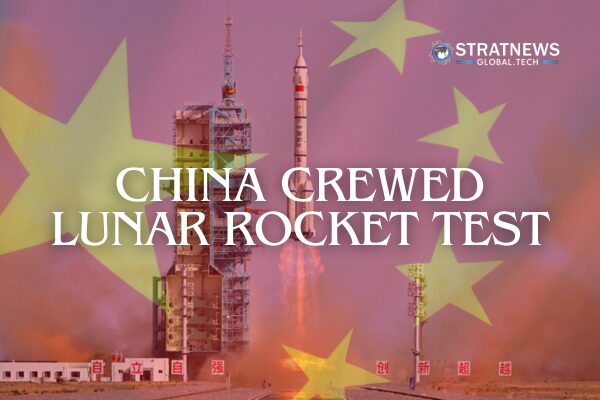
    China Crewed Lunar Rocket Test

    China Crewed Lunar Rocket Test Signals Leap in Space Capabilities

    The China Crewed Lunar Test has marked a major advancement in the country’s ambitions to land astronauts on the Moon. Space technology experts describe the successful demonstration of the Long March-10 heavy-lift rocket and the next-generation Mengzhou spacecraft as a decisive step forward in China’s crewed lunar program.

    The tests were conducted at the Wenchang Spacecraft Launch Site in Hainan Province and included a low-altitude demonstration flight of the Long March-10 rocket along with a maximum dynamic pressure abort test of the Mengzhou crewed spacecraft.

    First Ignition Flight and Max Q Milestone

    The China Crewed Lunar Rocket Test featured the first ignition flight of the Long March-10 rocket. During ascent, the spacecraft successfully powered through Max Q — the phase of flight when aerodynamic forces are at their strongest and risk is highest.

    Both the rocket’s first stage and Mengzhou’s return capsule safely landed in their designated recovery zones, demonstrating critical recovery and reusability capabilities.

    Sea Landing and Reusability Breakthrough

    A key highlight of the China Crewed Lunar Rocket Test was the first sea landing and retrieval of the Mengzhou return capsule. The capsule, designed primarily for lunar missions but also adaptable for space station operations, is built for multiple reuses.

    Wang Zhifei of the China Aerospace Science and Technology Corporation described the soft splashdown and sea recovery as a crucial breakthrough in reusable carrier rocket technology, noting it will accelerate advancements in China’s launch systems.

    Foundation for Future Lunar Landings

    Officials say the China Crewed Lunar Rocket Test lays the groundwork for completing verification flights necessary for eventual lunar landings. Infrastructure and launch systems at Wenchang are progressing as scheduled, with expectations that full testing and launch capabilities for the crewed lunar program could be achieved by year’s end.

    Zhou Jianping, chief designer of China’s manned space program, emphasized the significance of the successful retrieval technologies, calling it a “leapfrog development” achieved on the first attempt.

    The milestone strengthens China’s push toward sending astronauts to the Moon before 2030 and positions the Long March-10 and Mengzhou systems as central pillars of that mission.

    Author

    • Resham
      Resham

      Research Associate at Interstellar.| China Scholar | China Social Media & Foreign Affairs|

      View all posts
    Featured
    Share. Facebook Twitter Pinterest LinkedIn Tumblr Email Reddit Telegram WhatsApp
    Resham
    • X (Twitter)

    Research Associate at Interstellar.| China Scholar | China Social Media & Foreign Affairs|

    Keep Reading

    India Space Policy And The Rise Of Private Space

    Satellite Impact On Astronomical Observations

    Humanoid Robot Industry Nears ‘ChatGPT Moment’

    SkyX Vehicle Combines Underwater and Aerial Missions

    Chang’e-7 Mission Moves Closer to Lunar Launch

    OpenAI AI Development Slows After Agent Hacked Hugging Face

    Add A Comment
    Leave A Reply Cancel Reply

    Anti Drone System (CUAS)
    Latest Posts

    India Space Policy And The Rise Of Private Space

    August 20, 2026

    Will MDR Kill UPI’s Biggest Advantage—Frictionless Payments?

    August 20, 2026

    Satellite Impact On Astronomical Observations

    August 20, 2026

    Humanoid Robot Industry Nears ‘ChatGPT Moment’

    August 20, 2026

    SkyX Vehicle Combines Underwater and Aerial Missions

    August 20, 2026

    Chang’e-7 Mission Moves Closer to Lunar Launch

    August 20, 2026

    OpenAI AI Development Slows After Agent Hacked Hugging Face

    August 19, 2026

    Meta Child Safety Trial Opens as States Seek Changes

    August 19, 2026

    LandSpace Zhuque-3 Booster Makes Landmark Landing

    August 19, 2026

    Unitree Shares Soar Nearly Six-Fold in Shanghai Debut

    August 19, 2026

    Subscribe to News

    Get the latest sports news from NewsSite about world, sports and politics.

    • Astronomical Events
    • Space Missions
    • Industry News
    • Science
    StratNewsGlobal Tech
    Facebook X (Twitter) Instagram LinkedIn YouTube
    © 2026 StratNews Global, A unit of BharatShakti Communications LLP
    • About Us
    • Contributors
    • Copyright
    • Contact
    • Write for Us

    Type above and press Enter to search. Press Esc to cancel.