


The Hidden System Turning Chinese Tech Companies Into Military Suppliers
In October 2022, Unitree Robotics joined a group of global firms in signing a pledge not to weaponise their machines. The Hangzhou based startup had quickly established itself as a major player in quadruped robotics. Founded in 2016 by Wang Xingxing, the company focused on producing affordable robotic systems. By 2023, it controlled more than 60 percent of the global quadruped robot market by unit sales, attracting investment from prominent backers and expanding into consumer markets.
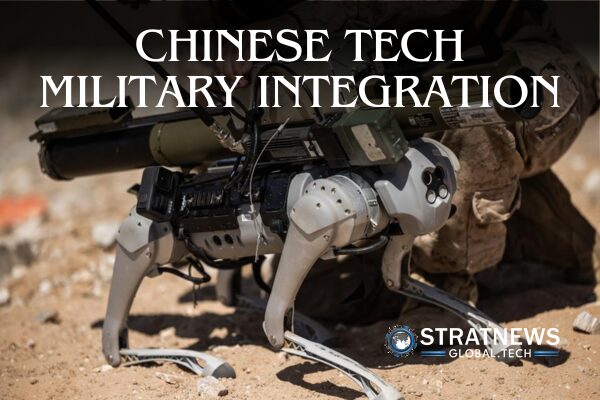
However, within two years of that pledge, state media footage showed Unitree’s robotic systems equipped with weapons during joint military exercises. By 2025, similar machines appeared in large scale military displays and training environments. Although the company maintained that it remained a civilian enterprise, it stated that any weaponisation had been carried out by third parties. This distinction highlights a deeper structural issue rather than a direct contradiction.
A System Without Direct Orders
The transformation of commercial technology into military capability does not rely on explicit directives. Instead, it occurs through a network of incentives and institutional frameworks. Companies do not need to seek military contracts or partnerships. Rather, the system introduces military integration through policy design and economic incentives.
For instance, Unitree received designation as a national level “Little Giant” enterprise. This status unlocked a range of benefits, including tax reductions, subsidised financing, and procurement opportunities. Additionally, local government initiatives further supported the company through targeted industrial policies and financial incentives. These measures collectively shaped the company’s trajectory without requiring direct military involvement.
The Role Of Universities And Research Channels
Universities play a crucial role in this system by acting as intermediaries between commercial firms and defence applications. Over recent years, numerous academic institutions have purchased Unitree’s products. A significant portion of the company’s revenue has come from research and education channels, indicating the importance of this pathway.
Unlike typical commercial environments, these institutions operate within a framework that encourages defence related research. Policies have explicitly promoted collaboration between academic bodies and military development programmes. As a result, equipment entering these channels often transitions into defence applications without direct oversight from the originating company. This process reflects a systemic design rather than an unintended consequence.
Standards Bodies And Structural Integration
Another critical layer involves participation in standards setting organisations. Leadership roles within these bodies provide companies with influence over technical frameworks and procurement criteria. At the same time, these organisations often include members from defence related institutions and sanctioned entities.
This composition creates an environment where military requirements can become embedded within civilian standards. Consequently, companies become integrated into defence ecosystems through routine professional advancement. The process does not require coercion, as participation is framed as recognition of technical expertise and commercial success.
Policy Gaps And Structural Challenges
Current policy responses tend to focus on restricting specific companies or technologies. Measures such as export controls, supply chain reviews, and entity listings target outcomes rather than underlying mechanisms. However, the conversion of commercial success into military capability occurs earlier in the development cycle.
This structural layer includes incentives, procurement pathways, and institutional linkages that shape corporate behaviour over time. As a result, addressing individual firms does not disrupt the broader system. The architecture continues to generate new participants, making reactive measures insufficient.
Understanding this framework is essential for developing effective responses. The challenge lies not in replicating the system but in recognising its design and implications. Without this awareness, efforts to counter technological competition will remain limited in scope and impact.
With inputs from Reuters

