


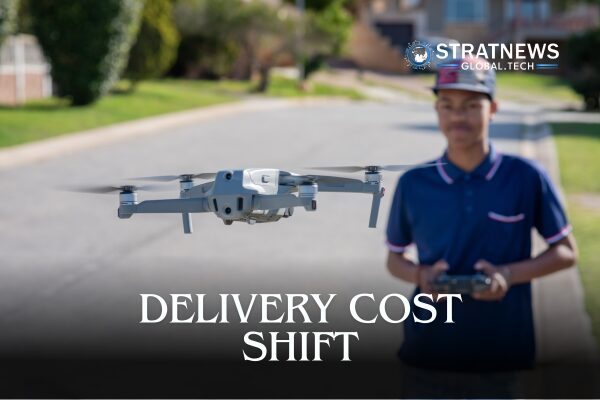
Autonomous Delivery Could Transform Food Industry Economics
Autonomous food delivery robots and drones could significantly reduce costs, potentially lowering expenses to as little as $1 per order. According to Barclays, this shift could unlock billions in profits for the global food delivery industry.
At present, delivery platforms are increasingly exploring automation to improve efficiency and margins. This transition reflects a broader strategic move towards reducing reliance on human labour while scaling operations more effectively.
Strategic Shift Towards Automation
Major global platforms, including DoorDash, are partnering with autonomous delivery operators. These collaborations mainly involve sidewalk delivery robots and drones, which are gradually becoming part of their logistics networks.
Barclays described this development as a clear strategic shift. Companies are actively investing in automation technologies to strengthen their capabilities and remain competitive in a rapidly evolving market.
Furthermore, this approach allows platforms to optimise delivery systems. It also helps them address rising labour costs, particularly in regions where human delivery expenses remain high.
Cost Reductions And Profit Potential
Currently, autonomous delivery costs range between $5 and $7 per order in early adoption markets with high labour costs. This is already $3 to $4 cheaper than traditional rider-based delivery methods.
In the long term, these costs could drop to around $1 per delivery. As a result, platforms could achieve savings of $8 to $9 per order compared with current rider delivery models in expensive labour markets.
Assuming an average saving of $4 per delivery at scale, Barclays estimates that automation could generate approximately $16 billion in annual global profitability for food delivery platforms.
Therefore, the financial upside remains substantial. Lower costs combined with increased efficiency could reshape the economics of the entire industry.
Adoption Still In Early Stages
Despite its potential, autonomous delivery remains at a nascent stage. Barclays estimates that it currently accounts for less than 1% of global food delivery orders.
However, adoption is expected to grow steadily. The brokerage forecasts that penetration could reach about 2% by the end of the decade and rise further to roughly 10% by 2035.
This gradual increase reflects both technological progress and regulatory developments. As systems become more reliable, adoption is likely to accelerate.
Key Companies Positioned To Benefit
Barclays expects several major companies to benefit from this shift. DoorDash and Chinese delivery leader Meituan are seen as near-term winners due to early deployments and investments in automation.
In addition, Uber is considered well-positioned to capitalise on these advancements. Meanwhile, Dutch technology investor Prosus is expected to benefit over the longer term.
Other platforms, including Delivery Hero, its Middle East unit Talabat, and Southeast Asia’s Grab, are viewed as medium- to long-term beneficiaries. Their progress in automation is currently limited to pilot programmes, but expansion is anticipated over time.
As automation continues to evolve, these companies are likely to play a central role in shaping the future of food delivery.
With inputs from Reuters

