


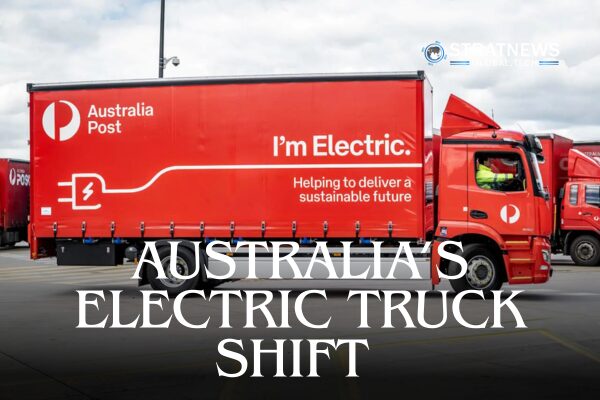
Australia’s Electric Truck Push Gains Momentum Amid Fuel Crisis
An electric truck quietly rolled out of an automotive workshop in Australia, marking a significant shift in the country’s freight industry. Despite its smooth and modern performance, the vehicle had already travelled more than a million kilometres in its previous life as a diesel-powered truck.
Following a transformation costing A$150,000, the five-year-old diesel engine was removed and replaced with an electric motor and a swappable battery system. This upgrade signals a broader transition in an industry long dependent on diesel fuel.
Converting Diesel Trucks Into Electric Alternatives
Located about an hour north of Sydney, Janus Electric was established four years ago with a clear objective. The company aims to electrify trucking by converting existing diesel vehicles into electric ones rather than building new trucks from scratch.
According to its chief executive, Ben Hutt, the financial advantages of electric trucks have become increasingly clear. While the economics were already favourable before the fuel crisis, rising diesel costs have made electric alternatives significantly cheaper to operate.
Moreover, interest from customers and investors has surged. This increase followed disruptions to global energy supply caused by Iran’s blockade of the Strait of Hormuz, which drove fuel prices sharply higher.
Diesel Dependence Meets Rising Costs
Australia remains one of the largest diesel consumers per person globally. The country imports roughly 80 percent of its liquid fuels, with a substantial portion used in road freight.
Consequently, the trucking sector plays a central role in transporting goods across vast distances in a sparsely populated landscape. However, it is also on track to become the highest emitting sector in the national economy within the next two years, making decarbonisation a pressing challenge.
Although electric cars have gained widespread popularity, electric trucks have faced slower adoption. High upfront costs, limited charging infrastructure, and concerns over performance have all contributed to hesitation within the industry.
Technology and Economics Begin to Align
However, the recent surge in diesel prices to more than A$3 per litre has shifted the balance. Electric trucking solutions are now becoming more financially attractive.
Janus Electric’s swappable battery technology enables trucks to resume operations within minutes, reducing downtime significantly. The company has already deployed this system in the United States and Canada, while also exploring opportunities in the United Kingdom, India, and South Africa.
At the same time, other industry players are seeing similar momentum. New Energy Transport reported a rise in enquiries following the fuel crisis, reflecting growing interest in electric freight solutions.
Faster Deliveries and Lower Costs Drive Adoption
New Energy Transport recently completed Australia’s first fully electric freight delivery between Sydney and Canberra. The journey demonstrated notable efficiency gains, including an 84 percent reduction in energy costs.
In addition, the electric truck completed the route 25 minutes faster than a diesel equivalent. This improvement was largely due to the vehicle’s ability to maintain consistent speed on inclines, unlike traditional diesel trucks.
Meanwhile, the Australian government has backed the transition. It selected a proposal by New Energy Transport to build the country’s largest heavy electric truck depot in Sydney under a fast-track development scheme. The initiative highlights a focus on strengthening domestic capability and reducing vulnerability to global supply disruptions.
Industry leaders emphasise that electrified freight offers more than environmental benefits. It also enhances energy security and protects supply chains from global volatility. As a result, electric heavy road freight is increasingly viewed as both a practical and economically viable alternative to diesel-powered transport.
With inputs from Reuters