

Close Menu
Stratnews GlobalStratnews Global
    Facebook X (Twitter) Instagram
    Trending
    • China Expands Desert-Control Projects To Protect Farmland In Xinjiang
    • China Flood AI Strategy Expands Amid Rising Risks
    • G7 Rare Earths Push Gains Urgency
    • Elon Musk’s OpenAI Lawsuit Rejected by U.S. Jury
    • AI Devices Could Replace Smartphones Soon
    • Trump Says U.S. Should Have Taken Bigger Intel Stake
    • India-Norway Partnership Boosts Science Cooperation
    • Iran Crypto Transactions Flow Through Tron And BNB Chain
    • Support Us
    Stratnews GlobalStratnews Global
    Write for Us
    Wednesday, May 20
    • Space
    • Science
    • AI and Robotics
    • Industry News
    • Support Us
    Stratnews GlobalStratnews Global
    Home » How GST Formalised the Indian Economy

    How GST Formalised the Indian Economy

    Anil PadmanabhanBy Anil PadmanabhanApril 16, 2026 Capital Calculus No Comments1 Min Read
    GST

    On 1 July 2017 India rolled out the Goods and Services Tax (GST). It collapsed 36 tax jurisdictions and consequently for the first time India was economically unified. Further it all but eliminated the cascading effect of taxes that prevailed in the earlier regime of indirect taxes.

    Indeed, it was the biggest tax reform ever. Nearly, a decade later, the country has few regrets. Yes, GST is still a work in progress. Yet it has more than matched expectations.

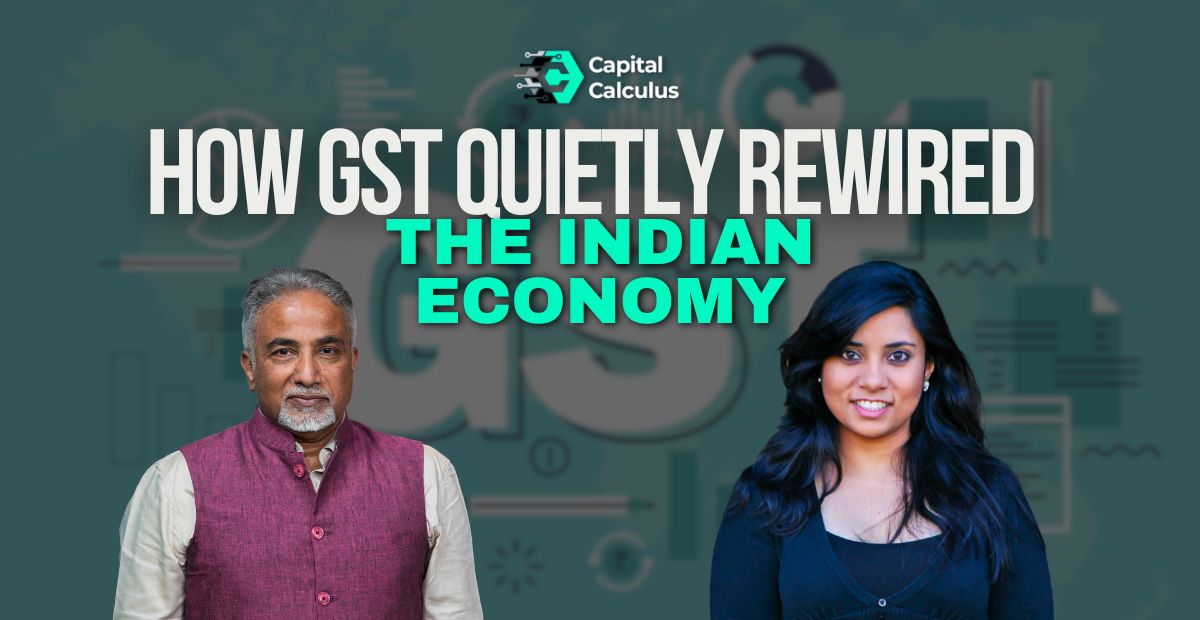
    Now, a new academic paper has empirically proved the long-held belief that GST is accelerating formalization of the Indian economy. Even better, this makeover has not been achieved by the fear of the taxman. Instead, it is because of the GST design India chose.

    To unpack these findings, StratNews Global spoke to the author of this study, Megha Patnaik, Assistant Professor at Luiss Guido Carli University and co-founder and, Leap Insights Foundation on Capital Calculus.

    Author

    • Anil Padmanabhan
      Anil Padmanabhan
      View all posts
    Share. Facebook Twitter Pinterest LinkedIn Tumblr Email Reddit Telegram WhatsApp
    Anil Padmanabhan

      Keep Reading

      How The US-Israel-Iran Conflict Could Reshape Gulf Economies

      Lal Bahadur Shastri And The Future India Didn’t Choose

      What Happens If Insurers Walk Away? India’s Maritime Bet Explained

      Did Development Fail—or Did Naxalism Block It?

      India’s Census 2027: Growth Story or Reality Check?

      The New Energy Wars: Why Sovereignty Matters

      Add A Comment
      Leave A Reply Cancel Reply

      Anti Drone System (CUAS)
      Latest Posts

      China Expands Desert-Control Projects To Protect Farmland In Xinjiang

      May 19, 2026

      China Flood AI Strategy Expands Amid Rising Risks

      May 19, 2026

      G7 Rare Earths Push Gains Urgency

      May 19, 2026

      Elon Musk’s OpenAI Lawsuit Rejected by U.S. Jury

      May 19, 2026

      AI Devices Could Replace Smartphones Soon

      May 19, 2026

      Trump Says U.S. Should Have Taken Bigger Intel Stake

      May 19, 2026

      India-Norway Partnership Boosts Science Cooperation

      May 19, 2026

      Iran Crypto Transactions Flow Through Tron And BNB Chain

      May 19, 2026

      Pope Leo AI Encyclical To Address Technology Risks

      May 19, 2026

      China Rare Earth Controls Raise U.S. Supply Concerns

      May 18, 2026

      Subscribe to News

      Get the latest sports news from NewsSite about world, sports and politics.

      • Astronomical Events
      • Space Missions
      • Industry News
      • Science
      StratNewsGlobal Tech
      Facebook X (Twitter) Instagram LinkedIn YouTube
      © 2026 StratNews Global, A unit of BharatShakti Communications LLP
      • About Us
      • Contributors
      • Copyright
      • Contact
      • Write for Us

      Type above and press Enter to search. Press Esc to cancel.