


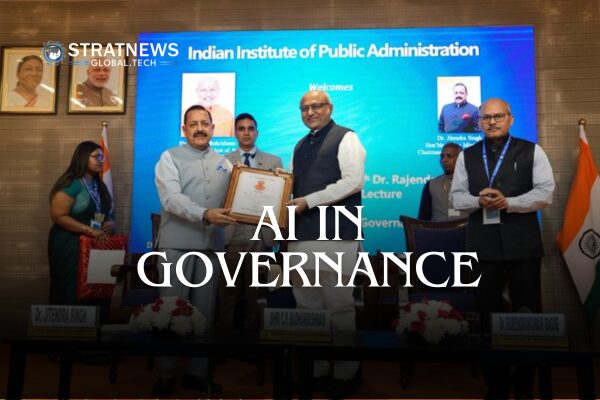
Vice President Highlights Transformative Role Of AI In Governance
The Vice President of India emphasised the growing importance of artificial intelligence in governance, describing it as a powerful tool that is reshaping how governments serve citizens. He made these remarks while delivering a memorial lecture focused on the theme of AI for good governance.
He noted that the current era represents one of the most dynamic phases in human history, driven by rapid technological advancement. In particular, he stated that artificial intelligence enables governments to better understand public needs and respond more effectively. As a result, governance is becoming more responsive, efficient and citizen-centric.
Furthermore, he stressed that governance must go beyond administrative systems and rules. Instead, it should focus on empowering individuals and ensuring inclusivity. In this context, he described artificial intelligence as a crucial enabler in achieving these goals.
Vice President Shri C. P. Radhakrishnan graced the 72nd Founders’ Day celebrations of the Indian Institute of Public Administration (IIPA) in New Delhi today. On the occasion, he delivered the 5th Dr. Rajendra Prasad Annual Memorial Lecture on the theme “AI for Good Governance.”… pic.twitter.com/bXUTQEO7GZ
— Vice-President of India (@VPIndia) April 15, 2026
AI Driving Inclusive And Efficient Public Services
The Vice President highlighted that artificial intelligence is playing a key role in building a developed and future-ready nation. He explained that AI enhances transparency, improves service delivery and ensures that benefits reach even the most marginalised sections of society.
Moreover, he pointed out that AI supports data-driven decision-making, which strengthens trust between citizens and institutions. It also helps bridge the gap between policy formulation and implementation, thereby improving overall governance outcomes.
He further observed that AI-powered platforms are helping overcome language barriers in a diverse country. This allows wider access to government services and information. In addition, he noted that official documents are now available in multiple languages through AI-enabled systems, making governance more inclusive.
Expanding Applications Across Key Sectors
The Vice President elaborated on the widespread application of artificial intelligence across various sectors. In healthcare, he stated that AI is improving access through tools such as assisted screening, portable diagnostic devices and telemedicine platforms.
Similarly, he noted that agriculture, small enterprises, cybersecurity and the judicial system are all benefiting from AI-driven solutions. Consequently, the technology is becoming an integral part of multiple domains that influence daily life.
He also highlighted national initiatives aimed at strengthening the technological ecosystem. These efforts are designed to support research, innovation and the development of advanced capabilities in artificial intelligence.
Call For Responsible And Ethical Use Of AI
While acknowledging the immense potential of artificial intelligence, the Vice President cautioned that its use must be guided by ethical principles. He stressed the importance of fairness, accountability and responsibility in deploying such powerful technologies.
Additionally, he encouraged young people and professionals to embrace emerging technologies and build skills relevant to the evolving digital landscape. He noted that technological advancements create new opportunities and contribute to long-term growth.
In his closing remarks, he described artificial intelligence as not merely a technological shift but a broader human transformation. He urged stakeholders to harness its potential responsibly to build a more inclusive, transparent and compassionate society.
With inputs from Reuters