


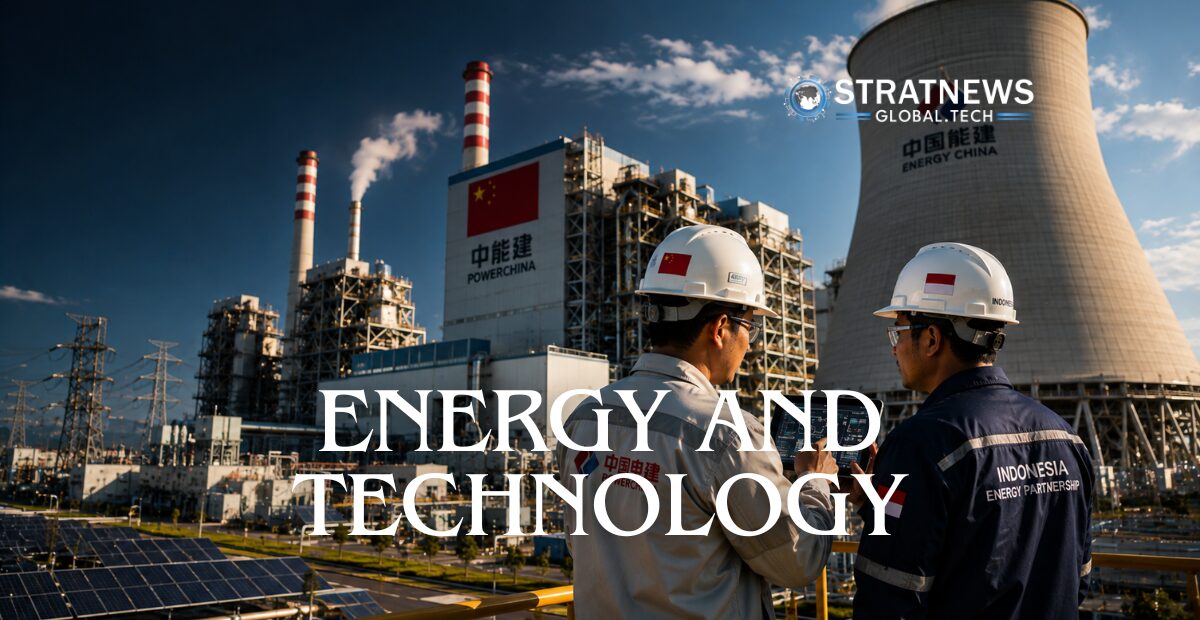
China and Indonesia Deepen Energy and Technology Ties Amid Regional Tensions
Energy and technology are emerging as key areas of cooperation between China and Indonesia as Jakarta seeks to balance its relationships with Beijing and Washington. The two countries agreed on Friday to strengthen military ties while expanding cooperation in minerals, energy and technology.
China’s Foreign Minister Wang Yi, visiting Jakarta alongside China’s defence minister to meet their Indonesian counterparts, urged both sides to “seize the moment”. He said the international situation was complex and that unilateralism and hegemonic actions were affecting global cooperation and stability.
Wang added that China aimed to build cooperation with Indonesia at a high level.
The two countries pledged to work together across several sectors, including artificial intelligence, defence, rail transport, green energy, satellites and fisheries.
Energy and Mineral Cooperation
Wang said both sides had agreed to support each other’s core interests and strengthen cooperation in energy and mineral resources.
Indonesia, a $1.4 trillion G20 economy, has substantial deposits of nickel, tin, copper, gold and bauxite. It is also the world’s largest exporter of palm oil and thermal coal, with China among its major buyers.
China dominates investment in Indonesia’s nickel processing sector. However, recent policy changes involving exports and tighter mining quotas have encouraged some companies to seek alternatives elsewhere.
The countries’ wider cooperation therefore links Indonesia’s natural resources with China’s economic and technological interests.
Technology Becomes a Key Focus
Technology is another major area in the expanding partnership. The two countries have pledged cooperation in artificial intelligence, satellites and green energy, alongside other sectors.
Indonesia’s President Prabowo Subianto has advocated a “free and active” foreign policy based on non-alignment. He has vowed to maintain friendly relations with all countries, including China and the United States.
The approach allows Jakarta to expand cooperation with Beijing while continuing to develop ties with Washington. The United States remains an important trade partner, and Indonesia’s defence relationship with Washington is also expanding.
The broader cooperation with China consequently covers economic, technological and strategic priorities.
Defence Cooperation Expands
Chinese Defence Minister Dong Jun was greeted by a military honour guard on Friday before talks with his Indonesian counterpart, Sjafrie Sjamsoeddin.
Dong said the prospects for cooperation between the two militaries were broad. He also said their cooperation was becoming higher in quality and more effective.
Sjafrie said the countries would increase defence activities, including joint exercises and officer exchanges. They would also develop partnerships in the defence industry.
The expanded military relationship comes after a rare joint exercise between Chinese and Indonesian navies took place east of Taiwan last week.
Taiwan, which China claims as its territory, objected to the exercise. Indonesia’s navy said the activity was routine and noted that it conducts exercises with China as well as Japan and the United States.
Defence analyst Curie Maharani said Indonesia viewed the exercise as routine, but its location allowed China to send a different political message. She said Indonesia had learned how major powers can use defence diplomacy to project influence.
Trade Relations Face Friction
Indonesia also has disagreements with China over developments in the South China Sea, which Beijing claims almost in its entirety. Jakarta has maintained a measured position and does not regard itself as a party to wider territorial disputes involving China and the Philippines, Malaysia and Vietnam.
China remains a major investor in Indonesia. Indonesian figures show that Chinese foreign direct investment reached $3.9 billion in the first half of 2026.
However, regulations affecting some investments have caused friction. In May, Chinese companies operating in Indonesia urged the government to adopt more business-friendly policies.
They said higher taxes and a new nickel pricing formula were increasing costs and threatening investment.
In a letter seen by Reuters, the China Chamber of Commerce in Indonesia said Chinese companies faced stringent regulation and over-enforcement. It also alleged corruption and extortion by authorities.
Key investors include Contemporary Amperex Technology, the world’s largest electric vehicle battery maker, and steelmaker Tsingshan Group, which operates smelters in Indonesia.
With inputs from Reuters

