

Close Menu
Stratnews GlobalStratnews Global
    Facebook X (Twitter) Instagram
    Trending
    • Beyond the Strait of Hormuz: The New Battle for Energy and Trade Security
    • India’s Working-Hour Rules: Why Factories Struggle to Scale
    • Vietnam vs India: What Must Change for India to Grow at 10%?
    • India’s Green Transition: Can Sustainability and Competitiveness Go Together?
    • Can A Weakening Indian Rupee Become A Global Currency?
    • India’s Resilience Is Facing A Perfect Storm
    • Why Are Indian MSMEs So Resilient?
    • 9/11@25: How Terrorism Reshaped Global Geopolitics
    • Support Us
    Stratnews GlobalStratnews Global
    Write for Us
    Friday, November 6
    • Space
    • Science
    • AI and Robotics
    • Industry News
    • Support Us
    Stratnews GlobalStratnews Global
    Home » NEET: Why People Game The System?

    NEET: Why People Game The System?

    Anil PadmanabhanBy Anil PadmanabhanAugust 27, 2026 Capital Calculus No Comments1 Min Read
    neet

    The NEET paper-leak controversy raised a disturbing question. Not for the first time though.
    Why do people cheat and game public systems?

    Take the example of the botched NEET (National Eligibility cum Entrance Test) test. For millions of students, NEET was supposed to offer a level playing field—one exam, one common standard, equal opportunity.

    But when access to a question paper can potentially be worth huge financial gain, the incentives to exploit weaknesses in the system become enormous.

    This alternate view, puts the spotlight on the skewed set of incentives which encourage people to indulge in malicious activities.

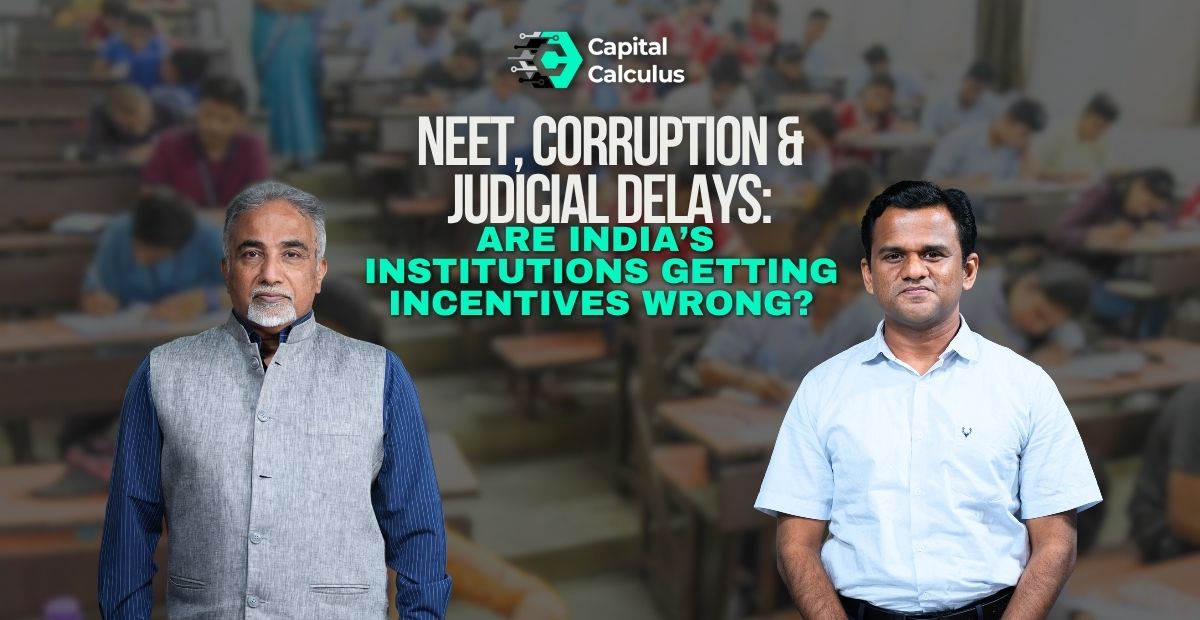
    What if some of India’s governance problems—from corruption and bureaucratic delays to judicial backlogs and poor civic services—are not simply about bad people or inadequate capacity, but about badly designed incentives?

    This is the central question of public choice theory: how politicians, bureaucrats, judges, contractors and citizens respond to the incentives created by institutions?

    In this episode of Capital Calculus, StratNewsGlobal.Tech spoke to Apurva Kumar about why people behave the way they do—and whether better-designed incentives can produce better governance.

    Author

    • Anil Padmanabhan
      Anil Padmanabhan
      View all posts
    AI India Policy
    Share. Facebook Twitter Pinterest LinkedIn Tumblr Email Reddit Telegram WhatsApp
    Anil Padmanabhan

      Keep Reading

      Beyond the Strait of Hormuz: The New Battle for Energy and Trade Security

      India’s Working-Hour Rules: Why Factories Struggle to Scale

      Vietnam vs India: What Must Change for India to Grow at 10%?

      India’s Green Transition: Can Sustainability and Competitiveness Go Together?

      Can A Weakening Indian Rupee Become A Global Currency?

      India’s Resilience Is Facing A Perfect Storm

      Add A Comment
      Leave A Reply Cancel Reply

      Anti Drone System (CUAS)
      Latest Posts

      Beyond the Strait of Hormuz: The New Battle for Energy and Trade Security

      November 6, 2026

      India’s Working-Hour Rules: Why Factories Struggle to Scale

      October 29, 2026

      Vietnam vs India: What Must Change for India to Grow at 10%?

      October 22, 2026

      India’s Green Transition: Can Sustainability and Competitiveness Go Together?

      October 15, 2026

      Can A Weakening Indian Rupee Become A Global Currency?

      October 8, 2026

      India’s Resilience Is Facing A Perfect Storm

      October 1, 2026

      Why Are Indian MSMEs So Resilient?

      September 24, 2026

      9/11@25: How Terrorism Reshaped Global Geopolitics

      September 17, 2026

      The Indian Economy Keeps Beating Expectations

      September 10, 2026

      Going Green Can Make India More Competitive

      September 3, 2026

      Subscribe to News

      Get the latest sports news from NewsSite about world, sports and politics.

      • Astronomical Events
      • Space Missions
      • Industry News
      • Science
      StratNewsGlobal Tech
      Facebook X (Twitter) Instagram LinkedIn YouTube
      © 2026 StratNews Global, A unit of BharatShakti Communications LLP
      • About Us
      • Contributors
      • Copyright
      • Contact
      • Write for Us

      Type above and press Enter to search. Press Esc to cancel.