


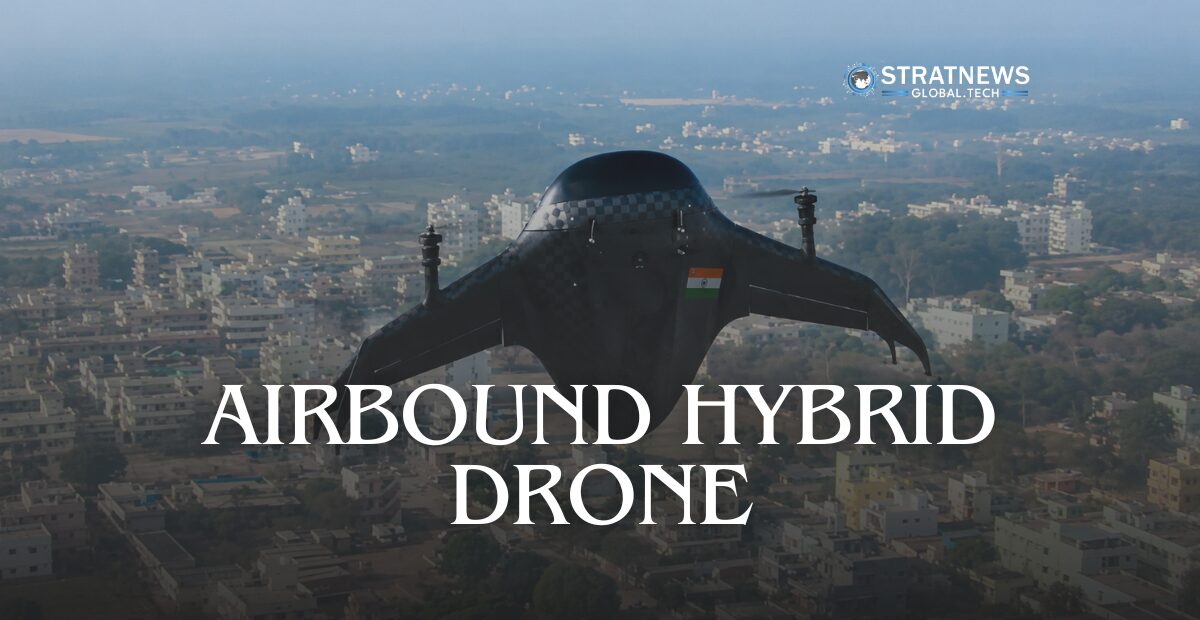
Airbound Launches Autonomous Hybrid Drone With 40 KM Range
India-based Airbound has unveiled a lightweight autonomous hybrid drone capable of vertical take-off and fixed-wing flight, marking another step forward in the rapidly expanding drone and autonomous aviation sector.
According to reports, the drone weighs around 2.5 kilograms and can carry payloads of up to 1 kilogram. The system is also capable of travelling distances of up to 40 kilometres while operating autonomously.
The launch has drawn attention across the aerospace, logistics, and technology industries because hybrid drones are increasingly viewed as a major advancement in next-generation transportation and industrial automation. The development also gained visibility on social media platforms, where technology communities highlighted the growing role of autonomous systems in aviation.
Hybrid Drone Technology Continues Evolving
Traditional drone systems often face limitations involving battery efficiency, payload capacity, and operational range. Hybrid drones attempt to overcome those challenges by combining vertical take-off capabilities with efficient airplane-style flight.
Vertical take-off and landing technology allows drones to operate without traditional runways, making them suitable for urban logistics, remote deployments, and emergency response operations. Meanwhile, fixed-wing flight significantly improves energy efficiency and extends travel range compared to standard multi-rotor drones.
As a result, hybrid drone platforms are attracting growing interest from industries seeking more efficient autonomous transportation systems.
Autonomous Aviation Expands Across Industries
Autonomous drone technology is becoming increasingly important across sectors including logistics, agriculture, infrastructure inspection, surveillance, emergency response, and package delivery.
Artificial intelligence now plays a central role in modern drone operations through navigation systems, obstacle detection, route optimisation, and real-time environmental analysis. These capabilities allow autonomous drones to complete complex operations with limited human intervention.
Additionally, governments and private companies worldwide continue investing heavily in autonomous aviation infrastructure as demand for drone-based services grows.
India Strengthens Position In Advanced Technology
The launch also reflects India’s expanding presence in advanced technology sectors including aerospace, robotics, artificial intelligence, and startup innovation. In recent years, the country has attracted growing investment in autonomous systems and next-generation transportation technologies.
Industry experts believe drone logistics could eventually become a major component of future urban transportation systems. Autonomous drones are already being explored for delivering medical supplies, industrial equipment, emergency materials, and e-commerce packages.
Furthermore, drone systems are increasingly used for infrastructure monitoring, environmental analysis, disaster assessment, agricultural operations, and wildlife tracking.
Drone Industry Continues Rapid Growth
The global drone market is expected to expand significantly over the coming decade as businesses and governments integrate autonomous aerial systems into daily operations. Advances in lightweight materials, battery systems, and AI-powered navigation continue accelerating innovation throughout the aerospace industry.
At the same time, technologies developed for civilian drone applications frequently overlap with systems used in defence and surveillance sectors, highlighting the growing convergence between commercial and security-focused aviation technologies.
Airbound’s latest hybrid drone demonstrates how autonomous aviation is rapidly evolving as companies worldwide compete to develop more capable and efficient aerial systems.