


Ukrainian Drone Makers Target Japan And Taiwan Amid Asia Defence Boom
Ukrainian drone manufacturers are expanding their focus into Asia as regional governments increase defence spending and seek proven battlefield technologies. In April, the chief executive of UFORCE, a Ukrainian producer of attack drones, travelled to Tokyo to present a proposal to Japanese officials and defence contractors. The company’s message was clear: build large numbers of Ukrainian-designed drones to strengthen regional security and support allied defence efforts.
Just days before those meetings, U.S. troops used UFORCE’s waterborne drones to sink a vessel during a military exercise conducted near the meeting point of the South China Sea and the Pacific Ocean. Meanwhile, the company’s Magura surface drone has played a significant role in limiting Russian naval operations in parts of the Black Sea.
According to UFORCE CEO Oleg Rogynskyy, although East Asia’s maritime environment differs from that of the Black Sea, the strategic effect of such systems remains highly comparable.
Ukraine’s Drone Expertise Draws Interest
The discussions in Japan form part of a broader effort by Ukrainian defence firms to benefit from growing military investment across Asia. Countries allied with the United States are increasingly seeking technologies that can help deter China and reduce the risk of conflict involving Taiwan.
Ukraine’s drone industry has gained global recognition after helping Kyiv resist Russian forces despite facing a larger and better-equipped military. As a result, Ukrainian companies have used that reputation to pursue defence partnerships beyond Europe.
Former Japanese defence minister Itsunori Onodera welcomed cooperation with Ukrainian firms, saying Japan requires equipment that has already demonstrated its effectiveness in real-world combat conditions.
Companies including UFORCE, Skyeton and General Cherry are exploring opportunities with Japanese manufacturers. Japan’s military has also hosted at least one demonstration of Ukrainian drone technology. Nevertheless, several discussions remain in the exploratory stage.
A spokesperson for Japan’s defence ministry said the government continues to examine all available options for acquiring equipment suitable for what it described as a new style of warfare.
Taiwan And Regional Security Concerns
Prime Minister Sanae Takaichi has warned that Japan could become involved in a conflict related to Taiwan. China continues to claim Taiwan as its territory and regularly conducts military exercises around the island.
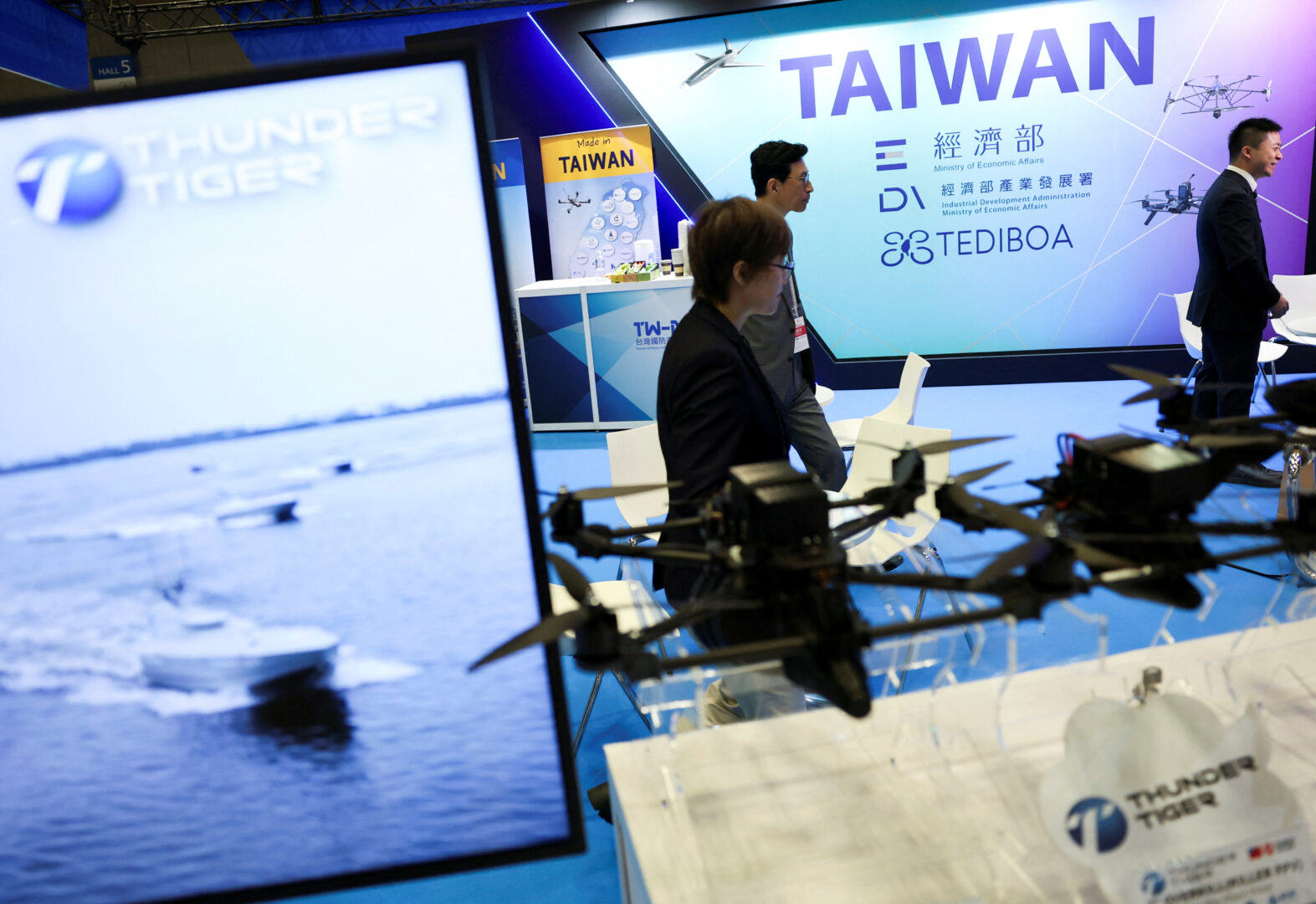
Executives from several Ukrainian drone firms confirmed they are also assessing opportunities in Taiwan. However, they remain cautious because Kyiv does not maintain formal diplomatic relations with the island.
Military planners increasingly view drones as essential to any future regional conflict. Analysts argue that unmanned systems could help strengthen the chain of islands stretching from Japan through Taiwan to the Philippines.
In April, a U.S. military exercise involving UFORCE technology took place near Itbayat in the Philippines, roughly 100 miles south of Taiwan. A spokesperson for the U.S. Pacific Command said discussions had taken place with Ukrainian drone makers regarding lessons from Black Sea operations and their relevance to the Indo-Pacific region.
Japan Seen As A Manufacturing Gateway
Japan began a major defence expansion programme in 2022 amid concerns that the war in Ukraine could inspire similar instability in East Asia. That process accelerated after Takaichi took office and encouraged greater domestic weapons production, including unmanned systems.
Tokyo has allocated nearly $2 billion for drone-related programmes in its current defence budget. The country aims to produce 80,000 drones annually by the end of the decade, a substantial increase from approximately 1,000 units produced in 2024. Even so, that figure remains well below Ukraine’s target of producing 7 million drones this year.
General Cherry and Skyeton are among the companies seeking Japanese production partners. Representatives from both firms have held meetings in Japan and promoted their technologies to government officials and potential industrial partners.
Ukraine has also discussed drone cooperation with the Philippines. According to Ukrainian industry executives, any drones supplied to Manila would likely be manufactured in Japan due to its advanced industrial capabilities.
Reducing Dependence On China
At the same time, Ukrainian companies are working to diversify their supply chains and reduce reliance on Chinese-made drone components. Japan and Taiwan offer alternative sources for cameras, microelectronics and other critical parts.
In May, the Ukrainian drone association IRON led a delegation to Taiwan’s industrial centre of Taichung to meet local suppliers. The primary objective was to identify component manufacturers capable of supporting Ukraine’s rapidly growing drone sector.
Some cooperation may extend beyond supply agreements. One Taiwanese manufacturer confirmed it is participating in an early-stage project with a Ukrainian partner to develop a drone that could eventually be sold in Taiwan.
IRON chief executive Volodymyr Cherniuk said he intends to bring several association members to Tokyo later this year in search of manufacturing partnerships. He added that Ukrainian companies would welcome opportunities to help other countries defend themselves from invasion, drawing on Ukraine’s own experience of war.
With inputs from Reuters