


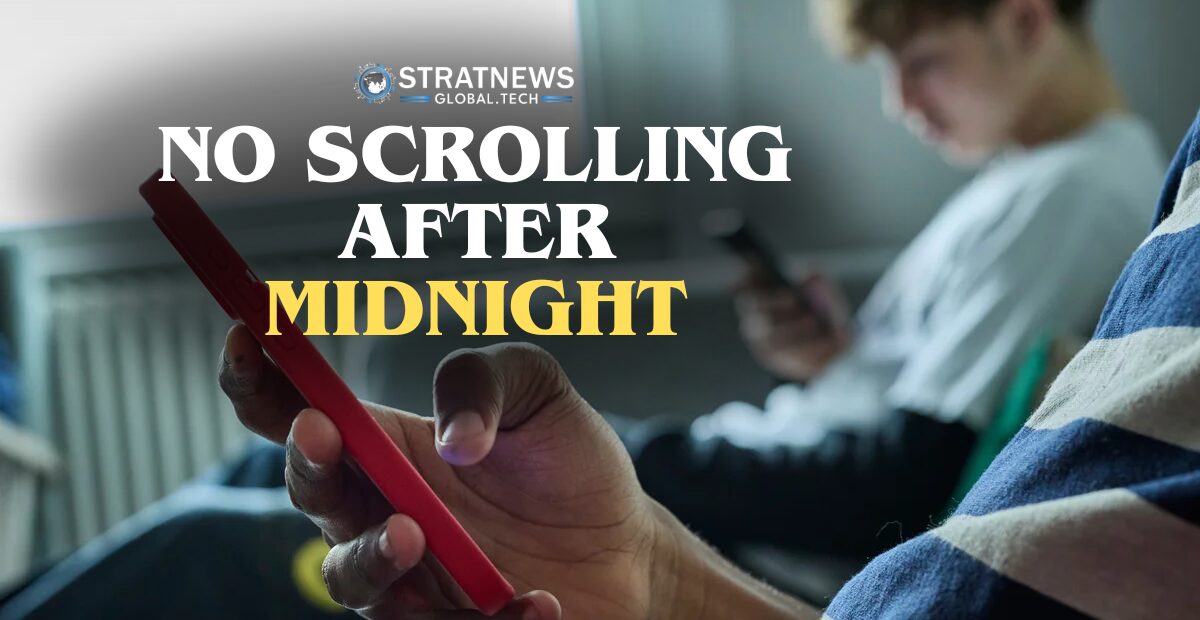
New rules will block social media access by default between midnight and 6 a.m. for 16- and 17-year-olds
Britain will introduce a default overnight curfew on social media apps for 16- and 17-year-olds, expanding its plans to protect young people online alongside a broader proposal to ban social media access for children under 16.
Under the new measures, teenagers aged 16 and 17 will be unable to use social media platforms between midnight and 6 a.m. unless they actively choose to change the default settings.
The government will also require features designed to encourage prolonged use—such as automatically playing videos and endless content feeds—to be switched off by default for users in this age group.
Reducing Late-Night Scrolling
The government said the changes are intended to prevent a “cliff edge” when children gain access to social media at 16 while still protecting them from the harmful effects of excessive screen time.
Technology Minister Liz Kendall said the measures would help teenagers get enough sleep, improve concentration at school and college, and encourage more time with family and friends.
“This will be crucial in helping young people get the sleep they need, focus on school and college, and spend more quality time with family and friends,” she said.
Research Supports Curfew
The announcement follows growing global concern over the impact of social media on young people’s mental and physical health.
A study published this week found that restrictions on social media use improved teenagers’ sleep, concentration and overall wellbeing. Researchers concluded that an overnight curfew was the easiest restriction for families to maintain and delivered the most consistent improvements in sleep.
Rules To Take Effect In 2027
The British government said the first package of regulations will be presented to Parliament by the end of this year, with the new rules expected to come into force in spring 2027.
Officials said the regulations would include robust enforcement measures to ensure social media companies comply with the new requirements.
Global Debate Continues
Britain’s move comes as governments around the world consider stricter regulation of social media platforms to better protect children online.
However, implementing such measures remains challenging. A team advising Australia—the first country to introduce a nationwide social media ban for children—recently reported that online platforms were struggling to effectively verify users’ ages, raising questions about enforcement.
Meanwhile, Google and TikTok have each recently settled legal cases in the United States brought by a minor who alleged that social media platforms had harmed his mental health, underscoring the growing scrutiny facing major technology companies over the impact of their services on young users.
(with inputs from Reuters)

