


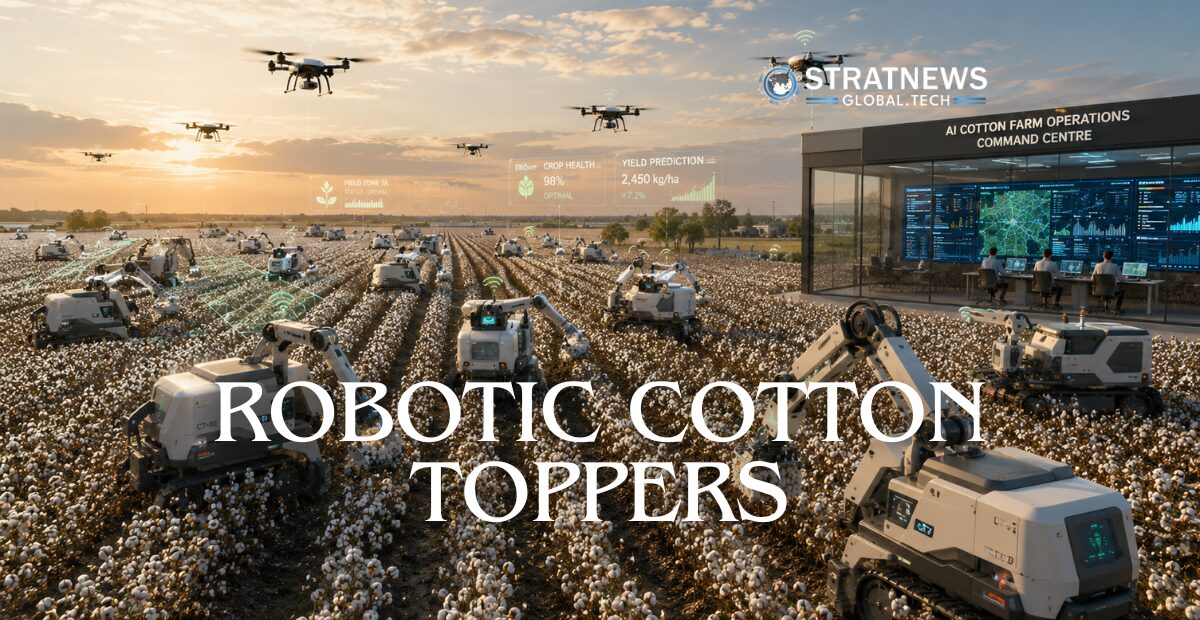
Robotic Cotton Toppers Transform Farming in Xinjiang
July is a crucial period for cotton topping in northwest China’s Xinjiang Uygur Autonomous Region. Across the region’s cotton fields, farmers are working against the seasonal timetable by deploying fleets of robotic cotton toppers. These machines are replacing traditional manual labour with digital, precision-based farming methods.
In a cotton field in Aral city, a robotic cotton topper moved steadily along rows of crops. The machine features 108 mechanical arms that rise and fall quickly to remove the terminal buds of cotton plants with high accuracy. Meanwhile, operators can monitor its real-time performance and operational data through tablet computers, allowing continuous oversight during fieldwork.
Standing 3.8 metres tall and weighing 8 tonnes, the robotic cotton topper is fitted with advanced sensors and machine vision technology. According to its manufacturer, Xinjiang-based agricultural robotics company Viewer Tech, the machine can cover up to 2 hectares per hour. This level of productivity is approximately 120 times greater than that achieved through manual labour.
Precision Technology Improves Cotton Cultivation
Cotton topping is a key cultivation process that plays a direct role in determining crop yields. By removing the plants’ terminal buds, the process reduces apical dominance and redirects nutrients towards lateral branches and developing cotton bolls. As a result, more bolls can form, and existing bolls have greater potential to grow larger.
For many years, farmers relied on manual topping, which required intensive physical labour and offered limited efficiency. Chemical topping presented concerns over pesticide residue and possible soil contamination. In addition, conventional mechanical topping often caused damage to cotton stalks, reducing its effectiveness.
Lower Costs and Greater Efficiency
Industry representatives said robotic cotton toppers can reduce production costs by around 50 per cent compared with manual operations. They also reported that the machines achieve a topping success rate of more than 90 per cent while effectively limiting the regrowth of terminal buds after treatment.
Furthermore, the adoption of robotic equipment highlights the increasing use of automation and precision technology in agricultural production. By combining machine vision, intelligent sensors and digital monitoring, farmers can complete critical field operations more efficiently while maintaining consistent performance across large cultivation areas.
With inputs from Reuters

